



الصفحة 1
الصفحة 1

Medical Emergencies in the Dental Office
Prepares dental professionals to promptly and proactively recognize and manage medical emergencies that may occur in the dental office. It details how to anticipate potential emergencies and what resources must be on hand to deal effectively with these situations. The book is arranged in eight sections concentrating on topics such as prevention of emergencies through patient evaluation (medical history) and specific types of more common emergencies that practitioners may encounter. "It successfully fulfils its aim of stimulating all members of the dental team to improve and maintain their skills in the effective prevention, recognition and management of medical emergencies.

Introduction to Partial Differential Equations: A Computational Approach
Mathematics is playing an ever more important role in the physical and biological sciences, provoking a blurring of boundaries between scientific disciplines and a resurgence of interest in the modern as well as the cl- sical techniques of applied mathematics. This renewal of interest, both in research and teaching, has led to the establishment of the series: Texts in Applied Mathematics (TAM). The development of new courses is a natural consequence of a high level of excitement on the research frontier as newer techniques, such as numerical and symbolic computer systems, dynamical systems, and chaos mix with and reinforce the traditional methods of applied mathematics. Thus, the purpose of this textbook series is to meet the current and future needs of these advances and encourage the teaching of new courses.
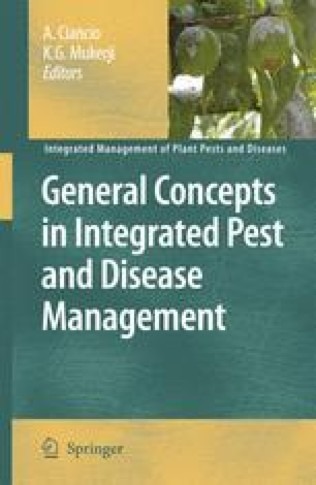
General Concepts in Integrated Pest and Disease Management
The first volume of the Integrated Management of Plant Pests and Diseases book series presents general concepts on integrated pest and disease management, organized in three sections. Section one (modeling, management, environment) includes chapters on infection models, resurgence and replacement. The second section (emerging technologies) includes remote sensing and information technology. In the third section (molecular aspects) the management of insect-borne viruses with transmission interference.

Current Developments in Solid-state Fermentation
Over the period of last two decades, there has been significant resurgence in solid-state fermentation due to the numerous benefits it offers, especially in the engineering and environmental aspects. SSF has shown much promise in the development of several bioprocesses and products. This resurgence gained further momentum during the last 5-6 years with the developments in fundamental and applied aspects. A good deal of information has been generated in published literature and patented information. Several commercial ventures have come up based on SSF in different parts of the world. The contents are organized into four parts: Part 1 deals with the General and Fundamentals aspects of SSF; Part 2 deals with the production of bulk chemicals and products such as enzymes, organic acids, spores and mushrooms in SSF; Part 3 is on the use of SSF for specialty chemicals such as gibberellic acid, antibiotics and other pharmaceutically valuable secondary metabolites, pigments, and aroma compounds; Part 4 deals with the use of SSF miscellaneous application such as SSF for food and feed applications, agro-industrial residues as substrates in SSF and the production of silage and vermicompost.
Maintenance of Process Instrumentation in Nuclear Power Plants
The resurgence of the nuclear power industry at a time when the nuclear plant I&C workforce is diminishing due to aging and retirements has been the motivation for writing this book. This book compiles 30 years of practical knowledge gained by the author and his staff in testing the I&C systems of nuclear power plants around the world. It focuses on process temperature and pressure sensors and the verification of these sensors’ calibration and response time.

Life System Modeling and Simulation; International Conference on Life System Modeling, and Simulation, LSMS 2007, Shanghai, China, September 14-17, 2007. Proceedings
The International Conference on Life System Modeling and Simulation (LSMS) was formed to bring together international researchers and practitioners in the field of life system modeling and simulation as well as life system-inspired theory and methodology. The arrival of the 21st century has been marked by a resurgence of research interest both in arriving at a systems-level und- standing of biology and in applying such knowledge in complex real-world appli- tions. Consequently, computational methods and intelligence in systems, biology, as well as bio-inspired computational intelligence, have emerged as key drivers for new computational methods. For this reason papers dealing with theory, techniques and real-world applications relating to these two themes were especially solicited.
Le syndrome de détresse respiratoire aiguë = Acute respiratory distress syndrome
Gives a large place to mechanical ventilation, in particular to its optimization and the interest of its various forms, such as non-invasive ventilation or high frequency oscillation. It also discusses, in a practical way, what imaging and the study of respiratory mechanics can bring to the practitioner in the field or to the intensive care unit.
Le manuel de réanimation, soins intensifs et médecine durgence = The manual of resuscitation, intensive care and emergency medicine
Offers an update of this book in a field that remains fascinating yet constantly evolving. Each chapter has been completely revised, expanded, and updated by the author. The didactic and practical approach has been maintained to ensure easy access for young doctors working in intensive care units, emergency physicians, and doctors on call in hospitals. These practitioners will find it helpful in understanding pathologies and implementing the most appropriate treatment.
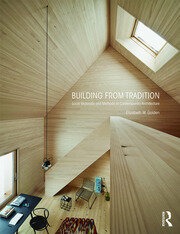
Building from tradition : Local materials and methods in contemporary architecture
Examines the recent resurgence of interest in the handmade building and the use of local and renewable materials in contemporary construction. In the past, raw materials were shaped to provide shelter and to accommodate the cultural, social, and economic needs of individuals and communities. This is still true today as architects, engineers, and builders turn once again to local resources and methods, not simply for constructing buildings, but also as a strategy for supporting social engagement, sustainable development, and cultural continuity. Building from Tradition features global case studies that allow readers to understand how building practices-developed and refined by previous generations-continue to be adapted to suit a broad range of cultural and environmental contexts. The book provides: a survey of historical and technical information about geologic and plant-based materials such as: stone, earth, reed and grass, wood, and bamboo; 24 detailed case studies examining the disadvantages and benefits to using traditional materials and methods and how they are currently being integrated with contemporary construction practices

Bio-inspired computational intelligence and applications ; International conference on life system modeling, and simulation, LSMS 2007, Shanghai, China, September 14-17, 2007. Proceedings
It covers both micro and macro c- ponents ranging from cells, tissues and organs across to organisms and ecologic niches. These interact and evolve to produce an overall complex system whose beh- ior is difficult to comprehend and predict.The arrival of the 21st century has been marked by a resurgence of research interest both in arriving at a systems-level und- standing of biology and in applying such knowledge in complex real-world appli- tions. Consequently, computational methods and intelligence in systems, biology, as well as bio-inspired computational intelligence, have emerged as key drivers for new computational methods. For this reason papers dealing with theory, techniques and real-world applications relating to these two themes were especially solicited.
Abord clinique des urgences traumatiques au cabinet du généraliste = Clinical approach to traumatic emergencies in the general practitioner's office
Cet ouvrage a été conçu comme une aide pour le médecin généraliste, confronté quotidiennement à la pathologie traumatique. Les deux auteurs, urgentistes expérimentés, apportent des réponses claires, concises et pratiques aux problèmes que posent les lésions traumatiques. Des gestes simples, un abord clinique détaillé, la nécessité de recourir ou non à des examens complémentaires ou à un avis spécialisé sont ici expliqués et justifiés. Le style est précis, concis, et un lexique complète les définitions et les matériels cités dans le texte. Les auteurs se sont entourés des avis de généralistes et de spécialistes pour définir des conduites à tenir simples et compatibles avec les nécessités du terrain.
Abord Clinique des Urgences au Domicile du Patient = Emergency Clinic at the Patient's Home
The general practitioner finds himself alone in the face of difficult and urgent situations. Her internship years taught her to work with the nursing team. At the patient's home, he must act alone with "the means at hand". To have known these difficulties, we conceived this work: it is intended to be a simple, effective and complete help. It sums up what we have learned from the “field”. It complies with scientific recommendations.
