



الصفحة 1
الصفحة 1

Methods in Gut microbial ecology for ruminants
As a result of various human activities, such as increase in human population,decrease in arable land due to soil degradation, urbanization, industrialization and associated increase in the demand for livestock products, dramatic changes are occurring in the global ruminant livestock sector. These changes includeshift inthesize of regional livestock populations and in the types of management and feeding systems under which ruminant livestock are held, and increased demand of a wider range of quality attributes from animal agriculture, not just of the products themselves but also of the methods used in their production. The livestock sector will need to respond to new challenges of increasing live stock productivity while protecting environment and human health and conservingbiodiversity and natural resources. The micro-organisms in the digestive tracts of ruminant livestock have a profound in?uence on the conversion offeedinto end products, which can impact on the- imal and theenvironment. As the livestock sector grows particularly in developing countries, there will be an increasing need to understand these processes for b- ter management and use ofbothfeed and other natural resources that underpinthe development of sustainable feeding systems.

Internal Migration, Urbanization and Poverty in Asia : Dynamics and Interrelationships
The chapters within this volume examine those complexities using a range of traditional and nontraditional measures—such as multidimensional poverty, gaps, and polarization—to arrive at the conclusion that poverty is now an urban issue. This volume offers an essential resource for economic policy makers and students of development economics to understand the interrelationships between internal migration, urbanization, and poverty in Asia, paving the way for the improved management of internal migration, and disadvantaged and vulnerable populations.

Housing Market Dynamics in Africa
Utilizes new data to thoroughly analyze the main factors currently shaping the African housing market. Some of these factors include the supply and demand for housing finance, land tenure security issues, construction cost conundrum, infrastructure provision, and low-cost housing alternatives. Through detailed analysis, the authors investigate the political economy surrounding the continent’s housing market and the constraints that behind-the-scenes policy makers need to address in their attempts to provide affordable housing for the majority in need. With Africa’s urban population growing rapidly, this study highlights how broad demographic shifts and rapid urbanization are placing enormous pressure on the limited infrastructure in many cities and stretching the economic and social fabric of municipalities to their breaking point. But beyond providing a snapshot of the present conditions of the African housing market, the book offers recommendations and actionable measures for policy makers and other stakeholders on how best to provide affordable housing and alleviate Africa’s housing deficit.

Hot Property : The Housing Market in Major Cities
This book discusses booming housing markets in cities around the globe, and the resulting challenges for policymakers and central banks. Cities are booming everywhere, leading to a growing demand for urban housing. In many cities this demand is out-pacing supply, which causes house prices to soar and increases the pressure on rental markets. These developments are posing major challenges for policymakers, central banks and other authorities responsible for ensuring financial stability, and economic well-being in general. This volume collects views from high-level policymakers and researchers, providing essential insights into these challenges, their impact on society, the economy and financial stability, and possible policy responses. The respective chapters address issues such as the popularity of cities, the question of a credit-fueled housing bubble, the role of housing supply frictions and potential policy solutions. Given its scope, the book offers a revealing read and valuable guide for everyone involved in practical policymaking for housing markets, mortgage credit and financial stability.
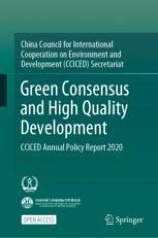
Green Consensus and High Quality Development : CCICED Annual Policy Report 2020
This book is based on the research outputs of China Council for International Cooperation on Environment and Development (CCICED) in 2020. It covers major topics of Chinese and international attention regarding green development, such as climate, biodiversity, ocean, BRI, urbanization, sustainable production and consumption, technology, finance, value chain, and so on. It also looks at the progress of China’s environmental and development policies,and the impacts from CCICED.

Global Health Collaboration : Challenges and Lessons
Details the innovative work of the Pan Institution Network for Global Health in creating collaborative research-based answers to large-scale health issues. Equitable partnerships among member universities representing North America, Africa, Asia, and Europe reverse standard cross-national dynamics to develop locally relevant responses to health challenges as well as their underlying disparities. Case studies focusing on multiple morbidities and effects of urbanization on health illustrate open dialogue in addressing HIV, maternal/child health, diabetes, and other major concerns. These instructive examples model collaborations between global North and South as meaningful steps toward the emerging global future of public health.

Foresight and Design: Composing Future Places
Every plan, pro-forma, design, building contract, and construction schedule is a proposal about future places. To help improve such proposals, Foresight and Design: Composing Future Places presents conceptual tools to inform design and outline the need for designers to rigorously think about potential futures. Our built compositions are constantly transforming due to continuing urbanization, demographic shifts, climate change, the evolution of virtual worlds, economic and health disparities, and other unforeseen trends. Five brief case studies interspersed between the chapters serve as examples of practitioners exercising foresight through these practices. Contributions include a description of a regional design process in Afghanistan by Anthony Fettes of Sasaki Architects, and an exploration into the Indigenous Futurism model-making competition by Anjelica Gallegos.

European water law and hydropolitics : An inquiry into the resilience of transboundary water governance in the European Union
provides the first comprehensive assessment of the various issues faced by countries in the European Union, where progressing climate change and urbanization pose significant cooperative challenges in a large number of river basins. Conducting a thorough analysis of the intricate web of EU water governance, it reveals that the hydropolitical stability of the European Union is already at risk. Further, given the structural nature of the shortcomings in EU water policy—e.g. the rigidity of the EU’s founding treaties or the institutional complacency of the European Commission— argues that these risks are likely to turn into sources of prolonged conflict, unless EU decision-making bodies take steps to address the new hydrological realities early on.

Environmental change and human security : Recognizing and acting on hazard impacts
This book focuses on the linkage between human and environmental security and takes both a conceptual and a pragmatic approach to complex environmental issues (such as soil erosion, desertification, water degradation, demographic shifts, food security and agricultural prospects, urbanization trends, hazard-induced migrations) that affect human security. The book is the direct outcome of a NATO Advanced Research Workshop (ARW), sponsored by the Science for Peace and Security Programme (SPS), Salve Regina University, United Nations Environment Programme (UNEP) and the United States Environmental Protection Agency (EPA). The book summarizes the collective work of both natural and social science disciplines in regard to how best address, mitigate, adapt, or achieve resilience
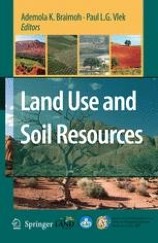
Land Use and Soil Resources
Land-use change is one of the main drivers of many environmental change processes. It influences the basic resources of land use, including the soil. Its impact on soil often occurs so creepingly that land managers hardly contemplate initiating ameliorative or counterbalance measures. Poor land management has degraded vast amounts of land, reduced our ability to produce enough food, and is a major threat to rural livelihoods in many developing countries. To date, there has been no single unifying volume that addresses the multifaceted impacts of land use on soils. This book has responded to this challenge by bringing together renowned academics and policy experts to analyze the patterns, driving factors and proximate causes, and the socioeconomic impacts of soil degradation. Policy measures to prevent irreversible degradation and rehabilitate degraded soils are also identified.
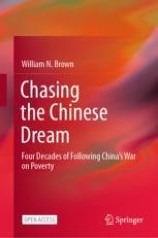
Chasing the Chinese dream : Four decades of following China’s war on poverty
This book explores the historical, cultural and philosophical contexts that have made anti-poverty the core of Chinese society since Liberation in 1949, and why poverty alleviation measures evolved from the simplistic aid of the 1950s to Xi Jinping’s precision poverty alleviation and its goal of eliminating absolute poverty by 2020. The book also addresses the implications of China’s experience for other developing nations tackling not only poverty but such issues as pandemics, rampant urbanization and desertification exacerbated by global warming. The first of three parts draws upon interviews of rural and urban Chinese from diverse backgrounds and local and national leaders. These interviews, conducted in even the remotest areas of the country, offer candid insights into the challenges that have forced China to continually evolve its programs to resolve even the most intractable cases of poverty.
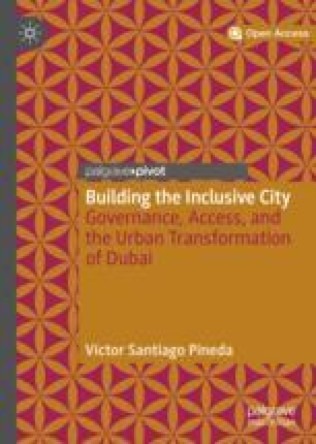
Building the Inclusive City : Governance, Access, and the Urban Transformation of Dubai
This book is an anthropological urban study of the Emirate of Dubai, its institutions, and their evolution. It provides a contemporary history of disability in city planning from a non-Western perspective and explores the cultural context for its positioning. Three insights inform the author’s approach. First, disability research, much like other urban or social issues, must be situated in a particular place
Advances in Urban Ecology : Integrating Humans and Ecological Processes in Urban Ecosystems
The future of Earth’s ecosystems is increasingly influenced by the pace and patterns of urbanization. One of the greatest challenges for natural and social scientists is to understand how urbanizing regions evolve through the complex interactions between humans and ecological processes. Questions and methods of inquiry specific to our traditional disciplinary domains yield partial views that reflect different epistemologies and understandings of the world. In order to achieve the level of synthesis required to see the urban ecosystem as a whole we must change the way we pose questions and search for answers. Cities are the result of human and ecological processes occurring simultaneously in time and in space and the legacy of the simultaneous processes of the past. Urban ecology is the study of the co-evolution of human-ecological systems. Scholars of both urban systems and ecology must challenge the assumptions and world views within their disciplines and work towards a hybrid theory that builds on multiple world views.
