



الصفحة 1
الصفحة 1

Neighbourhoods in Transition : Brownfield Regeneration in European Metropolitan Areas
This book is focused on the intersection between urban brownfields and the sustainability transitions of metreopolitan areas, cities and neighbourhoods. It provides both a theoretical and practical approach to the topic, offering a thorough introduction to urban brownfields and regeneration projects as well as an operational monitoring tool.
Migration, urbanity and cosmopolitanism in a globalized world
This book draws a theoretically productive triangle between urban studies, theories of cosmopolitanism, and migration studies in a global context. It provides a unique, encompassing and situated view on the various relations between cosmopolitanism and urbanity in the contemporary world.

Introduction to space syntax in urban studies
This textbook is a comprehensive introduction to space syntax method and theory for graduate students and researchers. It provides a step-by-step approach for its application in urban planning and design. This textbook aims to increase the accessibility of the space syntax method for the first time to all graduate students and researchers who are dealing with the built environment, such as those in the field of architecture, urban design and planning, urban sociology, urban geography, archaeology, road engineering, and environmental psychology. Taking a didactical approach, the authors have structured each chapter to explain key concepts and show practical examples followed by underlying theory and provided exercises to facilitate learning in each chapter

Innovative Models for Sustainable Development in Emerging African Countries
Explores key issues and presents recent case studies in areas of importance for the transition to a circular model of development in emerging African countries that will minimize resource consumption and waste production.

Innovation Capacity and the City : The Enabling Role of Design
This book represents one of the key milestones of DESIGNSCAPES: value creation through design-enabled innovation”. The book demonstrates that adopting design allows us to embed innovation within the city so as to arrive at feasible answers to complex global challenges. In this way, innovation can become disruptive, while also sparking a dynamic of gradual change in the “urbanscape” it acts within. To explore this potential, the book puts forward the concept of “design enabled innovation in urban environments” and examines the part that the city can play in promoting and facilitating the adoption of design among public and private sector innovators. This leads to a potential evaluation framework in which a given urbanscape is assessed both in terms of its capacity for generating innovation, and of the nature (more or less design-dependent or design-prone) of the innovative initiatives it hosts. This thread of reasoning holds many promising implications, including a possible “third way” between those who dream of an alternative economic model where revenues and growth are sacrificed on the altar of social and environmental respect, and the supporters of the traditional market-based view, who feel it is enough to add a touch of responsibility and concern to a system that should continue rewarding the profitability of innovations.

Housing Estates in the Baltic Countries : The Legacy of Central Planning in Estonia, Latvia and Lithuania
This book focuses on the formation and later socio-spatial trajectories of large housing estates in the Baltic countries—Estonia, Latvia, and Lithuania. It also explores claims that a distinctly “westward-looking orientation” in their design produced housing estates that were superior in design to those produced elsewhere in the Soviet Union. The first two parts of the book provide contextual material to help readers understand the vision behind housing estates in Estonia, Latvia, and Lithuania. These sections present the background of housing estates in the Baltic Republics as well as challenges and debates concerning their formation, evolution, and present condition and importance.

Hot Property : The Housing Market in Major Cities
This book discusses booming housing markets in cities around the globe, and the resulting challenges for policymakers and central banks. Cities are booming everywhere, leading to a growing demand for urban housing. In many cities this demand is out-pacing supply, which causes house prices to soar and increases the pressure on rental markets. These developments are posing major challenges for policymakers, central banks and other authorities responsible for ensuring financial stability, and economic well-being in general. This volume collects views from high-level policymakers and researchers, providing essential insights into these challenges, their impact on society, the economy and financial stability, and possible policy responses. The respective chapters address issues such as the popularity of cities, the question of a credit-fueled housing bubble, the role of housing supply frictions and potential policy solutions. Given its scope, the book offers a revealing read and valuable guide for everyone involved in practical policymaking for housing markets, mortgage credit and financial stability.

European Metropolitan Housing Markets
This book provides a comprehensive analysis of housing theory and policy with a focus on metropolitan regions. The results are based on case studies of twelve European metropolitan regions, including expert panels organized in each. Using an approach from the field of industrial economics, the analysis is divided into the three related stages "structure", "conduct" and "performance." The essential idea is that the structure of a market, defined by market conditions, market growth, forms of competition and control, influences the economic behavior of both companies and households. The effects of this behavior can be observed in the development of prices; exchanged, constructed and maintained housing quantities; location patterns and choice of space.

Eco-design of buildings and infrastructure : developments in the period 2016–2020
Reviews the second five-year sequence of the Chair, first presenting methodological advances in eco-design: life cycle assessment and quantification of uncertainties; local environmental impacts of transport and biodiversity. The interdisciplinary partnership, also associating the human sciences, shows its interest in taking into account the human factor in the modelling of urban systems. This modelling is based on several numerical simulation tools, presented in the third part.

Creating great places : Evidence-based urban design for health and wellbeing
Reminds us that theory is a powerful starting point. Drawing on international research, illustrated case studies, personal experiences, as well as fascinating examples from history and pop culture, this practical book provides the reader with inspiration, guidance and tools. The first section outlines six critical theories for contemporary urban design - affordance, prospect-refuge, personal space, sense of place/genius loci, place attachment, and biophilic design. The second section, using their innovative 'theory-storming' process, demonstrates how designers can create great places that are inclusive, sustainable, and salutogenic.

Contemporary Housing Struggles : A Structural Field of Contention Approach
This book provides a comparative study of housing contention in Budapest and Bucharest in 2008-2021. The financialization of housing and the resulting inequalities, expulsions and social contention are a central characteristic of today’s capitalist crisis. These two East European cities that fall outside the usual focus of urban movements research provide an illuminating case of similar structural conditions governed by different political constellations at the national and local scales. Instead of searching for unilinear narratives connecting structural tensions to politicized claims, the book offers an in-depth contextual analysis of multiple forms of contention, their (often unintentional) interactions, and their broader political-structural background, including tensions surrounded by political silence.

Landscape Performance Modeling Using Rhino and Grasshopper
A guidebook for landscape architects to learn the fundamental practices and use of the computational software Rhino 3D and the plugin Grasshopper for parametric modeling, landscape inventory, and performative analysis. This process visually connects intangible and abstract information with physical and spatial relationships to signify the impact ecological, climate, and cultural factors have on landscape performance and decision making.
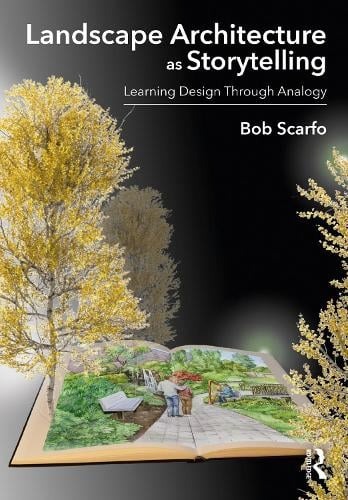
Landscape Architecture as Storytelling : Learning Design Through Analogy
Introduces a comfortable approach to learning landscape architectural design free of design jargon and derived from their existing knowledge. A step-by-step process has readers consider their knowledge of language as metaphorically related to basic design and landscape design. Through information delivery and questioning processes, readers build on what they already know, their tacit understanding of language as applied to problem solving and storytelling. Everyone is a storyteller.
Chasing the Chinese dream : Four decades of following China’s war on poverty
This book explores the historical, cultural and philosophical contexts that have made anti-poverty the core of Chinese society since Liberation in 1949, and why poverty alleviation measures evolved from the simplistic aid of the 1950s to Xi Jinping’s precision poverty alleviation and its goal of eliminating absolute poverty by 2020. The book also addresses the implications of China’s experience for other developing nations tackling not only poverty but such issues as pandemics, rampant urbanization and desertification exacerbated by global warming. The first of three parts draws upon interviews of rural and urban Chinese from diverse backgrounds and local and national leaders. These interviews, conducted in even the remotest areas of the country, offer candid insights into the challenges that have forced China to continually evolve its programs to resolve even the most intractable cases of poverty.
Building the Inclusive City : Governance, Access, and the Urban Transformation of Dubai
This book is an anthropological urban study of the Emirate of Dubai, its institutions, and their evolution. It provides a contemporary history of disability in city planning from a non-Western perspective and explores the cultural context for its positioning. Three insights inform the author’s approach. First, disability research, much like other urban or social issues, must be situated in a particular place
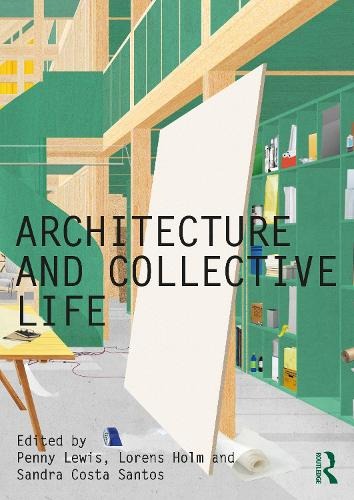
Architecture and Collective Life
Addresses the changing nature of public life alongside an analysis of changes in the architectural profession. Contains thought-provoking chapters from some of the disciplines' leading thinkers and draws together new research that helps us to look again at the question of urban development. Focuses on the link between architecture, urban theory and societal ideas.
AiREAS : Sustainocracy for a healthy city : Phase 3 : Civilian participation – Including the global health deal proposition
This volume describes phase 3 of the AiREAS multidisciplinary cocreation effort to produce a Healthy City. Phase 1 referred to making visible the invisible from an air quality and human exposure perspective. Phase 2 studies air quality related to health and Phase 3 looks at air quality, health and lifestyle from the perspective of persuasion to innovative change. The three books together describe the coming about and first results of the AiREAS "healthy city" cooperative in the city of Eindhoven and Province of North Brabant in the Netherlands. AiREAS is an initiative focused on the multidisciplinary co-creation of healthy cities using the core human value of human health and air quality as guiding principle for profound regional innovation.
