



الصفحة 1
الصفحة 1

Framing in Sustainability Science : Theoretical and Practical Approaches
This book offers both conceptual and empirical descriptions of how to “frame” sustainability challenges. It defines “framing” in the context of sustainability science as the process of identifying subjects, setting boundaries, and defining problems. The chapters are grouped into two sections: a conceptual section and a case section.

Ecologies design : Transforming architecture, landscape, and urbanism
Ecologies Design challenges professionals and academics to expand the concept of applying and understanding ecologies, both biological and social, in multi-disciplinary spatial design contexts. This book will be of great interest to academics and professionals within ecology and design.

Drawing the Ground - Landscape Urbanism Today : The Work of Palmbout Urban Landscapes
Documents some fifteen projects organized into six thematic blocks, including such extensive projects as Amsterdam Ijburg, a design for an urban extension to Amsterdam with a total area of 450 hectares, 18,000 residences, 100,000 square meters of office space, 30,000 square meters of stores, and other facilities, and Maastricht Belvedere, a restructuring of 280 hectares of a former industrial site with 4,000 residences, 100,000 square meters of office space, parking lots, and a vehicle bridge.

Drawing Architecture : The beginner's guide to drawing and painting buildings
A comprehensive and practical guide full of advice and inspiration for anyone wishing to capture the beauty of the urban landscape. The wonderful thing about drawing buildings is that, wherever you travel around the globe, you will never be short of subjects to inspire you. From the most elaborate of Renaissance cathedrals, through to the humble garden shed, you will always be able to practise your skills and learn a few techniques in the process. This hands-on and inspirational book will encourage you to meet the exciting challenges of drawing and painting buildings using a variety of media and a wide range of techniques, including pencil, pen, graphite powder, watercolour, water-soluble pencils and Indian ink. As you work through this book, you will look at materials and their qualities then move on to explore how to put these materials to best use when drawing specific types of building. You will be led gently through levels of learning, with easy and more challenging exercises progressing your knowledge and developing your skills. As the book is divided into discrete sections, you can dip in to a particular type of building that you wish to draw, and use the information and illustration provided, while extended teaching exercises take you through the way the author approaches composing and completing a drawing.

Conceptual Landscapes : Fundamentals in the Beginning Design Process
Explores the dilemma faced in the early moments of design thinking through a gradient of work in landscape and environmental design media by both emerging and well-established designers and educators of landscape architecture. It questions where and, more importantly, how the process of design starts. Deconstructs the steps of conceptualizing design in order to reignite pedagogical discussions about timing and design fundamentals, and to reveal how the spark of an idea happens – from a range of unique perspectives. Through a careful arrangement of visual essays that integrate analog, digital, and mixed-media works and processes, the book highlights differences between diverse techniques and triggers debate between design, representation, technology, and creative culture in the field.

Coastal architectures and politics of tourism : Leisurescapes in the global sunbelt
Offers a critical and complicated picture of how leisure tourism connected the world after the World War II, transforming coastal lands, traditional societies, and national economies in new ways. Analyzes selected case studies of architectures and landscapes around the world, contextualizing them within economic geographies of national development, the geopolitics of the Cold War, the legacies of colonialism, and the international dynamics of decolonization. Postwar leisure tourism evokes a rich array of architectural spaces and altered coastal landscapes, which is explored in this collection through discussions of tourism developments in the Mediterranean littoral, such as Greece, Turkey, and southern France, as well as compelling analyses of Soviet bloc seaside resorts along the Black Sea and Baltic coasts, and in beachscapes and tourism architectures of western and eastern hemispheres, from Southern California to Sri Lanka, South Korea, and Egypt.
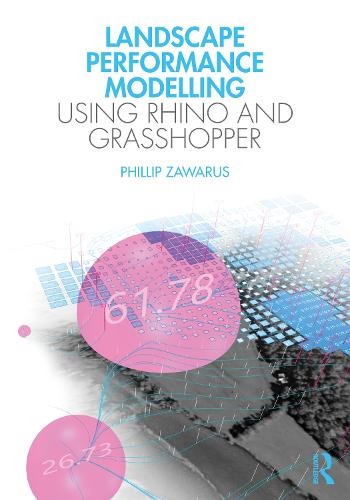
Landscape Performance Modeling Using Rhino and Grasshopper
A guidebook for landscape architects to learn the fundamental practices and use of the computational software Rhino 3D and the plugin Grasshopper for parametric modeling, landscape inventory, and performative analysis. This process visually connects intangible and abstract information with physical and spatial relationships to signify the impact ecological, climate, and cultural factors have on landscape performance and decision making.
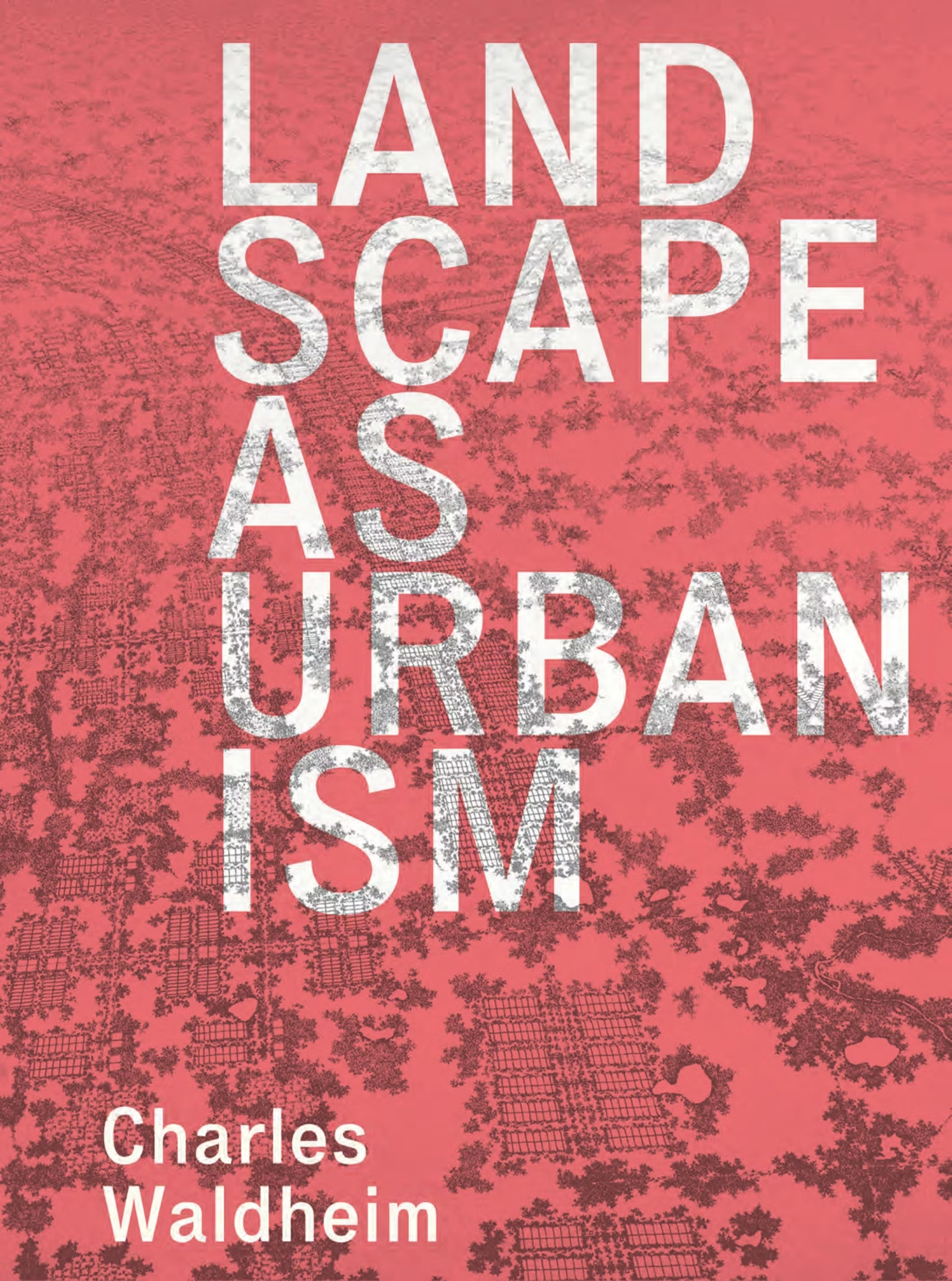
Landscape as Urbanism : A General Theory
Traces the roots of landscape as a form of urbanism from its origins in the Renaissance through the twentieth century. Growing out of progressive architectural culture and populist environmentalism, the concept was further informed by the nineteenth-century invention of landscape architecture as a "new art" charged with reconciling the design of the industrial city with its ecological and social conditions. In the late twentieth and early twenty-first centuries, as urban planning shifted from design to social science, and as urban design committed to neotraditional models of town planning, landscape urbanism emerged to fill a void at the heart of the contemporary urban project.
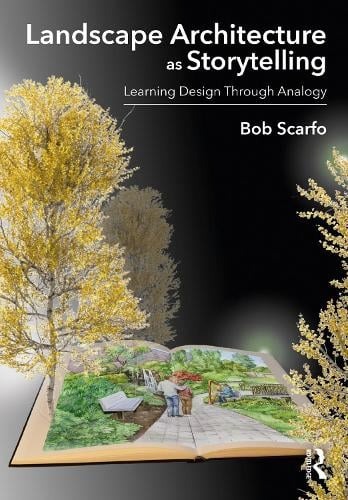
Landscape Architecture as Storytelling : Learning Design Through Analogy
Introduces a comfortable approach to learning landscape architectural design free of design jargon and derived from their existing knowledge. A step-by-step process has readers consider their knowledge of language as metaphorically related to basic design and landscape design. Through information delivery and questioning processes, readers build on what they already know, their tacit understanding of language as applied to problem solving and storytelling. Everyone is a storyteller.
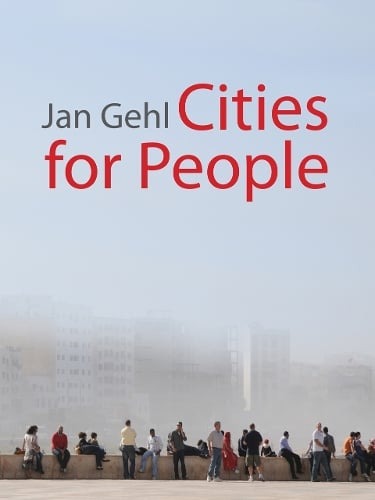
Cities for people
Presents latest work creating (or recreating) cityscapes on a human scale. He clearly explains the methods and tools he uses to reconfigure unworkable cityscapes into the landscapes he believes they should be: cities for people. Taking into account changing demographics and changing lifestyles, Gehl emphasizes four human issues that he sees as essential to successful city planning. He explains how to develop cities that are lively, safe, sustainable, and healthy. Focusing on these issues leads Gehl to think of even the largest city on a very small scale. For Gehl, the urban landscape must be considered through the five human senses and experienced at the speed of walking rather than at the speed of riding in a car or bus or train. This small-scale view, he argues, is too frequently neglected in contemporary projects. In a final chapter, Gehl makes a plea for city planning on a human scale in the fast-growing cities of developing countries.
