



الصفحة 1
الصفحة 1

Neighbourhoods in Transition : Brownfield Regeneration in European Metropolitan Areas
This book is focused on the intersection between urban brownfields and the sustainability transitions of metreopolitan areas, cities and neighbourhoods. It provides both a theoretical and practical approach to the topic, offering a thorough introduction to urban brownfields and regeneration projects as well as an operational monitoring tool.

Introduction to space syntax in urban studies
This textbook is a comprehensive introduction to space syntax method and theory for graduate students and researchers. It provides a step-by-step approach for its application in urban planning and design. This textbook aims to increase the accessibility of the space syntax method for the first time to all graduate students and researchers who are dealing with the built environment, such as those in the field of architecture, urban design and planning, urban sociology, urban geography, archaeology, road engineering, and environmental psychology. Taking a didactical approach, the authors have structured each chapter to explain key concepts and show practical examples followed by underlying theory and provided exercises to facilitate learning in each chapter

Innovation Capacity and the City : The Enabling Role of Design
This book represents one of the key milestones of DESIGNSCAPES: value creation through design-enabled innovation”. The book demonstrates that adopting design allows us to embed innovation within the city so as to arrive at feasible answers to complex global challenges. In this way, innovation can become disruptive, while also sparking a dynamic of gradual change in the “urbanscape” it acts within. To explore this potential, the book puts forward the concept of “design enabled innovation in urban environments” and examines the part that the city can play in promoting and facilitating the adoption of design among public and private sector innovators. This leads to a potential evaluation framework in which a given urbanscape is assessed both in terms of its capacity for generating innovation, and of the nature (more or less design-dependent or design-prone) of the innovative initiatives it hosts. This thread of reasoning holds many promising implications, including a possible “third way” between those who dream of an alternative economic model where revenues and growth are sacrificed on the altar of social and environmental respect, and the supporters of the traditional market-based view, who feel it is enough to add a touch of responsibility and concern to a system that should continue rewarding the profitability of innovations.

Human-Nature Interactions : Exploring Nature’s Values Across Landscapes
Highlights how humans value nature, the opportunities and challenges in changing socio-ecological systems / Provides insights into concepts and methods to study human-nature relationships, designed for a broad audience / Focus on integrative approaches exploring interactions across different scales, intensity levels and landscapes

Housing Estates in the Baltic Countries : The Legacy of Central Planning in Estonia, Latvia and Lithuania
This book focuses on the formation and later socio-spatial trajectories of large housing estates in the Baltic countries—Estonia, Latvia, and Lithuania. It also explores claims that a distinctly “westward-looking orientation” in their design produced housing estates that were superior in design to those produced elsewhere in the Soviet Union. The first two parts of the book provide contextual material to help readers understand the vision behind housing estates in Estonia, Latvia, and Lithuania. These sections present the background of housing estates in the Baltic Republics as well as challenges and debates concerning their formation, evolution, and present condition and importance.

Greening the Greyfields : New Models for Regenerating the Middle Suburbs of Low-Density Cities
This book outlines new concepts, development models, governance and implementation processes capable of addressing the challenges of transformative urban regeneration of cities at precinct scale.

Geographies of Schooling
This book explores the complex relationship between schooling as a set of practices embedded in educational institutions and their specific spatial dimensions from different disciplinary perspectives.The book covers a broad range of topics, all examined from a spatial perspective: the governance of schooling, the transition processes of and within national school systems, the question of small schools in peripheral areas as well as the embeddedness of schooling in broader processes of social change. Transcending disciplinary boundaries, the book offers deep insights into current theoretical debates and empirical case studies within the broad research field encompassing the complex relationship between education and space.

Fundamental Trends in City Development
This book inquires into how the city can be re-established as the space of dialogue and communication, how the spatial conditions of the public sphere can be created and the city retrieved. And what the features might be of a city retrieved and restored to its citizens. The book adopts the concept of externity as an innovative element for the project for the city, a constituent feature of all those situations traditionally considered non-functional, therefore external, to our contemporary post-cities, which are consigned to us adrift through decomposition, genericity and segregation. We thus need to try to get the city to conserve and show its past even when not visible, and to continue nurturing the imagination of its inhabitants by urban action consisting perhaps of subtly improving their approach to the "void", the "small", to the past, the territory, in general, to all those spatial concepts which are in a sense external to our cultural worlds today, but which represent the most fertile material for the project for the city.

Designing sustainable cities
Emphasizes new ways of designing for a sustainable city and urban environment. From several angles the future of our urbanism is illuminated. From a philosophical point of view, the city is seen as an organism, following complex ecosystemic principles, shining light on indigenous perspectives to become beneficial for sustainable design and core questions are asked whether current architectural practice is really sustainable. Simultaneously concrete practices are presented for cities in transformation, focusing on green infrastructure, smart city principles and health.

Data augmented design : Embracing new data for sustainable urban planning and design
This book offers an essential introduction to a new urban planning and design methodology called Data Augmented Design (DAD) and its evolution and progresses, highlighting data driven methods, urban planning and design applications and related theories. The authors draw on many kinds of data, including big, open, and conventional data, and discuss cutting-edge technologies that illustrate DAD as a future-oriented design framework in terms of its focus on multi-data, multi-method, multi-stage and multi-scale sustainable urban planning. In four sections and ten chapters, the book presents case studies to address the core concepts of DAD, the first type of applications of DAD that emerged in redevelopment-oriented planning and design, the second type committed to the planning and design for urban expansion, and the future-oriented applications of DAD to advance sustainable technologies and the future structural form of the built environment. The book is geared towards a broad readership, ranging from researchers and students of urban planning, urban design, urban geography, urban economics, and urban sociology, to practitioners in the areas of urban planning and design.

Creating great places : Evidence-based urban design for health and wellbeing
Reminds us that theory is a powerful starting point. Drawing on international research, illustrated case studies, personal experiences, as well as fascinating examples from history and pop culture, this practical book provides the reader with inspiration, guidance and tools. The first section outlines six critical theories for contemporary urban design - affordance, prospect-refuge, personal space, sense of place/genius loci, place attachment, and biophilic design. The second section, using their innovative 'theory-storming' process, demonstrates how designers can create great places that are inclusive, sustainable, and salutogenic.
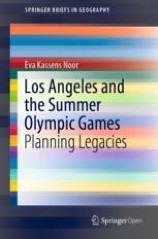
Los Angeles and the Summer Olympic Games : Planning Legacies
This book describes the three planning approaches and legacy impacts for the Olympic Games in one locale: the city of Los Angeles, USA.
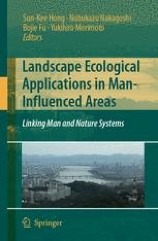
Landscape Ecological Applications in Man-Influenced Areas : Linking Man and Nature Systems
This book also includes several case studies concerning landscape analysis and evaluation using spatial analysis and landscape modelling for establishing sustainable management strategy in urban and agricultural landscapes. The subtitle of the book suggests the integrative and ubiquitous landscape planning considering harmony of man and nature systems in the socio-economic and cultural background.
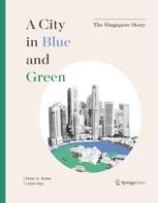
A City in Blue and Green : The Singapore Story
Highlights Singapore’s development into a city in which water and greenery, along with associated environmental, technical, social and political aspects have been harnessed and cultivated into a liveable sustainable way of life. It is also a story about a unique and thoroughgoing approach to large-scale and potentially transferable water sustainability, within largely urbanized circumstances, which can be achieved, along with complementary roles of environmental conservation, ecology, public open-space management and the greening of buildings, together with infrastructural improvements.
