



الصفحة 1
الصفحة 1

Ontologies for Urban Development
Action C21 of the European programme for Cooperation in the field of Scientific and Technical Research (COST—http://www.cost.esf.org/) is dedicated to investigating urban ontologies for an improved communication in urban civil engineering projects. The Action, known informally as "Towntology", brings together a large and heterogeneous grouping from across Europe, whose interests range from construction to urban tourism and from transport infrastructure to resource visualisation. On 6-7 November 2006, in Geneva, the Action convened a successful workshop to address emerging issues in the field. This volume presents the contributions to that workshop, in many cases revised afterwards to capture some of the outcomes of discussion.

New metropolitan perspectives : Knowledge dynamics, innovation-driven policies towards the territories’ attractiveness ; Vol.1
This book presents the outcomes of the symposium “NEW METROPOLITAN PERSPECTIVES,” held at Mediterranea University, Reggio Calabria, Italy on May 26–28, 2020.

Neighbourhoods in Transition : Brownfield Regeneration in European Metropolitan Areas
This book is focused on the intersection between urban brownfields and the sustainability transitions of metreopolitan areas, cities and neighbourhoods. It provides both a theoretical and practical approach to the topic, offering a thorough introduction to urban brownfields and regeneration projects as well as an operational monitoring tool.
Innovations in Design & Decision Support Systems in Architecture and Urban Planning
Traditionally, the DDSS conferences aim to be a platform for both starting and experienced researchers who focus on the development and application of computer support in urban planning and architectural design. This volume contains 31 peer reviewed papers from this year’s conference. This book will bring researchers together and is a valuable resource for their continuous joint effort to improve the design and planning of our environment.

Greening the Greyfields : New Models for Regenerating the Middle Suburbs of Low-Density Cities
This book outlines new concepts, development models, governance and implementation processes capable of addressing the challenges of transformative urban regeneration of cities at precinct scale.
Globalization and Urban Development
Most research on globalization has focused on macroeconomic and economy-wide consequences. This book explores an under-researched area, the impacts of globalization on cities and national urban hierarchies, especially but not solely in developing countries. Most of the globalization-urban research has concentrated on the "global cities" (e.g. New York, London, Paris, Tokyo) that influence what happens in the rest of the world. In contrast, this research looks at the cities at the receiving end of the forces of globalization. The general finding is that large cities, on balance, benefit from globalization, although in some cases at the expense of widening spatial inequities.

Fish, Fishing and Community in North Korea and Neighbours : Vibrant Matter(s)
This book explores the histories and geographies of fishing in North Korea and the surrounding nations.

Essentials of Urban Design
Explains the fundamental concepts of urban design, providing the understanding and tools needed to achieve better design outcomes. It is equally useful for designing places and evaluating designs.

Essential Urban Design : A Handbook for Architects, Designers and Planners
Shaping our cities, streets and public spaces, urban design informs the places we live. It is a complex multi-disciplinary process, requiring the input of a wide variety of stakeholders and design and construction professionals. Each urban project invariably throws up a new set of problems and strategic decisions for the design team. This guide distils the essential information required for the expert direction of the day-to-day work of urban design, from strategic design to masterplanning through to character assessment and collaboration. Compact and accessible with over 250 hand-drawn figures and plans, it's the perfect everyday companion for junior practitioners and experienced heads alike across the built environment.

Enterprising worlds : A geographic perspective on economics, environments & ethics
Enterprising World represents the culmination of several years of work by geographers, planners, and economists. The chapters included in this volume represent the collective efforts of the International Geographical Union’s Commission on the Dynamics of Economic Spaces. This collection is the result of the 2005 annual meeting in Toledo, Ohio (USA). The chapters have been selected based on their contribution to the broader community of economic geographers and policymakers and to demonstrate the inherent interconnectedness of these themes (and at times the conceptual tension that exists between ethics, economics, and the environment) insofar as these important issues shape the contours and cleavages of contemporary regional development.

Eco-design of buildings and infrastructure : developments in the period 2016–2020
Reviews the second five-year sequence of the Chair, first presenting methodological advances in eco-design: life cycle assessment and quantification of uncertainties; local environmental impacts of transport and biodiversity. The interdisciplinary partnership, also associating the human sciences, shows its interest in taking into account the human factor in the modelling of urban systems. This modelling is based on several numerical simulation tools, presented in the third part.

Designing sustainable and resilient cities : Small interventions for stronger urban food-water-energy management
Explores the link between the food-water-energy nexus and sustainability, and the extraordinary value that small tweaks to this nexus can achieve for more resilient cities and communities. Using data from Urban Living Labs in six participating cities (Eindhoven, Gdansk, Miami, Southend-on-Sea, Taipei and Uppsala) to co-define context-specific challenges, the results from each city are collated into an Integrated Decision Support System to guide and improve robust decision making on future urban development. The book presents contributions from CRUNCH, a transdisciplinary team of scholars and practitioners whose expertise spans urban climate modelling; food, water and energy management; the design of resilient public space; collecting better urban data; and the development of smart city technology. Whilst previous works on the food-water-energy nexus have focused on large, transnational cases, this book explores local ways to use the food-water-energy nexus to improve urban resilience.
Designing healthy and liveable cities : Creating sustainable urban regeneration
Aim of this book is, after the definition of the field of investigation concerning sustainable regeneration trough topics such as resilience, adaptation, health and mixed connections, to illustrate the present-day approaches to the analysis and design of healthy places, and in particular the original Healthy Pl@ce Design method, flexible and repeatable in different contexts. The method aims at: identifying sustainable urban liveability and healthy and the factors which make places liveable and healthy from the user's point of view and identifying design interventions to enhance or create both urban liveability and health. Emblematic case studies carried out in Europe, USA and China - Bordeaux, Copenhagen, Hamburg, Madrid, Newcastle, Nice, Dublin, Vancouver and Wuhan - constitute the empirical part of the Book detailed with surveys, questionnaires, images and maps.

Collapsing Structures and Public Mismanagement
This book demonstrates how accidents happen, how social processes are fundamental to their occurrence, and how learning and inference about their causes is a core public management function. Along the way, Seibel masterfully musters evidence from a multitude of sources to painstakingly document both bridge and building failures and the organizational pathologies that accompany them. This is a must-read for those who want to better understand such 'black swan' events and the search for resilience.

Coastal architectures and politics of tourism : Leisurescapes in the global sunbelt
Offers a critical and complicated picture of how leisure tourism connected the world after the World War II, transforming coastal lands, traditional societies, and national economies in new ways. Analyzes selected case studies of architectures and landscapes around the world, contextualizing them within economic geographies of national development, the geopolitics of the Cold War, the legacies of colonialism, and the international dynamics of decolonization. Postwar leisure tourism evokes a rich array of architectural spaces and altered coastal landscapes, which is explored in this collection through discussions of tourism developments in the Mediterranean littoral, such as Greece, Turkey, and southern France, as well as compelling analyses of Soviet bloc seaside resorts along the Black Sea and Baltic coasts, and in beachscapes and tourism architectures of western and eastern hemispheres, from Southern California to Sri Lanka, South Korea, and Egypt.
City Logistics 3 : Towards sustainable and liveable cities
Presents recent advances in modelling, planning and evaluating city logistics for sustainable and liveable cities based on the application of ICT (Information and Communication Technology) and ITS (Intelligent Transport Systems). It highlights modelling the behaviour of stakeholders who are involved in city logistics as well as planning and managing policy measures of city logistics including cooperative freight transport systems in public-private partnerships. Case studies of implementing and evaluating city logistics measures in terms of economic, social and environmental benefits from major cities around the world are also given.
City Logistics 2 : Modeling and Planning Initiatives
Presents recent advances in modelling, planning and evaluating city logistics for sustainable and liveable cities based on the application of ICT (Information and Communication Technology) and ITS (Intelligent Transport Systems). It highlights modelling the behaviour of stakeholders who are involved in city logistics as well as planning and managing policy measures of city logistics including cooperative freight transport systems in public-private partnerships. Case studies of implementing and evaluating city logistics measures in terms of economic, social and environmental benefits from major cities around the world are also given.
City Logistics 1 : New opportunities and challenges
Presents recent advances in modelling, planning and evaluating city logistics for sustainable and liveable cities based on the application of ICT (Information and Communication Technology) and ITS (Intelligent Transport Systems). It highlights modelling the behaviour of stakeholders who are involved in city logistics as well as planning and managing policy measures of city logistics including cooperative freight transport systems in public-private partnerships. Case studies of implementing and evaluating city logistics measures in terms of economic, social and environmental benefits from major cities around the world are also given.
Cities in Transition : Globalization, Political Change and Urban Development
This book was written with the aim of showing that even in the era of globalization developments appearing in cities are not subject to almost unconditional global forces. Rather, universal forces are decisive eventualities in the process of urban restructuring, often influencing its course and speed, yet developments and particularities within a city strongly influence the course of events and the extent to which negative characteristics of globalization might occur.
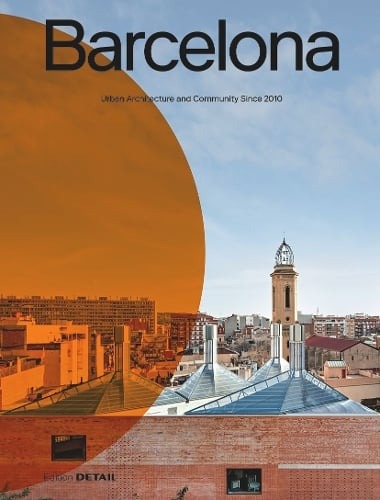
Barcelona : urban architecture and community since 2010
Highlights some of the most exciting structures built in Barcelona since 2010, bringing readers on a guided tour of surprising residential buildings, intriguing museums and extraordinary community spaces. The projects, including many additions to existing buildings, are documented with photos, floor plans and texts. Supplementary interviews introduce readers to key players in Barcelona’s architectural scene, while essays shed light on little-known aspects of the city’s urban development and transport planning.
