



الصفحة 1
الصفحة 1

One Hundred Years of Intuitionism (1907-2007) : The Cerisy Conference
With logicism and formalism, intuitionism is one of the main foundations for mathematics proposed in the twentieth century; and since the seventies, notably its views on logic have become important also outside foundational studies, with the development of theoretical computer science. The aim of the book is threefold: to review and complete the historical account of intuitionism; to present recent philosophical work on intuitionism; and to give examples of new technical advances and applications of intuitionism.

Mortality and Maldevelopment : Part I : Congenital cardiovascular malformations
The most frequent of them all are the many types of malformations of the cardiovascular system, the heart and its blood vessels.Study of these conditions during the twentieth century took many forms, revolving about examination and analysis of their causes, genetic, nongenetic, and complex. To aid in unraveling the complexities of this causation, various influences on their frequency are considered, among them social conditions, maternal health, birthweight, newborn maturity. And of course the known and possible environmental bases of their occurrence are fully described.

Modern architecture and climate design before air conditioning
explores how leading architects of the twentieth century incorporated climate-mediating strategies into their designs, and shows how regional approaches to climate adaptability were essential to the development of modern architecture. Focusing on the period surrounding World War II'before fossil-fuel powered air-conditioning became widely available'Daniel Barber brings to light a vibrant and dynamic architectural discussion involving design, materials, and shading systems as means of interior climate control. He looks at projects by well-known architects such as Richard Neutra, Le Corbusier, Lúcio Costa, Mies van der Rohe, and Skidmore, Owings, and Merrill, and the work of climate-focused architects such as MMM Roberto, Olgyay and Olgyay, and Cliff May. Drawing on the editorial projects of James Marston Fitch, Elizabeth Gordon, and others, he demonstrates how images and diagrams produced by architects helped conceptualize climate knowledge, alongside the work of meteorologists, physicists, engineers, and social scientists. Barber describes how this novel type of environmental media catalyzed new ways of thinking about climate and architectural design.
Micromanufacturing : International Research and Development
We have come to know that our ability to survive and grow as a nation to a very large degree depends upon our sci- tific progress. Moreover, it is not enough simply to keep abreast of the rest of the world in scientific matters. We 1 must maintain our leadership. President Harry Truman spoke those words in 1950, in the aftermath of World War II and in the midst of the Cold War. Indeed, the scientific and engineering leadership of the United States and its allies in the twentieth century played key roles in the successful outcomes of both World War II and the Cold War, sparing the world the twin horrors of fascism and tota- tarian communism, and fueling the economic prosperity that followed.

Intersecting colors : Josef Albers and his contemporaries
Offers a timely reappraisal of the immense impact of Albers's thinking, writing, teaching, and art on generations of students. It shows the formative influence on his work of non-scientific approaches to color (notably the work of Johann Wolfgang von Goethe) and the emergence of Gestalt psychology in the first decades of the twentieth century. The work also shows how much of Albers's approach to color-dismissed in its day by a scientific approach to the study and taxonomy of color driven chiefly by industrial and commercial interests-ultimately anticipated what neuroscience now reveals about how we perceive this most fundamental element of our visual experience.

Human Longevity, Individual Life Duration, and the Growth of the Oldest-Old Population
Old-age survival has considerably improved in the second half of the twentieth century. In this book, these fundamental questions are explored by experts from such diverse fields as biology, medicine, epidemiology, demography, sociology, and mathematics: they report on recent cutting-edge studies about essential issues of human longevity such as evolution of lifespan of species, genetics of human longevity, reasons for the recent improvement in survival of the elderly, medical and behavioral causes of deaths among very old people, and social factors of long survival in old age.

Hints on landscape gardening : together with a description of their practical application in Muskau : With the hand-colored illustrations of the atlas
Pückler’s park in Muskau served as a textbook example of park design for American students through much of the twentieth century“ (Gert Gröning). The text is completed by the 44 views and four maps of the Muskau park in the Atlas that accompanied the original edition of 1834.

Healthy Minds in the Twentieth Century : In and Beyond the Asylum
This book contributes a new dimension to the study of mental health and psychiatry in the twentieth century. It takes the present literature beyond the ‘asylum and after’ paradigm to explore the multitude of spaces that have been permeated by concerns about mental well-being and illness.

Genes, development, and cancer : The life and work of Edward B. Lewis
Edward B. Lewis' science is the bridge linking experimental genetics as conducted in the first half of the twentieth century, and the powerful molecular genetic approaches that revolutionized the field in its last quarter. For the first time Lewis' key publications in the fields of genetics, developmental biology, radiation and cancer are compiled within one volume.

Executing magic in the modern era : Criminal bodies and the Gallows in popular medicine
This book explores the magical and medical history of executions from the eighteenth to the early twentieth century by looking at the afterlife potency of criminal corpses, the healing activities of the executioner, and the magic of the gallows site. The use of corpses in medicine and magic has been recorded back into antiquity. The lacerated bodies of Roman gladiators were used as a source of curative blood, for instance. In early modern Europe, a great trade opened up in ancient Egyptian mummies and the fat of executed criminals, plundered as medicinal cure-alls. However, this is the first book to consider the demand for the blood of the executed, the desire for human fat, the resort to the hanged man’s hand, and the trade in hanging rope in the modern era. It ends by look at the spiritual afterlife of dead criminals.

Evolvable systems : From biology to hardware ; 6th International Conference, ICES 2005, Sitges, Spain, September 12-14, 2005, Proceedings
The flying machines proposed by Leonardo da Vinci in the fifteenth century, the se- reproducing automata theory proposed by John von Neumann in the middle of the twentieth century and the current possibility of designing electronic and mechanical systems using evolutionary principles are all examples of the efforts made by humans to explore the mechanisms present in biological systems that permit them to tackle complex tasks. These initiatives have recently given rise to the emergent field of b- inspired systems and evolvable hardware. The inaugural workshop, Towards Evolvable Hardware, took place in Lausanne in October 1995, followed by the successive events of the International Conference on Evolvable Systems: From Biology to Hardware, held in Tsukuba (Japan) in October 1996, in Lausanne (Switzerland) in September 1998, in Edinburgh (UK) in April 2000, in Tokyo (Japan) in October 2001, and in Trondheim (Norway) in March 2003. Following the success of these past events the sixth international conference was aimed at presenting the latest developments in the field, bringing together researchers who use biologically inspired concepts to implement real systems in artificial intelligence, artificial life, robotics, VLSI design, and related domains. The sixth conference consolidated this biennial event as a reference meeting for the community involved in bio-inspired systems research. All the papers received were reviewed by at least three independent reviewers, thus guaranteeing a high-quality bundle for ICES 2005.

Elwyn Simons : A Search for Origins
Summarizes the current state of knowledge in many aspects of primate and human evolution that have been studied by Simons and his colleagues and places it in a broader paleontological and historical perspective.A Search for Origins contains the results of new research and reviews of many of the critical issues in primate and human paleontology during the last half of the twentieth century as well as other aspects of African paleontology, geology, and primate conservation.The chapters include a wide range of important new works that are valuable contributions to the field of physical anthropology and are certain to be widely cited and used in teaching. The authors of this text are an extremely distinguished group of international authorities on all aspects of primate evolution, human evolution, and primate behavior.

Drinking in Victorian and Edwardian Britain : Beyond the Spectre of the Drunkard
Investigates the reasons why Victorians and Edwardians consumed alcohol in the ways that they did and explores the ideas about alcohol that circulated in the period. This book shows that they had many reasons for purchasing and consuming alcoholic substances and these were driven by broader social, cultural, medical and commercial factors. Although drunkenness may have been the most visible consequence of alcohol consumption, it was not the only type of drinking behaviour. Alcohol played an important social role in the everyday lives of Victorians and Edwardians where its consumption held many different meanings.

Distant Worlds : Milestones in Planetary Exploration
Peter Bond provides an overview of key, unmanned missions, chapter by chapter, to planets in the twentieth century. He tells the story of the mission planners and engineers who, working mostly in the background, made these unprecedented achievements in scientific exploration possible.

Data rights in transition
Maps the development of data rights that formed and reformed in response to the socio-technical transformations of the postwar twentieth century. The authors situate these rights, with their early pragmatic emphasis on fair information processing, as different from and less symbolically powerful than utopian human rights of older centuries

Contemporary Sociological Theory : An Integrated Multi-Level Approach
This book covers the major theoretical orientations that have been influential in American sociology since the mid-twentieth century. These include symbolic interaction, phenomenological sociology and ethnomethodology, social exchange and rational choice theories, sociology of emotions, functionalism and neofunctionalism, conflict and critical theory, selected feminist theories, structuration theory, systems theory, sociobiology, selected sociology of culture perspectives, and major themes from postmodern orientations.

Cold War Civil Defence in Western Europe : Sociotechnical Imaginaries of Survival and Preparedness
This edited collection brings together established and new perspectives on Cold War civil defence in Western Europe within a common analytical framework that also facilitates comparative and transnational dimensions. The current interest in creating disaster-resilient societies demands new histories of civil defence. Historical contextualization is essential in order to understand what is at stake in preparing, devising, and implementing forms of preparedness, protection, and security that are specifically targeted at societies and citizens. Applying the concept of sociotechnical imaginaries to civil defence history, the chapters of this volume cover a range of new themes, from technology and materiality to media, memory, and everyday experience.

Clocks in the Sky : The Story of Pulsars
In this book, Geoff McNamara explores the history, subsequent discovery and contemporary research into pulsar astronomy. The story of pulsars is brought right up to date with the announcement in 2006 of a new breed of pulsar, Rotating Radio Transients (RRATs), which emit short bursts of radio signals separated by long pauses. These may outnumber conventional radio pulsars by a ratio of four to one. Geoff McNamara ends by pointing out that, despite the enormous success of pulsar research in the second half of the twentieth century, the real discoveries are yet to be made including, perhaps, the detection of the hypothetical pulsar black hole binary system by the proposed Square Kilometre Array - the largest single radio telescope in the world.
Mathematical Events of the Twentieth Century
Russian mathematics (later Soviet mathematics, and Russian mathematics once again) occupies a special place in twentieth-century mathematics. In addition to its well-known achievements, Russian mathematics established a unique style of research based on the existence of prominent mathematical schools. These schools were headed by recognized leaders, who became famous due to their talents and outstanding contributions to science. The present collection is intended primarily to gather in one book the t- timonies of the participants in the development of mathematics over the past century. In their articles the authors have expressed their own points of view on the events that took place. The editors have not felt that they had a right to make any changes, other than stylistic ones, or to add any of their own commentary to the text. Naturally, the points of view of the authors should not be construed as those of the editors. The list of mathematicians invited to participate in the present edition was quite long.
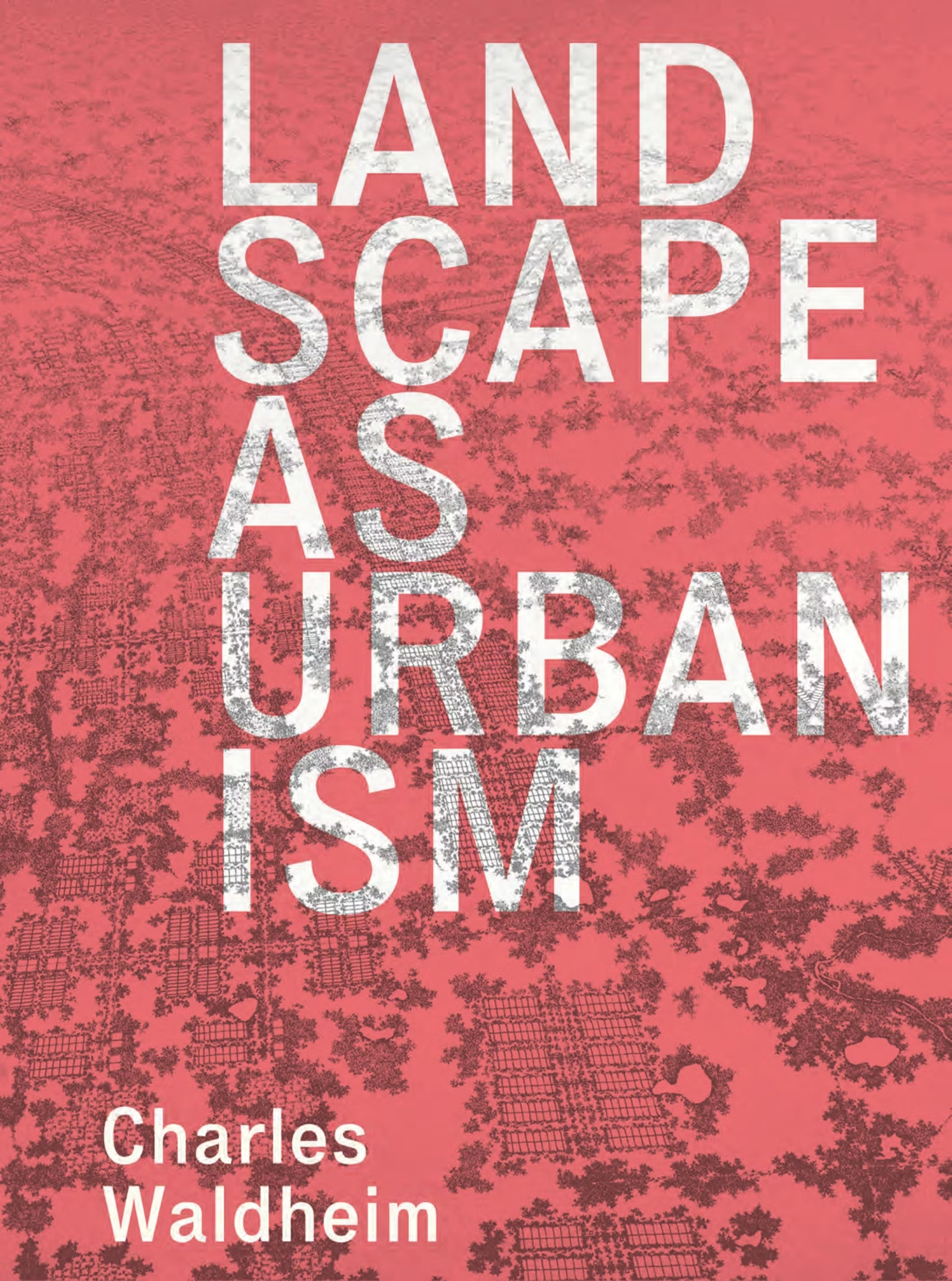
Landscape as Urbanism : A General Theory
Traces the roots of landscape as a form of urbanism from its origins in the Renaissance through the twentieth century. Growing out of progressive architectural culture and populist environmentalism, the concept was further informed by the nineteenth-century invention of landscape architecture as a "new art" charged with reconciling the design of the industrial city with its ecological and social conditions. In the late twentieth and early twenty-first centuries, as urban planning shifted from design to social science, and as urban design committed to neotraditional models of town planning, landscape urbanism emerged to fill a void at the heart of the contemporary urban project.
