



الصفحة 1
الصفحة 1
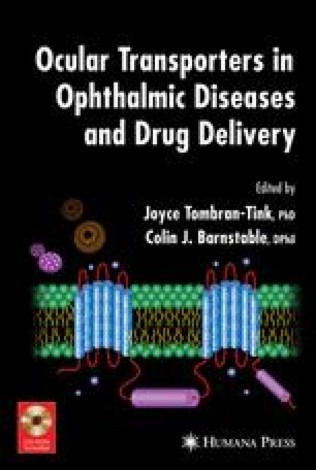
Ocular Transporters in Ophthalmic Diseases and Drug Delivery
This exceptionally important new work represents recent discoveries and advancements in the study of ocular transporters and their roles in ocular physiology, pathology, and drug delivery. Transporters are found on the membranes of cells and play a key role in transmitting signals between cells. In Ocular Transporters in Ophthalmic Diseases and Drug Delivery, a panel of distinguished authors discusses all the latest developments in the study of ocular transporters. Focusing on the molecular characteristics, localization, and substrate specificities in various compartments of the eye, this volume discusses how transporters regulate the clarity of the cornea and lens, the movements of fluids across the ciliary epithelium, and the transport of nutrients across the retinal pigment epithelium. It also provides an in-depth look at how mutations or dysfunction of specific transporters can contribute to various disorders in the eye, including blindness, and provides readers with potential targets and strategies to allow safe passage of therapeutic drugs into the eye.

Nicotinic Acetylcholine Receptor Signaling in Neuroprotection
Presents the roles and mechanisms of signal transduction triggered by nicotinic acetylcholine receptors (nAChRs) stimulation in neuroprotection against toxic effects of risk factors of neurodegenerative diseases. Accumulating evidence suggests that nAChRs in the CNS play important roles not only in excitatory neurotransmission but also in neuronal survival and related functions. Neuroprotection mediated by nAChRs in neurodegenerative diseases such as Alzheimer's disease is the major topic of this book. In response to rapidly evolving areas in clinical and laboratory neuropharmacology and neurochemistry, this volume provides in-depth coverage of neuroprotection in basic research and future developments in the clinical application of effective neuroprotective strategies in neurodegenerative diseases. This work appeals to both basic and clinical researchers in several fields, such as neuroscience, neurology, and pharmacology.

Neurotransmitter Transporters
The present volume of the Handbook of Experimental Pharmacology gives a representative survey of the current status of the structure, function, regulation and molecular pharmacology of Neurotransmitter Transporters and aims at providing an overview of insights that were generated in the past 5 years. If the volume serves as both, a useful compendium of current concepts and an inspiring starting point, it will have fulfilled its mission and will be a source for students interested in this emerging field as well as for experienced scientists looking for an update. This volume is the brainchild of the editor-in-chief of the HEP series, Klaus Starke, awe-inspiring to all pharmacologists of younger generations.

Neurochemical Aspects of Excitotoxicity
Leading researchers offer cutting-edge information on glutamate metabolism in the brain, examining the role of glutamate transporters and the involvement of glutamate receptors in the pathogenesis of acute neural trauma and neurodegenerative diseases.

Molecular microbiology of heavy metals
Molecular Microbiology of Heavy Metals includes chapters on allocation of metals in cells, metal transporter, storage and metalloregulatory proteins, cellular responses to metal ion stress, transcription of genes involved in metal ion homeostasis, uptake of essential metals, metal efflux and other detoxification mechanisms. Also discussed are metal bioreporters for the nanomolar range of concentration and tools to address the metallome. Chapters in the second part cover specific metals such as Fe, Mn, Cu, Ni, Co, Zn and Mo as key nutrient elements and Ag, As, Cd, Hg and Cr as toxic elements.

Introduction to basics of pharmacology and toxicology ; Vol.1 : General and molecular pharmacology : Principles of drug action
Illustrates the most crucial principles involved in pharmacology and allied sciences. The title begins by discussing the historical aspects of drug discovery, with up to date knowledge on Nobel Laureates in pharmacology and their significant discoveries. It then examines the general pharmacological principles - pharmacokinetics and pharmacodynamics, with in-depth information on drug transporters and interactions. In the remaining chapters, the book covers a definitive collection of topics containing essential information on the basic principles of pharmacology and how they are employed for the treatment of diseases.

Inhibitory Regulation of Excitatory Neurotransmission
This book reviews aspects of GABAA receptor function, as well as the properties of a variety of other important inhibitory proteins, such as GABAC receptors, G-protein coupled receptors (specifically, GABAB receptors, metabotropic glutamate receptors and neuropeptide receptors), glycine receptors, GABA transporters and potassium channels. In addition, the consequences of mutations that disrupt the regulation of excitatory neurotransmission, and efforts to target the GABAergic system for therapeutic benefit, are discussed.

Handbook of neurochemistry and molecular neurobiology : Neural Membranes and Transport
The first section of this volume deals with neural membranes and barriers. The second section covers ion pumps and ion transporters in neural membranes. The final section covers neural membranes and transport of neurotransmitters or other solutes.

Glutamate Receptors in Peripheral Tissue : Excitatory Transmission Outside the CNS
The book is divided into three sections— Part I is on general concepts and concentrates on the distribution and cell-specific localiza tion of glutamate receptors, their transporters, and the pharmacology in peripheral tissues and organs. Part II emphasizes the presence and implications of these receptors in specific target tissues, organs, and systems, including liver, lungs, endocrine tissues, bone, immune system, etc. Part III focuses on glutamate receptors in plants to illustrate their presence beyond the animal kingdom.
Facilitative glucose transporters in articular chondrocytes : Expression, distribution and functional regulation of GLUT isoforms by hypoxia, hypoxia mimetics, growth factors and pro-inflammatory Cytokines
In this multidisciplinary article we review the molecular and morphological aspects of GLUT expression and function in chondrocytes and their mesenchymal and embryonic stem cell precursors and propose key roles for these proteins in glucose sensing and metabolic regulation in cartilage.

Drug transporters : Molecular characterization and role in drug disposition
Drug Transporters: Molecular Characterization and Role in Drug Disposition provides in-depth analysis of the conceptual evolution and technical development for studying drug transporters. Contributions by an international panel of leading researchers address advances in transporters as drug targets, transporters in pharmacotherapy, the impact of transporters on drug efficacy and safety, the development of sophisticated model systems and sensitive assay methods, and more. Divided into two parts, the book first provides a thorough overview of relevant drug transporters before detailing the principles of drug transport and associated techniques.

Drug Targets in Kinetoplastid Parasites
The book contains 12 chapters contributed by eminent scientists working in this field. The articles deal mainly with two aspects: visual identification of targets and identification of therapeutic agents.Several targets like kDNA replication machinery, purine salvage pathway, purine and pyrimidine biosynthetic pathway, histone deacetylase, DNA topoisomerases, membrane transporter proteins, glycoproteins and glycolipids are discussed in this book. Since current treatments for kinetoplastid parasitic diseases are far from ideal, there is an urgent and genuine need to develop newer compounds as antiparasitic drug candidates. Therefore evelopment of some lead compounds against these parasites as well as drug resistance are also included in this book. Moreover the vast amount of information generated after publication of the "Trytrip" genome sequence now makes possible several new approaches for target identification and discovery of therapeutic agents. This book is an outcome of the contributions of many scientists working in this important area.

Drug repurposing : A new fashion for a new hope
The repurposing of drugs is becoming increasingly attractive as it avoids the long process and cost implications associated with bringing a novel drug to market i.e., drug repurposing is cost effective and time saving. This study will discuss the repositioning of several drugs that belong to different pharmaceutical classifications such as antimicrobials (itraconazole and fluoroquinolones), anti-diabetic agents (metformin and sodium glucose co-transporter 2 inhibitors), cardiovascular drugs (β-blockers and digoxin), anticonvulsants (topiramate), immunosuppressants (sirolimus), non-steroidal anti-inflammatory drugs (NSAIDs e.g., COX inhibitors), and cholesterol lowering drugs (statins).

Drug Metabolism, Pharmacokinetics and Bioanalysis
Drug metabolism/pharmacokinetics and drug interaction studies have been extensively carried out in order to secure the druggability and safety of new chemical entities throughout the development of new drugs. Recently, drug metabolism and transport by phase II drug metabolizing enzymes and drug transporters, respectively, as well as phase I drug metabolizing enzymes, have been studied. A combination of biochemical advances in the function and regulation of drug metabolizing enzymes and automated analytical technologies are revolutionizing drug metabolism research. There are also potential drug-drug interactions with co-administered drugs due to inhibition and/or induction of drug metabolic enzymes and drug transporters.

Drug interactions in infectious diseases : Mechanisms and models of drug interactions
Provides a comprehensive review of basic clinical pharmacology with a focus on metabolism and transporter-mediated drug interactions. The chapters address materials that cannot be retrieved easily in the medical literature, including materials focused on the complex interrelationship of acute infection, inflammation, and the risk of drug interactions in the Drug-Cytokine chapter. The Food-Drug and Herb-Drug interactions chapters remain definitive resources. A new chapter on in vitro modeling of drug interactions is included along with updates on design and data analysis of clinical drug interaction studies. Authoritative discussion of models for regulatory decision-making on drug-drug interactions provides the necessary framework to aid antimicrobial drug development. This concise review of the mechanisms and models of drug interactions provides important insights to health care practitioners as well as scientists in drug development
Cell Motility
Cell motility is a fascinating example of cell behavior which is fundamentally important to a number of biological and pathological processes. It is based on a complex self-organized mechano-chemical machine consisting of cytoskeletal filaments and molecular motors. In general, the cytoskeleton is responsible for the movement of the entire cell and for movements within the cell. The main challenge in the field of cell motility is to develop a complete physical description on how and why cells move. For this purpose new ways of modeling the properties of biological cells have to be found. This long term goal can only be achieved if new experimental techniques are developed to extract physical information from these living systems and if theoretical models are found which bridge the gap between molecular and mesoscopic length scales. Cell Motility gives an authoritative overview of the fundamental biological facts, theoretical models, and current experimental developments in this fascinating area.
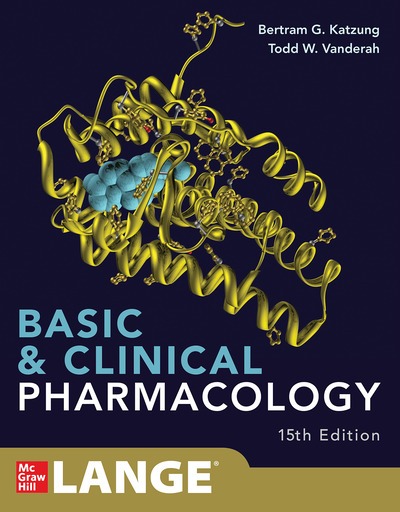
Basic & Clinical Pharmacology
Covers the important concepts students need to know about the science of pharmacology and its application to clinical practice. This edition has been extensively updated to provide expanded coverage of transporters, pharmacogenomics, and new drugs Delivers the knowledge and insight needed to excel in every facet of pharmacology!. Encompasses all aspects of medical pharmacology, including botanicals and over-the-counter drugs Major revisions of the chapters on immunopharmacology, antiseizure, antipsychotic, antidepressant, antidiabetic, anti-inflammatory, and antiviral drugs, prostaglandins, and central nervous system neurotransmitters New chapter on the increasingly relevant topic of cannabis pharmacology Each chapter opens with a case study, covers drug groups and prototypes, and closes with summary tables and diagrams that encapsulate important information Revised full-color illustrations provide more information about drug mechanisms and effects and help clarify important concepts Trade Name/Generic Name tables are provided at end of each chapter for easy reference when writing a chart order or prescription Includes descriptions of important new drugs released through May 2019 New and updated coverage of general concepts relating to recently discovered receptors, receptor mechanisms, and drug transporters
