



الصفحة 1
الصفحة 1

Online Storage Systems and Transportation Problems with Applications : Optimization Models and Mathematical Solutions
This books covers the analysis and development of online algorithms involving exact optimization and heuristic techniques, and their application to solve two real life problems. The first problem is concerned with a complex technical system: a special carousel based high-speed storage system - Rotastore. It is shown that this logistic problem leads to an NP-hard Batch PreSorting problem which is not easy to solve optimally in offline situations. The second problem originates in the health sector and leads to a vehicle routing problem. Reasonable solutions for the offline case covering a whole day with a few hundred orders are constructed with a heuristic approach, as well as by simulated annealing. Optimal solutions for typical online instances are computed by an efficient column enumeration approach leading to a set partitioning problem and a set of routing-scheduling subproblems. The latter are solved exactly with a branch-and-bound method which prunes nodes if they are value-dominated by previous found solutions or if they are infeasible with respect to the capacity or temporal constraints.

Noise and Vibration Mitigation for Rail Transportation Systems ; Proceedings of the 9th International Workshop on Railway Noise, Munich, Germany, 4 - 8 September 2007
This volume contains the contributions to the 9th International Workshop on Railway Noise, held Sept 04-08, 2007, in Munich, Germany. The workshop featured lectures by international leaders in the field of railway noise and vibration. All subjects relating to railway noise as noise sources (rolling noise, aerodynamic noise, bridge noise, sonic boom), prediction tools and theoretical models, new noise reduction, technology as well as ground-borne vibration are tackled.
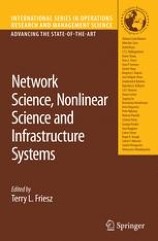
Network Science, Nonlinear Science and Dynamic Game Theory Applied to the Study of Infrastructure Systems
Network Science, Nonlinear Science and Infrastructure Systems has been written by leading scholars in these areas. Its express purpose is to develop common theoretical underpinnings to better solve modern infrastructural problems. It is felt by many who work in these fields that many modern communication problems, ranging from transportation networks to telecommunications, Internet, supply chains, etc., are fundamentally infrastructure problems. Moreover, these infrastructure problems would benefit greatly from a confluence of theoretical and methodological work done with the areas of Network Science, Dynamical Systems and Nonlinear Science. This book is dedicated to the formulation of infrastructural tools that will better solve these types of infrastructural problems.

Network Analysis : Methodological Foundations
‘Network’ is a heavily overloaded term, so that ‘network analysis’ means different things to different people. Specific forms of network analysis are used in the study of diverse structures such as the Internet, interlocking directorates, transportation systems, epidemic spreading, metabolic pathways, the Web graph, electrical circuits, project plans, and so on. There is, however, a broad methodological foundation which is quickly becoming a prerequisite for researchers and practitioners working with network models. From a computer science perspective, network analysis is applied graph theory. Unlike standard graph theory books, the content of this book is organized according to methods for specific levels of analysis (element, group, network) rather than abstract concepts like paths, matchings, or spanning subgraphs. Its topics therefore range from vertex centrality to graph clustering and the evolution of scale-free networks. In 15 coherent chapters, this monograph-like tutorial book introduces and surveys the concepts and methods that drive network analysis, and is thus the first book to do so from a methodological perspective independent of specific application areas.

Negotiations with Asymmetrical Distribution of Power : Conclusions from Dispute Resolution in Network Industries
In many ways, complex negotiations shape the business arena of regulated network markets. In general, negotiating partners are not equal with regard to their various sources and instruments of power. This book unfolds a differentiated and, at the same time, applicable framework for analyzing and managing negotiations. It creatively combines power and negotiations theories. In addition, it illustrates the findings in a very inspiring way by investigating negotiation episodes in network industries such as telecommunications and railways. Thus, this book is highly relevant for all those wanting to better understand the complex political processes and outcomes in regulated industries, but also for those bearing practical responsibility in regulatory and government affairs and wanting to improve their management performance.

Nanotechnology ¿ Toxicological Issues and Environmental Safety and Environmental Safety
Nanotechnology is one of the fastest growing technological fields of the 21st century. Nanotechnologies will impact numerous industries, including daily consumer products, health care, energy, and transportation. However, the success of the emerging nanotechnology applications will depend on dynamic development of nanomaterial toxicology, risk and exposure assessment. Little is known about the potential adverse health and ecological effects of exposure to engineered nanomaterials, the main components of many nanotechnologies. Concerns are coming from the initial toxicological studies as well as the research and epidemiological reports on ultrafine particle toxicity. This book provides a summary of the state-of-art knowledge on nanomaterials and nanoparticles – toxicological issues; risk assessment and control measures.

Nanopharmaceuticals ; Vol.1 : Expectations and realities of multifunctional drug delivery systems
Reviews advances in the drug delivery field via nanovehicles or nanocarriers that offer benefits like targeted therapy and serves as a single dose magic bullet for multiple drug delivery with improved drug efficiency at a lower dose, transportation of the drug across physiological barriers as well as reduced drug-related toxicity. The chapters are written by a diverse group of international researchers from industry and academia. The series Expectations and Realities of Multifunctional Drug Delivery Systems examines the fabrication, optimization, biological aspects, regulatory and clinical success of wide range of drug delivery carriers. This series reviews multifunctionality and applications of drug delivery systems, industrial trends, regulatory challenges and in vivo success stories. Throughout the volumes discussions on diverse aspects of drug delivery carriers, such as clinical, engineering, and regulatory, facilitate insight sharing across expertise area and form a link for collaborations between industry-academic scientists and clinical researchers. Expectations and Realities of Multifunctional Drug Delivery Systems connects formulation scientists, regulatory experts, engineers, clinical experts and regulatory stake holders. The wide scope of the book ensures it as a valuable reference resource for researchers in both academia and the pharmaceutical industry who want to learn more about drug delivery systems.

Multi-objective Management in Freight Logistics : Increasing Capacity, Service Level and Safety with Optimization Algorithms
Multi-objective Management in Freight Logistics provides decision makers with new methods and tools to implement multi-objective optimization models in logistics. The book combines theoretical aspects with applications, showing the advantages and the drawbacks of adopting scalarization techniques, and when it is worthwhile to reduce the problem to a goal programming one. The book also shows applications where more than one decision maker evaluates the effectiveness of the logistic system and thus a multilevel programming approach is sought to attain meaningful solutions.

Modern treatments for chronic blood diseases
Blood is a body fluid in humans and other animals that delivers necessary substances such as nutrients and oxygen to the cells and transports metabolic waste products away from those same cells. In vertebrates, it is composed of blood cells suspended in blood plasma. Plasma, which constitutes 55% of blood fluid, is mostly water (92% by volume), and contains proteins, glucose, mineral ions, hormones, carbon dioxide (plasma being the main medium for excretory product transportation), and blood cells themselves. Albumin is the main protein in plasma, and it functions to regulate the colloida osmotic pressure of blood. The blood cells are mainly red blood cells (also called RBCs or erythrocytes), white blood cells (also called WBCs or leukocytes) and platelets (also called thrombocytes). Thalassemias are inherited blood disorders characterized by decreased hemoglobin production Symptoms depend on the type and can vary from none to severe. Often there is mild to severe anemia (low red blood cells or hemoglobin). Anemia can result in feeling tired and pale skin. There may also be bone problems, an enlarged spleen, yellowish skin, and dark urine. Slow growth may occur in children.

Modeling and Control of Discrete-event Dynamic Systems : with Petri Nets and Other Tools
Discrete-event dynamic systems (DEDs) permeate our world, being of great importance in modern manufacturing processes, transportation and various forms of computer and communications networking. Modeling and Control of Discrete-event Dynamic Systems begins with the mathematical basics required for the study of DEDs and moves on to present various tools used in their modeling and control. Among the instruments explained are many forms of Petri net, Grafcet (the sequential function chart), state charts, formal languages and max-plus algebra; all essential for control students to become proficient with DEDs and to make use of them in practical applications.

Methods and Models in Transport and Telecommunications : Cross Atlantic Perspectives
One aspect of the new economy is a transition to a networked society, and the emergence of a highly interconnected, interdependent and complex system of networks to move people, goods and information. An example of this is the in creasing reliance of networked systems (e. g. , air transportation networks, electric power grid, maritime transport, etc. ) on telecommunications and information in frastructure. Many of the networks that evolved today have an added complexity in that they have both a spatial structure , they are located in physical space but also an a spatial dimension brought on largely by their dependence on infor mation technology. They are also often just one component of a larger system of geographically integrated and overlapping networks operating at different spatial levels. An understanding of these complexities is imperative for the design of plans and policies that can be used to optimize the efficiency, performance and safety of transportation, telecommunications and other networked systems. In one sense, technological advances along with economic forces that encourage the clustering of activities in space to reduce transaction costs have led to more efficient network structures.
Introduction to Intelligent Construction Technology of Transportation Infrastructure
Expounds on the related technologies of intelligent transportation infrastructure construction. Based on the essential characteristics of intelligent construction, "perception, analysis, decision-making, and execution," the basic structure of intelligent construction technology (ICT) is established. With the integration of engineering construction technologies, the analyses of the essence of intelligent algorithms and the feasibility of Artificial Intelligence (AI) are provided. The book introduces the essential characteristics of Big Data and the Internet of Things and their relationship with engineering construction. On this basis, the feasibility and implementation plan of intelligent technology applications in design, construction, and maintenance are analyzed and demonstrated with engineering examples.

Intelligent Mobile Robot Navigation
the book spans across different domains ranging from mobile robots to intelligent transportation systems, from automatic control to artificial intelligence.

Intelligent decision support : Current challenges and approaches
This anthology contains contributions addressing current challenges and approaches of intelligent decision support in organizations. The main foci are on: - quantitative decision problems in transportation, production, finance and marketing - business process optimization and information systems design - special problems of intelligent decision support which have their source in areas such as human resources management, information management and economic theory.
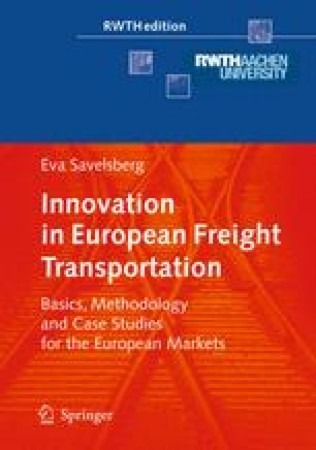
Innovation in European Freight Transportation : Basics, Methodology and Case Studies for the European Markets
Serious problems and risks can be observed in European freight transportation development. However, the transport and logistics sector shows a lack of tradition in utilising systematic innovation management to overcome these problems. Hence, this volume puts forward a specific and comprehensive Systemic Migration-Oriented Innovation Management Method.

Human reliability and error in transportation systems
Each year billions of dollars are being spent to develop, manufacture, and operate transportation systems such as aircraft, ships, trains, and motor vehicles throughout the world. During their operation thousands of lives are lost annually due to various types accidents. Needless to say, approximately 70 to 90 percent of transportation crashes are the result of human error to a certain degree. Moreover, it may be added that human errors contribute significantly to most transportation crashes across all modes of transportation. Human Reliability and Error in Transportation Systems is the first book to cover the subject of human reliability across all types of transportation systems. The material will be accessible to readers with no previous knowledge in the field, and is supported with a full explanation of the necessary mathematical concepts together with numerous examples and test problems.

Human interface and the management of information : Interacting in information environments ; Symposium on Human Interface 2007, Held as Part of HCI International 2007, Beijing, China, July 22-27, 2007, Proceedings, Part II
The 12th International Conference on Human-Computer Interaction, HCI Inter- tional 2007, was held in Beijing, P.R. This volume, edited by Michael J. Smith and Gavriel Salvendy, contains papers in the thematic area of Human Interface and the Management of Information, addressing the following major topics: • Communication and Collaboration • Knowledge, Learning and Education • Mobile Interaction • Interacting with the World Wide Web and Electronic Services • Business Management and Industrial Applications • Environment, Transportation and Safety.

Highway engineering : Planning, design, and operations ; 2nd ed.
Presents a clear and rigorous exposition of highway engineering concepts, including project development and the relationship between planning, operations, safety and highway types. The book includes important topics such as corridor selection and traverses, horizontal and vertical alignment, design controls, basic roadway design, cross section elements, intersection and interchange design, and the integration of new vehicle technologies and trends. It also presents end of chapter exercises to further aid understanding and learning. This edition has been fully updated with the current design policies and reference manuals essential for highway, transportation, and civil engineers who are required to work to these standards.

Highway
Our idea was generated as a result of the technical and technological shift in almost all industries and its endorsements in reducing costs, increasing efficiency, and serving a wider range of targeted beneficiaries. Three words this business was built on: TRUST, VALUE, and ETHICS. These words are far more endorsed than what the project might explain in terms of business methods, implementations, and processes, but the real aim whether internally or externally is to share the responsibility of improving our industries with creative, competitive ,and relabel business models that could put companies on the wheel of quality improvement and potentially wider the range of the jobs market.

Groundwater Management in Asian Cities : Technology and Policy for Sustainability
The number of city dwellers who do not have access to piped water and rely on groundwater is also increasing. In many Asian cities, groundwater is not only the source of domestic water but also an important resource for industrial development, making better management of groundwater resources essential for sustainable development. Because groundwater is easier to access and costs less than water from piped systems, groundwater abstraction cannot be easily regulated. Policies for groundwater management adopted in Japan and other Asian countries are compared, and technologies for efficient use of groundwater are elucidated. Groundwater contamination is also a serious problem that exacerbates water scarcity in Asian cities. Case studies illustrate the cause and consequences of naturally occurring contaminants such as arsenic and fluoride, and groundwater contamination due to anthropogenic contaminants is described. Also discussed are technologies for treating contaminated groundwater to reduce the health risks of drinking contaminated groundwater.
