



الصفحة 1
الصفحة 1

Transport and Town Planning : The City in Search of Sustainable Development
explores the possibilities of cities that are both more energy efficient and more respectful of the environment. Based on the observation that urban planning has been detrimentally affected by the compartmentalization of knowledge and practices, this book is conceived as a dialog between transport and urban planning on the one hand, and between engineering and social science on the other. Systemic analysis and a historical approach, integrating the teachings of the last two centuries, constitute at the methodological level the framework in which this dialog unfolds.

The Work : Architecture, Urban Design, Drawings, and Sculptures
After graduating, Krier first worked with O. M. Ungers and Frei Otto before setting up his own studios in Vienna and Berlin. He later taught at the Vienna University of Technology from 1976 to 1998 and as a visiting professor at Yale University in 1986. Drawing on a wealth of historical models and archetypal patterns, he developed new typologies of streets and public squares as an architect and urban planner, and was responsible for numerous urban development projects throughout Europe. These included the perimeter block development on Ritterstrasse for the IBA in Berlin, the residential complex on Breitenfurter Strasse in Vienna, the Kirchsteigfeld district in Potsdam, and numerous projects in the Netherlands.

Sustainable Design : Towards a New Ethic in Architecture and Town Planning
Documents the work of the prizewinners for 2007 and 2008. A first section introduces the work and thought of each architect, while a second takes an in-depth look at two or three projects that illustrate their distinctive approach. The 2007 prizewinners are Stefan Behnisch, Germany; Balkrishna Doshi, India; Françoise-Hélène Jourda, France; Hermann Kaufmann, Austria; and Wang Shu, China. For 2008, the honorees are Fabrizio Carola, Italy/Mali; Philippe Samyn, Belgium; Carin Smuts, South Africa; Andrew Freear and his Rural Studio, USA; and Alejandro Aravena for Elemental, Chile.

Roman architecture
Arranged logically in six historical sections interspersed with material on Roman architects and their techniques, the building types found in Roman cities and the different buildings found in the Roman provinces, this volume now contains the latest insights into Roman architecture and takes account of the past 20 years of scholarship. This seminal work covers the architecture of the Republic, the Age of Augustus, the imperial period, Pompeii and Ostia, the eastern and western empire, and the Late Antique period, exploring subjects such as patronage, building techniques and materials, Roman engineering, town planning and imperial propaganda in a concise and readable way.

Finding Lost Space : Theories of Urban Design
Offers a comprehensive and systematic examination of the crisis of the contemporary city and the means by which this crisis can be addressed. Finding Lost Space traces leading urban spatial design theories that have emerged over the past eighty years: the principles of Sitte and Howard; the impact of and reactions to the Functionalist movement; and designs developed by Team 10, Robert Venturi, the Krier brothers, and Fumihiko Maki, to name a few. In addition to discussions of historic precedents, contemporary approaches to urban spatial design are explored.

Enabling the City : Interdisciplinary and Transdisciplinary Encounters in Research and Practice
Focuses on how interdisciplinary and transdisciplinary processes of knowledge production may contribute to urban transformation at a local level in the 21st century, striking a balance between enthusiastic support for such transformational potential and a cautious note regarding the persistent challenges to the ethos as well as the practice of inter and transdisciplinarity. The rich stories reflect different research and local practice cultures, exploring issues such as ageing, community, health and dementia, public space, energy, mobility cultures, heritage, housing, re-use, and renewal, as well as more universal questions about urban sustainability and climate change, and perhaps most importantly, education.

Drawing the Ground - Landscape Urbanism Today : The Work of Palmbout Urban Landscapes
Documents some fifteen projects organized into six thematic blocks, including such extensive projects as Amsterdam Ijburg, a design for an urban extension to Amsterdam with a total area of 450 hectares, 18,000 residences, 100,000 square meters of office space, 30,000 square meters of stores, and other facilities, and Maastricht Belvedere, a restructuring of 280 hectares of a former industrial site with 4,000 residences, 100,000 square meters of office space, parking lots, and a vehicle bridge.
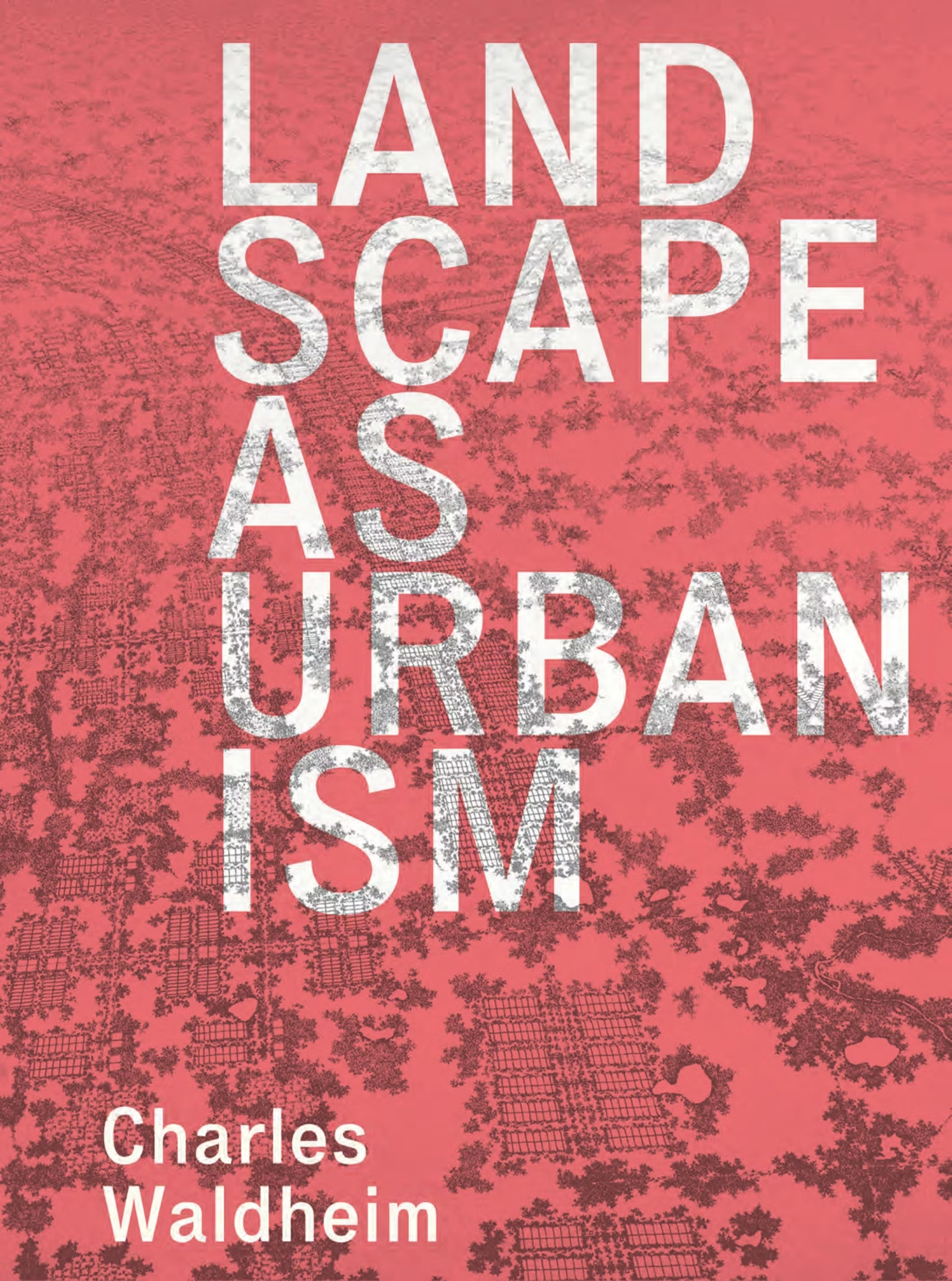
Landscape as Urbanism : A General Theory
Traces the roots of landscape as a form of urbanism from its origins in the Renaissance through the twentieth century. Growing out of progressive architectural culture and populist environmentalism, the concept was further informed by the nineteenth-century invention of landscape architecture as a "new art" charged with reconciling the design of the industrial city with its ecological and social conditions. In the late twentieth and early twenty-first centuries, as urban planning shifted from design to social science, and as urban design committed to neotraditional models of town planning, landscape urbanism emerged to fill a void at the heart of the contemporary urban project.
Cities and Affordable Housing : Planning, Design and Policy Nexus
Provides a comparative perspective on housing and planning policies affecting the future of cities, focusing on people- and place-based outcomes using the nexus of planning, design and policy. A rich mosaic of case studies features good practices of city-led strategies for affordable housing provision, as well as individual projects capitalising on partnerships to build mixed-income housing and revitalise neighbourhoods. Twenty chapters provide unique perspectives on diversity of approaches in eight countries and 12 cities in Europe, Canada and the USA.
Cities After Crisis : Reinventing Neighborhood Design from the Ground-Up
The book details how these crises have led to a new urban vision—from avantgarde modern design to an artisan aesthetic that calls for simplicity and the everyday, from the sustainable development paradigm to a resilient vision that defends de-growth and the re-wilding of cities, from a homogenizing globalism to a new localism that values what is distinctive and nearby, from the privatization of the public realm to the commoning and self-governance of urban resources, and from top-down to bottom-up processes based on the engagement and empowerment of communities.
