



الصفحة 1
الصفحة 1

Open Quantum Systems II : The Markovian Approach
These books present in a self-contained way the mathematical theories involved in the modeling of such phenomena. They describe physically relevant models, develop their mathematical analysis and derive their physical implications. Volume II is dedicated to the Markovian formalism of classical and quantum open systems. A complete exposition of noise theory, Markov processes and stochastic differential equations, both in the classical and the quantum context, is provided. These mathematical tools are put into perspective with physical motivations and applications.
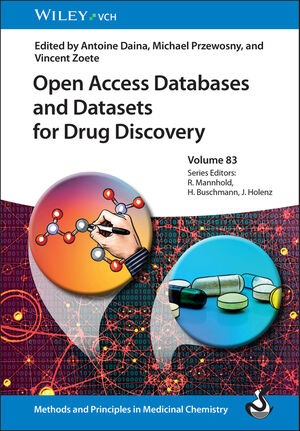
Open access databases and datasets for drug discovery
With an overview of 90 freely accessible databases and datasets on all aspects of drug design, development, and discovery, Open Access Databases and Datasets for Drug Discovery is a comprehensive guide to the vast amount of “free data” available to today’s pharmaceutical researchers. The applicability of open-source data for drug discovery and development is analyzed, and their usefulness in comparison with commercially available tools is evaluated. The most relevant databases for small molecules, drugs and druglike substances, ligand design, protein 3D structures (both experimental and calculated), and human drug targets are described in depth, including practical examples of how to access and work with the data. The first part is focused on databases for small molecules, followed by databases for macromolecular targets and diseases. The final part shows how to integrate various open-source tools into the academic and industrial drug discovery and development process.

Ontology Management : Semantic Web, Semantic Web Services, and Business Applications
This volume describes relevant tasks, practical and theoretical challenges, limitations and methodologies, plus available software tools. The editors discuss integrating the conceptual and technical dimensions with a business view on using ontologies, by stressing the cost dimension of ontology engineering and by providing guidance on how up-to-date tooling helps to build, maintain, and use ontologies. Also included is a one-stop reference on all aspects of managing ontological data and best practices on ontology management for a number of application domains.

Ontologies-Based Business Integration
E-business integration is a vision we have developed over a long period of time. As we have worked in business practice for many years prior to and in parallel with our academic research, we have always thought of such - tegration not only as an intellectual challenge but also as a real business tool. Consequently, when we started our project on Ontologies-based R- onciliation for Business Integration (ORBI) in 2004, not only pure science but also business objectives were at the center of our research. We were very happy to be able to form a project consortium that consisted not only of renowned researchers but also of experienced business practitioners from a range of companies. Each played a specific role – as user, provider or co-developer of the application components that are based on the me- ods we have developed. So may this book find its way not only to the desks of researchers and students, but also into the offices and minds of business practitioners worldwide who are dealing with the challenge of integrating their business processes, applications and information.

Ontologies for Agents : Theory and Experiences
On the other hand, ontologies have established themselves as a powerful tool to enable kno- edge sharing, and a growing number of applications have bene?ted from the use of ontologies as a means to achieve semantic interoperability among heterogeneous, distributed systems. In principle ontologies and agents are a match made in heaven, that has failed to happen. What makes a simple piece of software an agent is its ability to communicate in a ”social” environment, to make autonomous decisions, and to be proactive on behalf of its user. Communication ultimately depends on und- standing the goals, preferences, and constraints posed by the user. Autonomy is theabilitytoperformataskwithlittleornouserintervention,whileproactiveness involves acting autonomously with no need for user prompting. Communication, but also autonomy and proactiveness, depend on knowledge. The ability to c- municate depends on understanding the syntax (terms and structure) and the semantics of a language. Ontologies provide the terms used to describe a domain and the semantics associated with them. In addition, ontologies are often comp- mented by some logical rules that constrain the meaning assigned to the terms. These constraints are represented by inference rules that can be used by agents to perform the reasoning on which autonomy and proactiveness are based.
On the move to meaningful internet systems 2007 : CoopIS, DOA, ODBASE, GADA, and IS ; OTM Confederated International Conferences, CoopIS, DOA, ODBASE, GADA, and IS 2007, Vilamoura, Portugal, November 25-30, 2007, Proceedings, Part I
Constitutes the proceedings of the 5 confederated international conferences on Cooperative Information Systems, Distributed Objects and Applications, Ontologies, Databases and Applications of Semantics, Grid computing, high performance and Distributed Applications, and Information Security held as OTM 2007 in Vilamoura, Portugal, in November 2007.

Oil-in-Water Nanosized Emulsions for Drug Delivery and Targeting
ompiles the step-by-step investigations made concerning the potential of nanosized emulsions on both drug delivery and drug targeting areas by different group of scientists in various laboratories across the world Inverts the common nano-emulsions coverage trend of focusing on focused on the particulate system itself, instead exploring the way to turn nanosized emulsions as biomedical tool, as well as, treating the in vitro and in vivo aspects after administration Provides an overview of the current state-of-the art regarding the development of tocol emulsions, emulsion adjuvants in immunization research, oxygen-carrying emulsions (called as fluorocarbon emulsion) and emulsions for delivering drugs to nasal and topical (ocular and transdermal) routes

Office and SharePoint 2007 User’s Guide : Integrating SharePoint with Excel, Outlook, Access, and Word
Web sites. Collaboration. Document management. Paperless offices. We want it all in business today, but how do you achieve all of these goals? More importantly, if you work for one of the millions of small to medium–sized businesses, how do you find the time and build the expertise necessary to reach these goals? Even the most powerful tool will not allow you to succeed unless you can get the majority of your staff to use it efficiently and effectively. You need a guide that demonstrates a platform small to medium–sized businesses can use to reach these goals.

Objects, Components, Models and Patterns ; 46th International Conference, TOOLS EUROPE 2008, Zurich, Switzerland, June 30 - July 4, 2008. Proceedings
This book constitutes the thoroughly refereed proceedings of the 46th International Conference on Objects, Components, Models and Patterns, TOOLS EUROPE 2008, held in Zurich, Switzerland, in June/July 2008.TOOLS played a major role in the spread of object-oriented and component technologies. It has now broadened its scope beyond the original topics of object technology and component-based development to encompass all modern, practical approaches to software development.

Object-Oriented Software Engineering Using UML Patterns and Java
Shows students how to use both the principles of software engineering and the practices of various object-oriented tools, processes, and products. Using a step-by-step case study to illustrate the concepts and topics in each chapter, Bruegge and Dutoit emphasize learning object-oriented software engineer through practical experience: students can apply the techniques learned in class by implementing a real-world software project. The third edition addresses new trends, in particular agile project management (Chapter 14 Project Management) and agile methodologies (Chapter 16 Methodologies).

Obesity Management in Family Practice
With guidelines backed by the best scientific data, the book is about application, not just theory. The reader is given the commonsense tools that patients need in order to have ownership of their disease. Ultimately, patients are empowered to control their obesity, resulting in positive interaction between providers and patients.

Nutrigenomics and nutraceuticals
Provides an authoritative and comprehensive overview of the field of nutraceuticals and genomics—also called nutrigenomics, a rapidly growing field. It discusses both nutrigenomic and nutrigenetic techniques to investigate the nutritional basis of several health disorders because scientists have found that diet can affect gene expression. The book covers the nutrigenomic tools for the prevention of disease conditions such as cancer, viral infection, microbial infection, COVID-19, HIV/AIDS, tuberculosis, hypertension, neurodegenerative disease, obesity, baldness, and anemia. Some nutrigenomic tools that can also be used for brain health, weight loss, human nutrition, skin care, and maintaining health during pregnancy are also explored.

Nutraceuticals in arthritis and psoriasis : Management and prevention of diseases
Explores plant-derived nutraceuticals that can be used as crucial therapeutic tools in the prevention and treatment of arthritis and psoriasis, providing detailed information on the use of plant-derived nutraceuticals, such as microalgae and other marine botanicals, omega polyunsaturated fatty acids, glucosamine and chondroitin sulphate, plant-based gum, vitamins and oils, probiotic supplements, and others in the treatment and management of arthritis and psoriasis. The book relates the recent scientific evidence on the effectiveness of each of these nutraceutical treatments, offering case studies, results of clinical studies, and more.
Nutraceuticals and obesity strategies for weight management
his comprehensive volume explores the role that nutraceuticals can play in addressing obesity, shedding light on their potential as tools to promote sustainable weight management strategies as well as addressing associated health risks. Delving into the intricate interplay between nutrition, health, and obesity, the book provides a compelling account that illustrates how nutraceutical interventions can be incorporated into holistic obesity management strategies. It begins with an account of the mechanisms by which nutraceuticals function before featuring chapters on their efficacy and safety, how they can be integrated with other therapeutic interventions, and how they can be tailored for individuals with comorbidities. Offering a global perspective on the issue, there is also coverage of the various regulatory contexts in which nutraceuticals are sold and used.

Numerical Solution of Partial Differential Equations on Parallel Computers
The scientific fields of Ma- ematics and Physics provide a powerful vehicle for such descriptions in terms of Partial Differential Equations (PDEs). Formulated as such equations, physical laws can become subject to computational and analytical studies. In the computational setting, the equations can be discreti ed for ef?cient solution on a computer, leading to valuable tools for simulation of natural and man-made processes. Numerical so- tion of PDE-based mathematical models has been an important research topic over centuries, and will remain so for centuries to come. In the context of computer-based simulations, the quality of the computed results is directly connected to the model’s complexity and the number of data points used for the computations. Therefore, computational scientists tend to ?ll even the largest and most powerful computers they can get access to, either by increasing the si e of the data sets, or by introducing new model terms that make the simulations more realistic, or a combination of both. Today, many important simulation problems can not be solved by one single computer, but calls for parallel computing.

Numerical Mathematics
Numerical mathematics is the branch of mathematics that proposes, develops, analyzes and applies methods from scientific computing to several fields including analysis, linear algebra, geometry, approximation theory, functional equations, optimization and differential equations. Other disciplines, such as physics, the natural and biological sciences, engineering, and economics and the financial sciences frequently give rise to problems that need scientific computing for their solutions. As such, numerical mathematics is the crossroad of several disciplines of great relevance in modern applied sciences, and can become a crucial tool for their qualitative and quantitative analysis.

Numerical Linear Algebra
This book brings together linear algebra, numerical methods and an easy to use programming environment under Matlab (or Scilab). One of the key features of the book are the worked out examples and exercises at the end of each chapter. The reader is asked to do some numerical experiments in Matlab and then to prove the results theoretically. The book is a combination and update of two earlier French books by the authors. It is appropriate for both undergraduate and beginning graduate courses in mathematics as well as for working scientists and engineers as a self-study tool and reference.This book is about numerical linear algebra and focuses on practical algorithms for solving computer problems of linear algebra.
Numerical Continuation Methods for Dynamical Systems : Path following and boundary value problems
The book opens with a foreword by Herbert B. Keller and lecture notes by Sebius Doedel himself that introduce the basic concepts of numerical bifurcation analysis. The other chapters by leading experts discuss continuation for various types of systems and objects and showcase examples of how numerical bifurcation analysis can be used in concrete applications. Topics that are treated include: interactive continuation tools, higher-dimensional continuation, the computation of invariant manifolds, and continuation techniques for slow-fast systems, for symmetric Hamiltonian systems, for spatially extended systems and for systems with delay. Three chapters review physical applications: the dynamics of a SQUID, global bifurcations in laser systems, and dynamics and bifurcations in electronic circuits.

Number Theory ; Vol. II : Analytic and Modern Tools
The central theme of this graduate-level number theory textbook is the solution of Diophantine equations, i.e., equations or systems of polynomial equations which must be solved in integers, rational numbers or more generally in algebraic numbers. This theme, in particular, is the central motivation for the modern theory of arithmetic algebraic geometry. In this text, this is considered through three aspects.

Number Theory ; Vol. I : Tools and Diophantine Equations
The central theme of this graduate-level number theory textbook is the solution of Diophantine equations, i.e., equations or systems of polynomial equations which must be solved in integers, rational numbers or more generally in algebraic numbers. This theme, in particular, is the central motivation for the modern theory of arithmetic algebraic geometry. In this text, this is considered through three aspects.
