



الصفحة 1
الصفحة 1

Multiscale Problems in the Life Sciences : From Microscopic to Macroscopic
The aim of this volume that presents Lectures given at a joint CIME and Banach Center Summer School, is to offer a broad presentation of a class of updated methods providing a mathematical framework for the development of a hierarchy of models of complex systems in the natural sciences, with a special attention to Biology and Medicine. Mastering complexity implies sharing different tools requiring much higher level of communication between different mathematical and scientific schools, for solving classes of problems of the same nature. Today more than ever, one of the most important challenges derives from the need to bridge parts of a system evolving at different time and space scales, especially with respect to computational affordability. As a result the content has a rather general character; the main role is played by stochastic processes, positive semigroups, asymptotic analysis, kinetic theory, continuum theory and game theory.

Missions of universities : Past, present, future
provides an analysis of university missions over time and space. It starts out by presenting a governance framework focusing on the demands on universities set by regulators, market actors and scrutinizers. It examines organizational structures, population development, the fundamental tasks of universities, and internal governance structures. Next, offers a discussion of the idea and role of universities in society, exploring concepts such as autonomy and universality, and the university as a transformative institute. The next four chapters deal with the development of universities from medieval times, through the Renaissance, towards the research universities in the nineteenth century in Europe and the United States.

Groundwater Recharge from Run-off, Infiltration and Percolation
This book first discusses the recharge fluxes relating both to the quantity and quality of groundwater. In order to face the threats to the water supply and to be able to maintain a sustainable water management policy, detailed knowledge is needed in between others on the surface to subsurface transformation link in the water cycle. Secondly, the presentation and comparison of both the traditional and modern approach to determine groundwater recharge is discussed. The traditional approach to determine groundwater recharge, is based on water balance estimates and hydraulic considerations, which yield instantaneous values at best but do not integrate the totality of recharge pathways in time and space. In contrast, environmental tracers do integrate these factors. Finally, the fate of groundwater recharge in the subsurface by hydraulic and geologic means is discussed in detail, in order to stimulate adapted groundwater management strategies and to better assess consequences of climate changes on groundwater resources as a whole.

Finite Model Theory ; 2nd ed.
The book presents the main results of descriptive complexity theory, that is, the connections between axiomatizability of classes of finite structures and their complexity with respect to time and space bounds. The logics that are important in this context include fixed-point logics, transitive closure logics, and also certain infinitary languages; their model theory is studied in full detail. Other topics include DATALOG languages, quantifiers and oracles, 0-1 laws, and optimization and approximation problems. The book is written in such a way that the respective parts on model theory and descriptive complexity theory may be read independently. This second edition is a thoroughly revised and enlarged version of the original text.
Environmental Value Transfer : Issues and Methods
The transfer of environmental values in time and space has increased rapidly with the widespread use of cost benefit analysis in project evaluation and regulatory assessments over the last three decades. The purpose of this volume is to take a snapshot of the research that is ongoing in the area of value transfer (benefit transfer). It includes papers by some of the most influential authors in the area, and covers the latest developments in the field. It will be useful for academics conducting research in this area and for practitioners in government agencies and ministries, as well as consulting firms.

Confronting Scale in Archaeology : Issues of Theory and Practice
This book discusses the cultural, social and spatial aspects of scale and its impact on archaeology in practical and applicable cases. Each author takes one of the fundamental elements of archaeology - from the experience of time and space to the visualization of individuals, sites and landscapes to the intricacies of archaeological discourse - and shows how an awareness of scale can create new and exciting interpretations.
Leibnizs Metaphysics of Time and Space
Leibniz’s metaphysics of space and time stands at the centre of his philosophy and is one of the high-water marks in the history of the philosophy of science. In this work, Futch provides the first systematic and comprehensive examination of Leibniz’s thought on this subject. In addition to elucidating the nature of Leibniz’s relationalism, the book fills a lacuna in existing scholarship by examining his views on the topological structure of space and time, including the unity and unboundedness of space and time. It is shown that, like many of his more recent counterparts, Leibniz adopts a causal theory of time where temporal facts are grounded on causal facts, and that his approach to time represents a precursor to non-tensed theories of time.
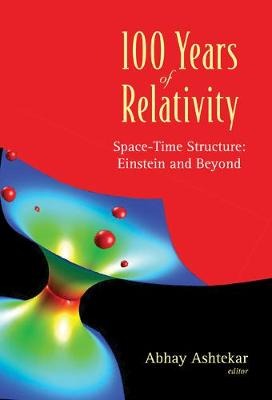
100 years of relativity : Space-time structure - Einstein and beyond
Contains contributions from leading researchers, worldwide, who have thought deeply about the nature and consequences of this interplay. The articles take a long-range view of the subject and distill the most important advances in broad terms, making them easily accessible to non-specialists. The first part is devoted to a summary of how relativity theories were born (J Stachel). The second part discusses the most dramatic ramifications of general relativity, such as black holes (P Chrusciel and R Price), space-time singularities (H Nicolai and A Rendall), gravitational waves (P Laguna and P Saulson), the large scale structure of the cosmos (T Padmanabhan); experimental status of this theory (C Will) as well as its practical application to the GPS system (N Ashby). The last part looks beyond Einstein and provides glimpses into what is in store for us in the 21st century.
