



الصفحة 1
الصفحة 1

Open and Distance Education in Australia, Europe and the Americas : National Perspectives in a Digital Age
This book describes the history, structure and institutions of open and distance education in six countries: Australia, Brazil, Canada, Germany, the UK and the US. It discusses how open and distance education is evolving in a digital age to reflect the needs and circumstances of national higher education systems in these countries, and explores the similarities and differences between the ways in which they are organized and structured. It is the first book to make such comparisons and draw conclusions about the nature of open and distance education in the context of various national higher education systems. In a digital era with growing use of online education as well as open and distance education.

Open and distance education in Asia, Africa and the Middle East : National perspectives in a digital age
This book describes the history, structure and institutions of open and distance education in six countries: China, India, Russia, Turkey, South Africa and South Korea. It describes how open and distance education is evolving in a digital age to reflect the needs and circumstances of the national higher education systems in these countries. It also explores the similarities and differences between how their open and distance higher education systems are managed and structured. The book compare and draw conclusions about the nature of open and distance education in the context of various national higher education systems. In a digital era characterized by the growing use of online, open and distance education, this book will prove particularly valuable for policy-makers and senior administrators who want to learn about establishing or expanding open and distance education services. In addition, it offers a valuable reference guide for researchers, academics and students interested in understanding the different approaches to open and distance education.

Open and Closed Innovation : Different Cultures for Different Strategies
Open Innovation is a phenomenon in both research and management practice. Since radical innovation or new business development often require external technologies or ways of commercialization, many firms have shifted from a Closed to an Open Innovation model. However, firms often face difficulties during the implementation. While the implementation effort usually focuses on external ideas and technologies as well as the processes to identify them, cultural challenges are neglected. Philipp Herzog develops a theoretical framework arguing that Open Innovation and Closed Innovation cultures need to be different (e.g. regarding the not-invented-here (NIH) syndrome). Based on a multi-respondent survey among 120 R&D employees from three business units of a leading chemical firm, he provides empirical evidence for many of the hypothesized differences in innovation culture.

Ontology Matching
Euzenat and Shvaiko’s book is devoted to ontology matching as a solution to the semantic heterogeneity problem faced by computer systems. Ontology matching aims at finding correspondences between semantically related entities of different ontologies. These correspondences may stand for equivalence as well as other relations, such as consequence, subsumption, or disjointness, between ontology entities.

Online Investing on the Australian Sharemarket : How to Research, Trade and Invest in Shares and Securities Online
Offers step-by-step guidance on choosing an online broker, accessing and making best use of online share investing resources, planning trades, identifying profit-making opportunities, timing of and placing online orders, managing investment risks, and much more.
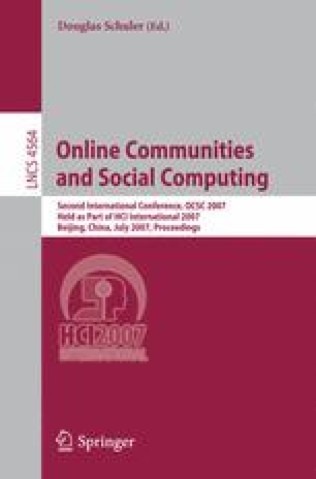
Online Communities and Social Computing ; 2nd International Conference, OCSC 2007, Held as Part of HCI International 2007, Beijing, China, July 22-27, 2007, Proceedings
The 12th International Conference on Human-Computer Interaction, HCI Inter- tional 2007, was held in Beijing, P.R. China, 22-27 July 2007. This volume, edited by Douglas Schuler, contains papers in the thematic area of Online Communities and Social Computing, addressing the following major topics: • Designing and Developing On-line Communities • Knowledge, Collaboration, Learning and Local On-line Communities

One-Dimensional Nanostructures
One-dimensional (1D) nanostructures, including nanowires, nanotubes and quantum wires, have been regarded as the most promising building blocks for nanoscale electronic and optoelectronic devices. Worldwide efforts in both the theory and the experimental investigation of growth, characterization and applications of 1D nanostructures have resulted in a mature, multidisciplinary field. In this book, a wealth of state-of-the-art information offers the opportunity to uncover the underlying science from diverse perspectives. Leading researchers elucidate the synthesis and properties of 1D nanostructures for various morphologies and compositions (semiconductor, metal, carbon, etc.) as well as their considerable impact on spintronics, information storage, and the design of field-effect transistors.

One Hundred Years of Intuitionism (1907-2007) : The Cerisy Conference
With logicism and formalism, intuitionism is one of the main foundations for mathematics proposed in the twentieth century; and since the seventies, notably its views on logic have become important also outside foundational studies, with the development of theoretical computer science. The aim of the book is threefold: to review and complete the historical account of intuitionism; to present recent philosophical work on intuitionism; and to give examples of new technical advances and applications of intuitionism.

Oncology : An Evidence-Based Approach
Reflect the principles and current practice of oncology with contributors from the fields of medical, surgical, and radiation oncology. The textbook will incorporate an evidence-based approach, enabling the reader to make decisions on the basis of concrete data. Sections on solid tumors, hematologic malignancies and the practice of oncology address the natural history and therapy for the full spectrum of neoplastic diseases in the adult. Further sections present fundamentals of supportive care of the cancer patient, the management of oncologic emergencies and acute toxicities of therapy, as well as care of metastatic disease and the terminally-ill patient. Breaking new ground, the textbook features thoughtful, in-depth sections on cancer prevention and control, cancer surviorship, the economics of cancer care, and cancer informatics. Cancer imaging is covered with an organ system-based approach, with an additional chapter on the especially intriguing potential of PET. Furthermore, a comprehensive section on translational basic science reviews the fundamentals of molecular biology, the cell cycle and signal transduction, carcinogenesis, cancer genetics, the biology of invations and metastasis, and tumor immunology.

Oncologic and Cardiologic PET/CT-Diagnosis : An Interdisciplinary Atlas and Manual
Since 1999/2000 simultaneous imaging of anatomical features and metabolic activities using fused PET and CT images has complemented and in many cases even replaced what was originally done as separate analysis. – Is this a small revolution? – In fact, this new approach can be considered to be without a rival for imaging diagnosis. The complementary efforts of nuclear medicine physicians and radiologists have improved the diagnostic value of PET/CT scans. The successful use of PET/CT in the field of oncology has been documented world-wide, and in cardiology we can take advantage of the significant findings of PET diagnosis, particularly in the USA. New prospects are now available for paediatric oncology and molecular medicine.

Oncogenes Meet Metabolism : From Deregulated Genes to a Broader Understanding of Tumour Physiology
In 1920s, Otto Warburg described the phenomenon of ‘aerobic glycolysis’, the ability of tumour cells to convert glucose to lactate in the presence of normal oxygen conditions. Warburg’s hypothesis of an altered metabolism in cancer cells found no immediate acceptance, though it was latter confirmed for most human tumours. With the advent of molecular biology the focus in tumour research has shifted towards the search for oncogenes. However, the interest in cancer molecular profiling eventually led to a renaissance of the Warburg effect trying to combine genetic alterations with effects on metabolism with the help of modern analytic technologies to rapidly analyze broad varieties of metabolites in various tissues and bodyfluids (metabonomics).

On the Topology of Isolated Singularities in Analytic Spaces
The aim of this book is to give an overview of selected topics on the topology of real and complex isolated singularities, with emphasis on its relations to other branches of geometry and topology. The first chapters are mostly devoted to complex singularities and a myriad of results spread in a vast literature, which are presented here in a unified way, accessible to non-specialists. Among the topics are the fibration theorems of Milnor; the relation with 3-dimensional Lie groups; exotic spheres; spin structures and 3-manifold invariants; the geometry of quadrics and Arnold's theorem which states that the complex projective plane modulo conjugation is the 4-sphere. The second part of the book studies pioneer work about real analytic singularities which arise from the topological and geometric study of holomorphic vector fields and foliations. In the low dimensional case these turn out to be related to fibred links in the 3-sphere defined by meromorphic functions. This provides new methods for constructing manifolds equipped with a rich geometry.

On the Moon : The Apollo Journals
This book explains how the Apollo crews learned to work on the lunar surface. Its lively and informative text draws heavily on transcripts and photographs to illustrate points. It puts the reader on the lunar surface with the astronauts, sharing their observations, excitement, and frustrations.

On The Interpretation of Treaties : The Modern International Law as Expressed in the 1969 Vienna Convention on the Law of Treaties
This book investigates the contents and structure of this system. By importing knowledge from linguistics, and pragmatics in particular, a model is established giving representation to the concept of a rule of interpretation. Drawing on this model, the book then proceeds to reconstruct the contents of the various rules of interpretation. To facilitate reference, the conclusions suggest a list of 44 rules, all of which can be invoked by appliers citing VCLT Articles 31-33.

On Line Citizenship : Emerging Technologies for European Cities
The book presents e-government issues from an institutional as well as a practical point of view through the contributions of distinguished authors representative of the European Union, the European network of cities (Telecities) and the Italian Government. On Line Citizenship offers an innovative approach in the analysis of technology's evolutionary paths in e-government through a comparison with e-business trends.

On Law and Reason
This is an outline of a coherence theory of law. Its basic ideas are: reasonable support and weighing of reasons. All the rest is commentary.’ These words at the beginning of the preface of this book perfectly indicate what On Law and Reason is about. It is a theory about the nature of the law which emphasises the role of reason in the law and which refuses to limit the role of reason to the application of deductive logic. This book was ground breaking for several reasons. It provided a rationalistic theory of the law in the language of analytic philosophy and based on a thorough understanding of the results, including technical ones, of analytic philosophy.

On Communication : An interdisciplinary and mathematical approach
This book offers a radical new approach for the understanding of communication. By using the theoretical framework of complex systems theory communication is defined as the interplay of social and cognitive dynamics: communicators are modelled as complex cognitive systems who interact according to social rules and generate communicative systems. Messages generate meaning, which is understood as an attractor in the cognitive system of the receiver. Information is measured via the difference between a factual message and the message expected by the receiver.

Oligomers- Polymer Composites -Molecular Imprinting
The series Advances in Polymer Science presents critical reviews of the present and future trends in polymer and biopolymer science including chemistry, physical chemistry, physics and material science.It is adressed to all scientists at universities and in industry who wish to keep abreast of advances in the topics covered.As a rule, contributions are specially commissioned. The editors and publishers will, however, always be pleased to receive suggestions and supplementary information.

Olfactory knows the truth
Olfaction, the sense of smell detects and discriminate odors as well as social cues which influence our innate responses. The olfactory system in human beings is found to be weak as compared to other animals; however, it seems to be very precise. It can detect and discriminate millions of chemical moieties (odorants) even in minuscule quantities. The sense of smell is greatly underappreciated, despite the fact that it monitors the intake of airborne agents into the human respiratory system and determine to a large degree the flavor and palatability of foods and beverage. In addition to enhancing quality of life, this primary sensory system warns of spoiled foods, leaking natural gas, polluted air and smoke, and mediates basic elements of communication (e.g., mother-infant interaction). It is now apparent that smell dysfunction is among the first clinical signs of such neurodegenerative diseases as Alzheimer’s disease and sporadic Parkinson’s disease.

Old Buildings New Designs
Increasingly, architects are hired to design new work for existing structures. Whether for reasons of preservation, sustainability, or cost-effectiveness, the movement to reuse buildings presents a variety of design challenges and opportunities. Old Buildings, New Designs is an Architecture Brief devoted to working within a given architectural fabric from the technical issues that arise from aging construction to the controversy generated by the various project stakeholders to the unique aesthetic possibilities created through the juxtaposition of old and new.
