



الصفحة 1
الصفحة 1

Micromechanics of Contact and Interphase Layers
Micromechanics provides a link between the structure and the properties at different scales of observation. This book deals with micromechanical analysis of interfaces and interface layers and presents several modelling tools, ranging from the rigorous method of asymptotic expansions to practical finite element simulations, suitable for this class of problems. Two application areas are discussed. Boundary layers associated with contact of rough bodies are modelled by applying a scale transition approach in which a macroscopic interface of zero thickness is seen at the micro-scale as a layer with some finite thickness. Secondly, evolution of laminated microstructures accompanying stress-induced martensitic transformations in shape memory alloys (SMA) is analyzed as an illustration of the case when the local interfacial phenomena – here the propagation of phase transformation fronts – govern the macroscopic behaviour of a heterogeneous material.

Integrated Circuit Packaging, Assembly and Interconnections
Integrated Circuit Packaging, Assembly and Interconnections is intended as a multi-purpose text, serving individuals looking for an introduction, or a review, or an update of the various IC packaging, assembly, and interconnection technologies. To this end, it provides an overview of the materials and the processes, as well as the trends and available options that encompass electronic manufacturing. It covers both the technical issues and touches on some of the reliability concerns with the various technologies applicable to packaging and assembly of the IC. The focus is on the electronic manufacturing process which, in its simplest form, involves assembly of the IC into a package or interconnect substrate or board. The book discusses the various packaging approaches available, namely, single chip, multichip, and Chip On Board; the assembly options, chip & wire, tape automated bonding, and flip chip; and the essential high density package/substrate manufacturing technologies, thin film, thick film, cofired ceramic, and laminate printed wiring board (PWB) processes. Included also is a discussion of high density PWBs using build up/sequential processes.

High Dielectric Constant Materials : VLSI MOSFET Applications
Issues relating to the high-K gate dielectric are among the greatest challenges for the evolving International Technology Roadmap for Semiconductors (ITRS). More than just an historical overview, this book will assess previous and present approaches related to scaling the gate dielectric and their impact, along with the creative directions and forthcoming challenges that will define the future of gate dielectric scaling technology. Topics include: an extensive review of Moore's Law, the classical regime for SiO2 gate dielectrics; the transition to silicon oxynitride gate dielectrics; the transition to high-K gate dielectrics (including the drive towards equivalent oxide thickness in the single-digit nanometer regime); and future directions and issues for ultimate technology generation scaling. The vision, wisdom, and experience of the team of authors will make this book a timely, relevant, and interesting, resource focusing on fundamentals of the 45 nm Technology Generation and beyond.

Heart block
Cardiac muscle (also called heart muscle or myocardium) is one of three types of vertebrate muscle tissue, with the other two being skeletal muscle and smooth muscle. It is involuntary, striated muscle that constitutes the main tissue of the wall of the heart. The cardiac muscle (myocardium) forms a thick middle layer between the outer layer of the heart wall (the pericardium) and the inner layer (the endocardium), with blood supplied via the coronary circulation. It is composed of individual cardiac muscle cells joined together by intercalated discs, and encased by collagen fibers and other substances that form the extracellular matrix.

Glaucoma
The series Essentials in Ophthalmology was initi- to discuss clinically relevant and appropriate t- ated two years ago to expedite the timely trans- ics. Summaries of clinically relevant information fer of new information in vision science and have been provided throughout each chapter. evidence-based medicine into clinical practice.

Elasto-Plastic and Damage Analysis of Plates and Shells
This book presents a finite element model for the elasto-plastic and damage analysis of thin and thick shells. Linear elastic, inelastic and softening behaviors caused by damage in structural shells, as well as large rotations are investigated.

Development and characterization of a dispersion-encoded method for low-coherence interferometry
This book discusses an extension to low-coherence interferometry by dispersion-encoding. The approach is theoretically designed and implemented for applications such as surface profilometry, polymeric cross-linking estimation and the determination of thin-film layer thicknesses. During a characterization, it was shown that an axial measurement range of 79.91 µm with an axial resolution of 0.1 nm is achievable. Simultaneously, profiles of up to 1.5 mm in length were obtained in a scan-free manner. This marked a significant improvement in relation to the state-of-the-art in terms of dynamic range.

Defect-Oriented Testing for Nano-Metric CMOS VLSI Circuits
Failures of nano-metric technologies owing to defects and shrinking process tolerances give rise to significant challenges for IC testing. As the variation of fundamental parameters such as channel length, threshold voltage, thin oxide thickness and interconnect dimensions goes well beyond acceptable limits, new test methodologies and a deeper insight into the physics of defect-fault mappings are needed. In Defect-Oriented Testing for Nano-Metric CMOS VLSI Circuits state of the art of defect-oriented testing is presented from both a theoretical approach as well as from a practical point of view. Step-by-step handling of defect modeling, defect-oriented testing, yield modeling and its usage in common economics practices enables deeper understanding of concepts.

Current techniques and materials in dentistry
Dental implants are one of the most interesting dental treatments. PEEK (polyetheretherketone) has recently been reported as a further innovation in polymer implant materials, although it has not yet met the requirements to be a biomechanical requirement. In the placement of mini-screws used in orthodontic treatments, micro-cracks caused by overtorquing in thick and hard bone, and the consequent heat production, can reduce the success rate. Computer-aided design/computer-aided manufacturing (CAD/CAM) techniques are becoming increasingly popular. Since complete dentures can be produced using an additive (3D printing) or subtractive (milling) process, CAD/CAM techniques for denture fabrication have many clinical and laboratory advantages.
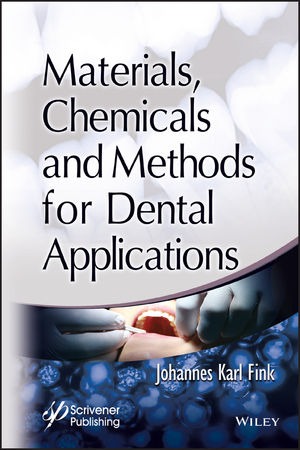
Materials, Chemicals and Methods for Dental Applications
Focuses on the materials used for dental applications looking at the fundamental issues and the developments that have taken place the past decade. While it provides a broad overview of dental materials, the chemicals that are used for the preparation and fabrication of dental materials are explained as well. Also, the desired properties of these materials are discussed and the relevance of the chemical, physical, and mechanical properties is elucidated. Methods for the characterization and classification, as well as clinical studies are reviewed here. In particular, materials for dental crowns, implants, toothpaste compositions, mouth rinses, as well as materials for toothbrushes and dental floss are discussed. For example, in toothpaste compositions, several classes of materials an chemcials are incorporated, such as abrasives, detergents, humectants, thickeners, sweeteners, coloring agents, bad breath reduction agents, flavoring agents, tartar control agents, and others. These chemicals, together with their structures, are detailed in the text.
Biosolids treatment processes ; Vol.6
The past 30 years have seen the emergence of a growing desire worldwide to take positive actions to restore and protect the environment from the degrading effects of all forms of pollution: air, noise, solid waste, and water. The Handbook of Environmental Engineering series guides readers to answer the fundamental questions facing pollution in the modern era – How serious is pollution? Is the technology needed to abate it not only available, but feasible? Among the topics included in this, the sixth edition, are: biosolids, flotation thickening, anaerobic and aerobic digestion, pressurized ozonation, lime stabilization, elutriation and polymer conditioning, and animal waste treatment.

Bioactives and pharmacology of Legumes
A variety of bioactives and therapeutics from the legume family (Fabaceae or Leguminosae) are thoroughly detailed. For each species included in the volume, a brief introduction is given, the plant’s bioactive compounds are listed, and its chemical structures shown, followed by their pharmacological activities. Many of these plants have medicinal activities that include antiviral, antimicrobial, antioxidant, anticancer, anti-inflammatory, and antidiabetic, hepatoprotective, nephroprotective and cardioprotective. The biochemical characteristics of the 37 plants included, such as the type of starch, protein, and fibers, can be exploited as binders, excipients, thickeners, and dispersants in the formulation of various products in the pharmaceutical industry. The published literature on the pharmacological activities on each species is reviewed and presented in a concise and clear manner.
