



الصفحة 1
الصفحة 1

Glass Construction Manual
Presents the current state of the art on planning and building with glass, from the history through the technical foundations all the way to the most innovative applications. Astonishing perspectives on thermal insulation and solar protection and the addition of thoughtfully selected new practical examples round off this comprehensive reference work. Glass constructions in detail – all mounting methods are systematically depicted with detail drawings. Contains laws and guidelines, with the new EU norms

Construction materials, methods, and techniques : Building for a sustainable future
Covers both traditional and contemporary materials, current industry standards and new and emerging technologies. The only text organized according to the Construction Specifications Institute (CSI) MasterFormat (R) standards, construction materials, methods and techniques: building for a sustainable future, fifth edition, features a reader-friendly style and logical structure, which follows the construction process step-by-step from project inception to completion. The new edition provides up-to-date coverage of dramatic changes underway in the construction industry, including advances in pre-fabricated construction; increased use of drones, robotics and artificial intelligence; net-zero buildings and lean construction. You'll learn about key current industry developments and standards, as well as latest relevant building codes, all presented within a dynamic, richly illustrated new design.
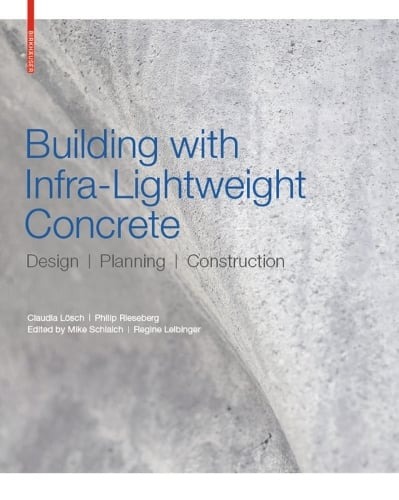
Building with infra-lightweight concrete : design, planning, construction
Infra-lightweight concrete combines the structural and thermal insulation functions of the building envelope in one monolithic material, thus providing new design options. The handbook is a practical guide to building with this new type of material.
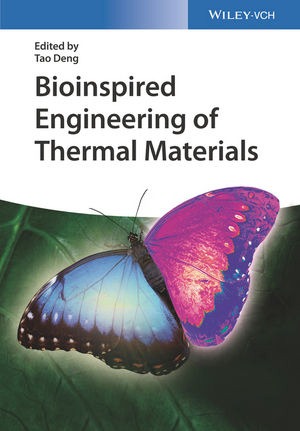
Bioinspired engineering of thermal materials
A comprehensive overview and summary of recent achievements and the latest trends in bioinspired thermal materials. Following an introduction to different thermal materials and their effective heat transfer to other materials, the text discusses heat detection materials that are inspired by biological systems, such as fire beetles and butterflies. There then follow descriptions of materials with thermal management functionality, including those for evaporation and condensation, heat transfer and thermal insulation materials, as modeled on snake skins, polar bears and fire-resistant trees.
Assessment of Energy-Efficient Building Details for Seismic Regions
Presents a methodology for the assessment of structural building details, taking into account the contemporary guidelines for earthquake-resistant and energy-efficient buildings. A review of structural details for energy-efficient buildings revealed that in some cases the structural system is interrupted, leading to solutions which are not suitable for earthquake-prone regions. Such typical examples would be the use of thermal insulation under the building foundation and reduction of the load-bearing elements’ dimensions – also at the potential locations of plastic hinges which are crucial for the dissipation of seismic energy.
