



الصفحة 1
الصفحة 1
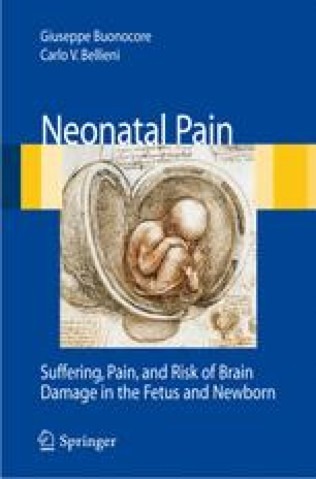
Neonatal Pain : Suffering, Pain and Risk of Brain Damage in the Fetus and Newborn
Until the 1980s it was denied that fetuses and neonates feel pain. With the advent of a deeper understanding of the pathophysiology and new diagnostic tools, the last 30 years have seen great developments in this field. This volume aims to give an overview of current knowledge in the field.

Giving Death a Helping Hand : Physician-Assisted Suicide and Public Policy. An International Perspective
The volume focuses on public policy issues related to physician-assisted suicide. It offers a detailed analysis of the current legal standing and practice of physician-assisted suicide in various countries and discusses the ethical principles underlying its legal and professional regulation.

Genetic Democracy : Philosophical Perspectives
GENETIC DEMOCRACY involves an in-depth analysis of the ethical, social and philosophical issues related to modern genetic research and gene technology. The aim of the book is to introduce systematic research on the social and ethical impacts of the use and development of genetically modified organisms (GMOs) as well as the acquisition, use and storage of human genetic information (HGI). The book contributes into enhancing public discussion and reaching fair and democratic decision-making practices in GMO and HGI use and development both on local and global level.

Evidence-Based Medical Ethics : Cases for Practice-Based Learning
In Evidence-Based Medical Ethics: Cases for Practice-Based Learning, the authors address what has been missing in existing text books and ethics courses to date – clear-cut ethical and legal guidelines that provide a method for the reader to learn how to systematically manage dilemmas seen in the everyday practice of medicine.

Dermatoethics : Contemporary ethics and professionalism in dermatology
This extensively updated textbook reviews the ethical issues faced within dermatology. Bringing together practical real-life case scenarios and scholarly analysis, it covers the foundations of bioethics, as well as ethical issues associated with the various roles dermatologists play, including clinician, professional, educator, business person, and scholar. New chapters on the ethics of dermatologic care during pandemics, non-traditional interventions, private equity in dermatology, self-care and improvement, skin cancer screening, maintenance of certification, the ethics of clinical trial design are also included.

Contemporary Bioethics : Islamic Perspective
This book discusses the common principles of morality and ethics derived from divinely endowed intuitive reason through the creation of al-fitr' a (nature) and human intellect (al-‘aql). Biomedical topics are presented and ethical issues related to topics such as genetic testing, assisted reproduction and organ transplantation are discussed. Whereas these natural sources are God’s special gifts to human beings, God’s revelation as given to the prophets is the supernatural source of divine guidance through which human communities have been guided at all times through history. The second part of the book concentrates on the objectives of Islamic religious practice – the maqa' sid – which include: Preservation of Faith, Preservation of Life, Preservation of Mind (intellect and reason), Preservation of Progeny (al-nasl) and Preservation of Property. Lastly, the third part of the book discusses selected topical issues, including abortion, assisted reproduction devices, genetics, organ transplantation, brain death and end-of-life aspects.
Charting Spiritual Care : The emerging role of Chaplaincy Records in Global Health Care
This book is the first academic book on the controversial issue of including spiritual care in integrated electronic medical records (EMR). Based on an international study group comprising researchers from Europe (The Netherlands, Belgium and Switzerland), the United States, Canada, and Australia, this edited collection provides an overview of different charting practices and experiences in various countries and healthcare contexts.
Brain-computer interfaces : An international sssessment of research and development trends
This WTEC study gathered information on worldwide status and trends in BCI research to disseminate to government decisionmakers and the research community. The study reviewed and assessed the state of the art in sensor technology, the biotic-abiotic interface and biocompatibility, data analysis and modeling, hardware implementation, systems engineering, functional electrical stimulation, noninvasive communication systems, and cognitive and emotional neuroprostheses in academic research and industry.

Bioethics across the globe : Rebirthing bioethics
This book addresses a variety of issues relating to bioethics, in order to initiate cross-cultural dialogue. Beginning with the history, it introduces various views on bioethics, based on specific experiences from Japan. It describes how Japan has been confronted with Western bioethics and the ethical issues new to this modern age, and how it has found its foothold as it decides where it stands on these issues. In the last chapter, the author proposes discarding the overarching term ‘Global Bioethics’ in favor of the new term, ‘Bioethics Across the Globe (BAG)’, which carries a more universal connotation.
Autistic community and the neurodiversity movement : Stories from the frontline
This book marks the first historical overview of the autism rights branch of the neurodiversity movement, describing the activities and rationales of key leaders in their own words since it organized into a unique community in 1992. Sandwiched by editorial chapters that include critical analysis, the book contains 19 chapters by 21 authors about the forming of the autistic community and neurodiversity movement, progress in their influence on the broader autism community and field, and their possible threshold of the advocacy establishment

Artificial Nutrition and Hydration : The New Catholic Debate
This collection of essays by some of the most prominent Catholic bioethicists addresses the Pope’s statements, the moral issues surrounding artificial feeding and hydration, the refusal of treatment, and the ethics of care for those at the end of life.
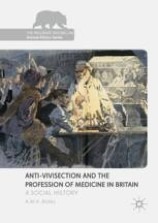
Anti-vivisection and the profession of medicine in Britain : A social history
This book explores the social history of the anti-vivisection movement in Britain from its nineteenth-century beginnings until the 1960s. It discusses the ethical principles that inspired the movement and the socio-political background that explains its rise and fall. Opposition to vivisection began when medical practitioners complained it was contrary to the compassionate ethos of their profession. Christian anti-cruelty organizations took up the cause out of concern that callousness among the professional classes would have a demoralizing effect on the rest of society. As the nineteenth century drew to a close, the influence of transcendentalism, Eastern religions and the spiritual revival led new age social reformers to champion a more holistic approach to science, and dismiss reliance on vivisection as a materialistic oversimplification.
