



الصفحة 1
الصفحة 1

Intermolecular Forces and Clusters II
This slim volume, contains papers written by leading researchers of intermolecular forces and clusters in honor of Anthony Stone. Taken together, the articles provide an accurate snapshot of current work on selected aspects of intermolecular forces and clusters that are primarily, but not exclusively, theoretical, Scientists and students interested in pursuing research on intermolecular forces and/or clusters would benefit

High Energy Density Materials
The series Structure and Bonding publishes critical reviews on topics of research concerned with chemical structure and bonding. The scope of the series spans the entire Periodic Table. It focuses attention on new and developing areas of modern structural and theoretical chemistry such as nanostructures, molecular electronics, designed molecular solids, surfaces, metal clusters and supramolecular structures. Physical and spectroscopic techniques used to determine, examine and model structures fall within the purview of Structure and Bonding to the extent that the focus is on the scientific results obtained and not on specialist information concerning the techniques themselves.

Frontiers in Quantum Systems in Chemistry and Physics
The basic theory of matter on the nanoscale is quantum mechanics and the application of quantum mechanics to the study of the many-body problem in molecules and materials is a rapidly developing field of research. Frontiers in Quantum Systems in Chemistry and Physics defines the leading edge; hence it describes the new theoretical developments available to a wider audience and presents theories which provide, for example, new insights into the structure of increasing complex molecular systems or molecules in a variety of environments. New computational techniques and practices are accessed, exploiting the wide range of equipment available to the researcher from “leadership” class supercomputers to distributed workstations and the internet.

Conformation-Dependent Design of Sequences in Copolymers II
The book include : 1 V.O. Aseyev, H. Tenhu, F. Winnik: Temperature Dependence of the Colloidal Stability of Neutral Amphiphilic Polymers in Water.- 2 V.I. Lozinsky: Approaches to Chemical Synthesis of Protein-Like Copolymers.- 3 S.I. Kuchanov, A.R. Khokhlov: Role of Physical Factors in the Processes of Obtaining of Copolymers.- 4 A.Y. Grosberg, A.R. Khokhlov: After-Action of the Ideas of I.M. Lifshitz in Polymer and Biopolymer Physics.-

Conformation-Dependent Design of Sequences in Copolymers I
The book include : *Computer-aided conformation-dependent design of copolymer sequences *Folding and Formation of Mesoglobules in Dilute Copolymer Solutions *Water solutions of amphiphilic polymers : nanostructure formation and possibilities for catalysis Temperature Dependence of the Colloidal Stability of neutral amphiphilic polymers in water *Approaches to chemical synthesis of protein like copolymers *Role of physical factors in the process of obtaining copolymers *After-action of the ideas of I.M. Lifshitz in polymer and biopolymer physics

Atomistic approaches in modern biology : From quantum chemistry to molecular simulations
This volume of Topics in Current Chemistry presents an overview of atomistic theoreticalmethodsapplied tomolecular biologicalsystems. Itthus repesents abottom-upview of chemistryonbiologyfroma theoreticalperspective. The chapters arearrangedsuchthat important issuesareconsidered startingfrom a quantum mechanical perspective and proceeding to a molecular mechanics and molecular dynamics descriptiono fthemotionoftheelementaryparticles involved.which are responsible for the properties and function of biomolecules. Depending on the length and time scales relevant for a given phenomenon to be investigated, tailored theoretical methods are required to account for these. If one is interested in large scale motions of molecules, a molecul- mechnanics-based description willbeappropriate.

Aspects of mathematical modelling : Applications in science, medicine, economics and management
The construction of mathematical models is an essential scientific activity. Mathematics has long been associated with developments in the exact sciences and engineering, but more recently mathematical modelling has been used to investigate complex systems that arise in many other fields. The contributors to this book demonstrate the application of mathematics to modern research topics in ecology and environmental science, health and medicine, phylogenetics and neural networks, theoretical chemistry, economics and management. The reader will find some review papers outlining current research directions in hot topics such as pattern formation and applications to medicine, and more targeted research papers on current developments in the various disciplines included.
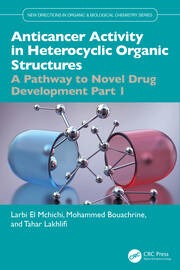
Anticancer activity in heterocyclic organic structures : A pathway to novel drug development : Part 1
New Directions in Organic & Biological Chemistry, explores the development of cancer therapeutics, focusing on molecular chemistry and advanced drug design approaches. Written by experts in theoretical chemistry and molecular chemistry, they bridge the gap between theoretical chemistry, molecular biology, and drug development. In Part I, they focus on the fundamental properties of heterocyclic compounds and innovative methodologies being employed to enhance therapeutic potential. By exploring various classes of heterocyclic compounds and diverse anticancer mechanisms.
