



الصفحة 1
الصفحة 1

NL ARMS Netherlands Annual Review of Military Studies 2020 : Deterrence in the 21st Century—Insights from Theory and Practice
This book surveys the state of the field to examine whether a fifth wave of deterrence theory is emerging. Bringing together insights from world-leading experts from three continents, the volume identifies the most pressing strategic challenges, frames theoretical concepts, and describes new strategies.
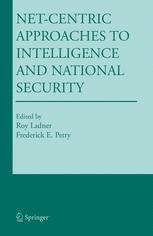
Net-Centric Approaches to Intelligence and National Security
Net-Centric Approaches to Intelligence and National Security considers the web architectures and recent developments that make net-centric approaches for intelligence and national security possible. The development of net-centric approaches for intelligence, national & homeland security applications has become a major concern in many areas such as defense intelligence and national and international law enforcement agencies, especially since the terrorist attacks of 9/11. Net-Centric Approaches to Intelligence and National Security presents developments in information integration and recent advances in web services including the concept of the semantic web. Discovery analysis and management of web-available data pose a number of interesting challenges for research in web-based management systems. Intelligent agents and data mining are among the techniques employed. A number of specific systems that are net-centric based in various areas of military applications, intelligence and law enforcements are presented utlilizing one or more of such techniques Net-Centric Approaches to Intelligence and National Security is designed for a professional audience of researchers and practitioners in industry. This volume is also suitable for graduate-level students in computer science.

Nato And Terrorism : On Scene : New Challenges for First Responders and Civil Protection
This book provides information about how leading agencies across the NATO membership are preparing to confront and respond to terrorists deploying Weapons of Mass Destruction (WMD), Weapons of Mass Killing (WMK) and Weapons of Mass Disruption (WMDi). Based on contributions by experts from NATO member states, Israel and the Russian Federation, this book offers information on fourth generation warfare as a new challenge to first responders. It also provides a variety of insights into methods for preparing for and responding to WMD-, WMK-, and WMDi-events, using new technologies and strategies. Furthermore, the book offers solution for restoring the community to functioning after such a major terror attack. Topics include preparing, planning, operations, equipment, training and unique applications of existing technologies for countering terrorist attacks against cities and their infrastructure.

Microorganisms and Bioterrorism
The purpose of this book is to bring together, in a single volume, the most up-to-date information concerning microbes with potential as bioterrorist weapons. The primary audience includes microbiologists, including bacteriologists, virologists and mycologists, in academia, government laboratories and research institutes at the forefront of studies concerning microbes which have potential as bioterrorist weapons, public health physicians and researchers and scientists who must be trained to deal with bioterrorist attacks as well as laboratory investigators who must identify and characterize these microorganisms from the environment and from possibly infected patients.

Medical Treatment of Intoxications and Decontamination of Chemical Agents in the Area of Terrorist Attack
This book includes reports which were presented at a NATO Advanced Research Workshop (ARW) entitled?Medical Treatment of Intoxications and Decontamination of Chemical Agent in the Area of Terrorist Attack?. The focus of this workshop was assessment of scientific concepts and practical means for management of chemical agent casualties in the area of terrorist attack with emphasis on improving the medical treatment and decontamination. These problems were analyzed from an interdisciplinary perspective. The primary objective of the ARW was to provide countries in which chemical-defense systems are currently under development with the experience and expertise of those that are more advanced and/or have already been exposed and responded to a chemical-terrorist attack. . The main areas covered were: 1. new approaches in pre-treatment and prophylaxis of nerve agent intoxication; 2. diagnosis of exposure to chemical agents ; 3. therapy of chemical agent intoxication; 4. development of personal decontamination; 5. decontamination of intoxication with chemical agents.

Intervention, Terrorism, and Torture : Contemporary Challenges to Just War Theory
Just war theory is the traditional approach taken to questions of the morality of war, but war today is far from traditional. War has been deeply affected in recent years by a variety of social and technological developments in areas such as international terrorism, campaigns of genocide and ethnic cleansing, the global human rights movement, economic globalization, and military technology. This book asks whether just war theory is adequate to the challenges these developments pose.
Intelligence and Security Informatics ; Vol. 3917 ; International Workshop, WISI 2006, Singapore, April 9, 2006, Proceedings
Intelligence and security informatics (ISI) can be broadly defined as the study of the development and use of advanced information technologies and systems for national and international security-related applications. The First and Second Symposiums on ISI were held in Tucson, Arizona, in 2003 and 2004, respectively. In 2005, the IEEE International Conference on ISI was held in Atlanta, Georgia. These ISI conferences brought together academic researchers, law enforcement and intelligence experts, information technology consultants and practitioners to discuss their research and practice related to various ISI topics including ISI data management, data and text mining for ISI applications, terrorism informatics, deception detection, terrorist and criminal social network analysis, crime analysis, monitoring and surveillance, policy studies and evaluation, and information assurance, among others. We continued these stream of ISI conferences by organizing the Workshop on Intelligence and Security Informatics (WISI 2006) in conjunction with the Pacific Asia Conference on Knowledge Discovery and Data Mining (PAKDD 2006).

Fighting Terror Online : The Convergence of Security, Technology, and the Law
This book presents the position that the online environment is a significant and relevant theater of activity in the fight against terror, and will identify the threats, the security needs, and the issues that are unique to this environment. We examine whether the unique characteristics of this environment require new legal solutions, or whether existing solutions are sufficient. Three areas of online activity are identified that require reexamination: security, monitoring, and propaganda. For each of these, we will indicate the issues, examine existing legal arrangements, and offer guidelines for formulating legal policy. There is a demonstrated need to relate to the digital environment as a battlefront, map the new security threats.

Extreme Man-Made and Natural Hazards in Dynamics of Structures
The present threat of the terrorist attacks or accidental explosions, the climate change which brings strong stormy winds or yet the destructive earthquake motion that occurs in previously inactive regions or brings about tsunamis, are a few examples of the kind of applications we seek to address in this work.

Detection of Liquid Explosives and Flammable Agents in Connection with Terrorism
The organization of an Advanced Research Workshop with the title “Detection and Disposal of Liquid Explosives and Flammable Agents in Connection with Terrorism” was motivated by international findings about activities in this field of application. This ARW followed a meeting about the “Detection of Disposal Improvised Explosives” (St. Petersburg, 2005). Both items show the logistic problems as one of the lessons, terrorists have to overcome. These problems are connected with the illegal supply and transport of explosives and fuels and as counter-measure the detection of these materials. The invention of liquid explosives goes back to the middle of the 19th century and was used for special purposes in the commercial field of application. Because of the high sensitivity of liquid explosives against mechanical shock, caused by adiabatic compression of air-bobbles producing “hot spots” as origin of initiation the commercial application was not very successful. Because of this high risk, liquid explosives are not used in military or commercial application with some exceptions. In the commercial field explosives as slurries or emulsions consisting of suitable salts (Ammoniumnitrate etc.) and water are used to a large extend because of their high insensitivity. In many cases these slurries or emulsions were unfit for terrorist actions, because of their low sensitivity, large critical diameter and using in confinement. In the military field liquid explosives are used in World War I and II as bomb-fillings.

Debating Transformations of National Citizenship
Deconomic, social and political change. It focuses on the emergence of global markets where citizenship is for sale and on how new reproduction technologies impact citizenship by descent. It also discusses the return of banishment through denationalisation of terrorist suspects, and the impact of digital technologies, such as blockchain, on the future of democratic citizenship. The book provides a wide range of views on these issues from legal scholars, political scientists, and political practitioners. It is structured as a series of four conversations in which authors respond to each other. This exchange of arguments provides unique depth to current debates about the future of citizenship.

Countering Nuclear and Radiological Terrorism
One key outcome of this book is a better understanding of the independent contributions from across the international community of the scientific and technological components and the legal, policy and institutional components to combating nuclear/radiological terrorism. The book can serve as a tool for communicating the outcomes of the workshop to the multi-national scientific communities engaged in combating nuclear/radiological terrorism, and to those working at governmental and policy levels.

Coercion and the State
A signal feature of legal and political institutions is that they exercise coercive power. The essays in this volume examine institutional coercion with the aim of trying to understand its nature, justification and limits. Included are essays that take a fresh look at perennial questions – what, if anything, can legitimate state exercises of coercive force? What is coercion in politics and law? – and essays that take a first or nearly first look at newer questions – may the state coercively hold certain terrorists indefinitely? Leading scholars from philosophy, political science and law examine these and related questions shedding new light on an apparently inescapable feature of political and legal life: Coercion.
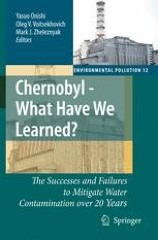
Chernobyl - What Have We Learned? : The Successes and Failures to Mitigate Water Contamination Over 20 Years
Twenty million people have been exposed to Chernobyl radionuclides through the Dnieper River aquatic pathways. This book presents a 20-year historical overview and comprehensive study results of the aquatic environment affected by the 1986 Chernobyl nuclear accident. During this time, many water quality management practices and countermeasures were enacted. The book presents in-depth analyses of these water remediation actions, using current science and mathematical modeling, and discusses why some were successful, but many others failed. The chapter entitled Where Do We Go From Here? incorporates a comprehensive discussion of the planned New Safe Confinement (NSC) structure to cover the Chernobyl plant. The book closes with a summary and conclusions drawn from these analyses, making it a valuable reference tool for the future. This book will be of interest to engineers, scientists, decision-makers, and those involved in radiation protection and radioecology, environmental protection and risk assessment, water remediation and mitigation measures, and radioactive waste disposal. In addition, the detailed, almost day-to-day, emergency responses to the Chernobyl accident described in this book will also be useful to people developing emergency and long-term responses to accidental or intentional (by terrorists) releases of radionuclides, toxic chemicals and biological agents.
Catastrophe modeling : A new approach to managing risk
Catastrophe Modeling: A New Approach to Managing Risk is the first book that systematically analyzes how catastrophe models can be used for assessing and managing risks of extreme events. It focuses on natural disaster risk, but also discusses the management of terrorism risk. A unique feature of this book is the involvement of three leading catastrophe modeling firms, AIR Worldwide, EQECAT, and Risk Management Solutions, who examine the role of catastrophe modeling in rate setting, portfolio management and risk financing. Given the uncertainties associated with terrorism the book points out the opportunities for utilizing catastrophe models to set insurance rates and to examine public-private partnerships for providing financial assistance in the event of a terrorist attack. This book is strongly recommended for individuals who must make decisions regarding the management of impacts of catastrophe risks including those in both the public and private sector.
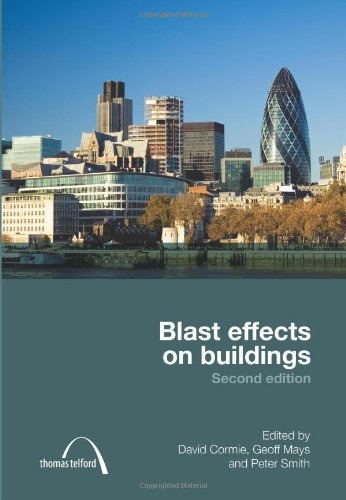
Blast effects on buildings
Provides the latest practical guidance on designing buildings to optimise their resilience to blast loading. Focused specifically on the design of commercial buildings, it is an indispensible guide to help engineers reduce the risks posed to building occupants and businesses from terrorist and other explosions. This book provides the engineer with a single and comprehensive source of reference for all the main elements of blast engineering design in modern practice. Industry-accepted methods for the design of glazing to resist blast loading are published for the first time, as well as a new chapter on hostile vehicle mitigation techniques. Guidance on structural steelwork and reinforced concrete design is extended and enhanced, supplemented with material on design in new materials such as steel-concrete-steel composites, this latter addition being published for the first time.
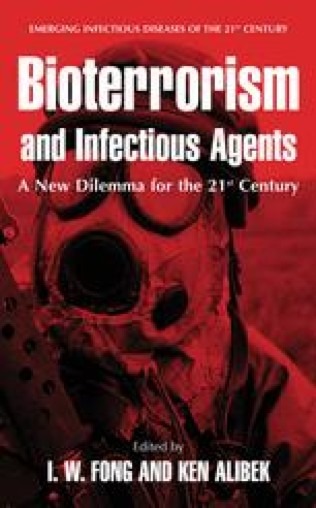
Bioterrorism and Infectious Agents : A New Dilemma for the 21st Century
Since the terrorist attack on the United States on September 11, 2001 and subsequent cases of anthrax in Florida and New York City, attention has been focused on the threat of b- logical warfare and bioterrorism. Biological warfare agents are de?ned as “living org- isms, whatever their nature, or infected material derived from them, which are used for h- tile purposes and intended to cause disease or death in man, animals and plants, and depend for their efforts on the ability to multiply in person, animal or plant attacked.” Biological warfare agents may be well suited for bioterrorism to create havoc and terror in a civilian population, because they are cheap and easy to obtain and dispense. Infectious or contagious diseases have played a major part in the history of warfare – deliberately or inadvertently – in restricting or assisting invading armies over the centuries. In 1346, the Tartars catapulted plaque-infected bodies into Kaffa in the Crimea to end a 3-year siege. Blankets contaminated with smallpox to infect North American Indians were used by British forces in the 18th century. More recently, the Japanese released ?eas infected with plaque in Chinese cities in the 1930s and 1940s. Biological research programs for both offensive and defensive strategies have been developed by the United States, Britain, the former Soviet Union, and Canada; several other nations are thought to have such programs.
Biological, chemical, and radiological Terrorism : Emergency preparedness and response for the primary care physician
This book provides sought-after guidance to primary care physicians on preparing for and responding to terrorist events. Chapters offer a fundamental understanding of the epidemiology and relevant clinical aspects of diseases caused by biological agents (anthrax, plague, smallpox, botulism, tularemia, and hemorrhagic viruses), chemical agents (nerve and blister), and radiological agents. The text details how to detect terrorist-caused illness as early as possible, how to provide defensive or preventive therapy, and how to triage and treat ill patients. Emphasis is placed on addressing both the physical and psychological impact on patients and providers.
Assessment of the fate and effects of toxic agents on water resources
Like all limited and vulnerable resources, water has become one of the potential targets of terrorists. Coastal lagoons are especially vulnerable as they are densely populated centers of commerce and/or tourism. This volume addresses the basic scientific concepts that must be integrated by decisionmakers to minimize damages and optimize recovery operations in the aftermath of such an attack. Scientists from many disciplines including water resource management, hydrodynamics, aquatic ecology and social science combine their expertise in an effort to assess and model emergency scenarios for coastal lagoon systems. This case study uses existing numerical models such as-EFCD, WASP and AQUATOX are used to demonstrate how to optimize rapid response and decision-making
