



الصفحة 1
الصفحة 1

Mathematics Education in East Africa : Towards Harmonization and Enhancement of Education Quality
In the increasingly global and technological world mathematics is seen as a significant gatekeeper of opportunities for social and economic advancement and mobility. Hence, countries and development agencies in the broader sub-Saharan Africa region are looking towards increasing access to relevant and high-quality secondary education as a lever towards economic development. Policy makers and other key decision makers in education look towards improvement in mathematics teaching and learning as a key focus in education reform. In the East Africa region also a number of initiatives have been taken at the national level in the respective countries to improve the quality of mathematics education. This book provides an in-depth comparative analysis of the developments and issues in mathematics education in Kenya, Tanzania, Rwanda and Uganda, and advances our understanding of the state of secondary mathematics education in East Africa.

Forest Entomology in East Africa : Forest Insects of Tanzania
East African forests, among the world’s most biologically rich and diverse, are subject to multiple pressures, including insects. As the first work to focus exclusively on East African forest insects, this monograph distils 135 years of scientific and historical literature extending from before the colonial era to the present into an authoritative survey of this region’s major pests of trees and wood, as well as their antagonists. This comprehensive treatise also addresses insects of social and economic importance, such as endemics, edible and collectible insects, wild bees and silk producers. It should be of great value to foresters, entomologists, conservation biologists, resource managers, safari outfitters and anyone else interested in the natural history of this fascinating region.

Disability, Health and Human Development
Introduces the human development model to define disability and map its links with health and wellbeing, based on Sen’s capability approach. The author uses panel survey data with internationally comparable questions on disability for Ethiopia, Malawi, Tanzania and Uganda. It presents evidence on the prevalence of disability and its strong and consistent association with multidimensional poverty, mortality, economic insecurity and deprivations in education, morbidity and employment. It shows that disability needs to be considered from multiple angles including aging, gender, health and poverty. Ultimately, this study makes a call for inclusion and prevention interventions as solutions to the deprivations associated with impairments and health conditions.
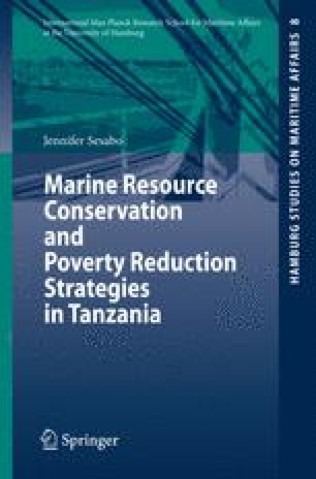
Marine Resource Conservation and Poverty Reduction Strategies in Tanzania
Despite the social, nutritional, economical and environmental importance of Tanzanian coastal areas, yet they are vulnerable to both over-exploitation and degradation of their habitats. Using the data from two coastal villages and econometric methods as well as Stochastic Production Frontier techniques, the book demonstrates the extent which various socio-economic dimensions of rural coastal households influence livelihood pathways, production efficiency and attitudes towards conservation initiatives. Thus, attention to differential patterns of rural coastal households presents more viable possibilities for coastal villages to have conservation-development policies/programs that lead to poverty reduction.
Learning, philosophy, and African citizenship
This book discusses and addresses the compelling questions concerning the ideals of citizenship, the processes of learning to fulfill these ideals, and possibilities of education in fostering citizenship. Rather than advocating for one framework, the authors demonstrate the continuously contested nature of the concept of citizenship as theoretically discussed and practically experienced. The monograph combines, in an unconventional way, selected philosophical accounts and everyday experiences from certain locations in Tanzania and Uganda.
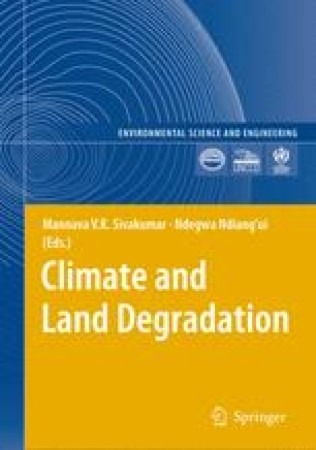
Climate and Land Degradation
In many parts of the world, climatic variations are recognized as one of the major factors contributing to land degradation impacting on agricultural systems performance and management. To accurately assess sustainable land management practices, the climate resources and the risk of climate-related or induced natural disasters in a region must be known. Only when climate resources are paired with management or development practices can the land degradation potential be assessed and appropriate mitigation technologies be developed. This book is based on an International Workshop held in Arusha, Tanzania and should be of interest to all organizations and agencies interested in sustainable land management to arrest land degradation.
African Languages and Literatures in the 21st Century
Examines the crucial role still played by African languages in pedagogy and literatures in the 21st century, generating insights into how they effectively serve cultural needs across the African continent and beyond. Boldly positioning African languages as key resources in the 21st century, chapters focus on themes such as language revolt by marginalized groups at grassroots level, the experience of American students learning African languages, female empowerment through the use of African languages in music, film and literary works, and immigration issues. The contributions are written by scholars of language, literature, education and linguistics, and will be of interest to students and scholars in these and related areas.
