



الصفحة 1
الصفحة 1
Infrastructure for Agents, Multi-Agent Systems, and Scalable Multi-Agent Systems ; International Workshop on Infrastructure for Scalable Multi-Agent Systems, Barcelona, Spain, June 3-7, 2000 Revised Papers
Building research grade multi-agent systems usually involves a broad variety of software infrastructure ingredients like planning, scheduling, coordination, communication, transport, simulation, and module integration technologies and as such constitutes a great challenge to the individual researcher active in the area. The book presents a collection of papers on approaches that will help make deployed and large scale multi-agent systems a reality. The first part focuses on available infrastructure and requirements for constructing research-grade agents and multi-agent systems. The second part deals with support in infrastructure and software development methods for multi-agent systems that can directly support coordination and management of large multi-agent communities; performance analysis and scalability techniques are needed to promote deployment of multi-agent systems to professionals in software engineering and information technology.

Dependable computing - EDCC 2005 ; 5th European dependable computing Conference, Budapest, Hungary, April 20-22, 2005, Proceedings
It is always a special honor to chair the European Dependable Computing C- ference (EDCC). EDCC has become one of the well-established conferences in the ?eld of dependability in the European research area. Budapest was selected as the host of this conference due to its traditions in organizing international scienti?c events and its traditional role of serving as a meeting point between East and West. EDCC-5 was the ?fth in the series of these high-quality scienti?c conf- ences. In addition to the overall signi?cance of such a pan-European event, this year’s conference was a special one due to historic reasons. The roots of EDCC date back to the moment when the Iron Curtain fell. Originally, two groups of scientists from di?erent European countries in Western and Eastern Europe – who were active in research and education related to dependability created a – joint forum in order to merge their communities as early as in 1989. This trend has continued up to today. This year’s conference was the ?rst one where the overwhelming majority of the research groups belong to the family of European nations united in the European Union. During the past 16 years we observed that the same roots in all the professional, cultural and scienti?c senses led to a seamless integration of these research communities previously separated ar- ?cially for a long time. EDCC has become one of the main European platforms to exchange new - searchideasinthe?eldofdependability.
Computer vision systems ; 6th International conference, ICVS 2008 Santorini, Greece, May 12-15, 2008 Proceedings
This book constitutes the refereed proceedings of the 6th International Conference on Computer Vision Systems, ICVS 2008, held in Santorini, Greece, May 12-15, 2008.
Managing Weather and Climate Risks in Agriculture
In many parts of the world, weather and climate are one of the biggest production risks and uncertainty factors impacting on agricultural systems performance and management. Both structural and non-structural measures can be used to reduce the impacts of the variability (including extremes) of climate resources on crop production. While the structural measures include strategies such as irrigation, water harvesting, windbreaks etc., the non-structural measures include use of seasonal to interannual climate forecasts, improved application of medium-range weather forecasts and crop insurance. This book based on an International Workshop held in New Delhi, India should be of interest to all organizations and agencies interested in improved risk management in agriculture.
Climate and Land Degradation
In many parts of the world, climatic variations are recognized as one of the major factors contributing to land degradation impacting on agricultural systems performance and management. To accurately assess sustainable land management practices, the climate resources and the risk of climate-related or induced natural disasters in a region must be known. Only when climate resources are paired with management or development practices can the land degradation potential be assessed and appropriate mitigation technologies be developed. This book is based on an International Workshop held in Arusha, Tanzania and should be of interest to all organizations and agencies interested in sustainable land management to arrest land degradation.
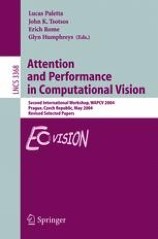
Attention and Performance in Computational Vision ; 2nd International Workshop, WAPCV 2004, Prague, Czech Republic, May 15, 2004, Revised Selected Papers
This book constitutes the thoroughly refereed post-proceedings of the Second International Workshop on Attention and Performance in Computational Vision, WAPCV 2004, held in Prague, Czech Republic in May 2004. The goal of this workshop was to provide an interdisciplinary forum tocommunicatecomputationalmodelsofvisualattentionfromvariousviewpoints,such as from computer vision, psychology, robotics and neuroscience. The motivation for - terdisciplinarity was communication and inspiration beyond the individual community, to focus discussion on computational modelling, to outline relevant objectives for p- formance comparison, to explore promising application domains, and to discuss these with reference to all related aspects of cognitive vision.
