



الصفحة 1
الصفحة 1

Inductive Dependency Parsing
This book provides an in-depth description of the framework of inductive dependency parsing, a methodology for robust and efficient syntactic analysis of unrestricted natural language text. This methodology is based on two essential components: dependency-based syntactic representations and a data-driven approach to syntactic parsing. More precisely, it is based on a deterministic parsing algorithm in combination with inductive machine learning to predict the next parser action.
Existence: Semantics and Syntax
This collection is an important contribution to the semantic and syntactic analysis of the expression of existence. The volume focuses on the three main linguistic constructions expressing existence: copular clauses, existential sentences, and (in)definiteness. The papers analyze the interaction between the basic notion of existence and pervasive phenomena of natural language, such as quantification and presupposition. The contributions represent state of the art research on theoretical and comparative issues related to the expression of existence, and make extensive reference to the semantic and syntactic facts of English and of various other languages. The richness of new data and the juxtaposition of different theoretical stances bring a number of new questions into focus.

Event Structure and the Left Periphery : Studies on Hungarian
This book provides substantial new results in a novel field of research examining the syntactic and semantic consequences of event structure. The studies of this volume examine the hypothesis that event structure correlates with word order, the presence or absence of the verbal particle, the [+/- specific] feature of the internal argument, aspect, focusing, negation, and negative quantification, among others. The results reported concern the telicising vs. perfectivizing role of the verbal particle; the syntactic and semantic differences of verbs denoting a delimited change, and those denoting creation or coming into being; evidence of viewpoint aspect in a language with no morphological viewpoint marking; the aspectual role of non-thematic objects; the source of the ‘exhaustive identification’ function of structural focus; the interaction of negation and aspect etc.

Ergativity : Emerging Issues
This volume presents a collection of papers on the enticing and complex theme of Ergativity. The papers exemplify theoretical depth applied to a wide range of languages, with the majority of papers based on original fieldwork. Ergativity refers to a grammatical pattern in which the logical subject of intransitive clauses and the logical object of transitive clauses share some grammatical features, and in this respect differ from transitive subjects. The shared features are often case and/or agreement, but a variety of other relevant features have also been isolated in the literature.

English proofreader
Using Natural Language Processing via Deep Learning, we will attempt to implement a context-sensitive spelling error correction system focused on casual text messaging. For example, usual autocorrect systems will not correct a sentence like “An apple is better than a banana” as this is a syntactically correct sentence. However, a correction should be made here to the word “then” and the sentence should be, “An apple is better than a banana.” These types of mistakes are common in people texting and can be found for example in people learning English as a second language. Natural Language Processing can be summarized as combining the utilization of computation to understand the concepts of natural language and speech.

Copular Sentences In Russian : A Theory of Intra-Clausal Relations
This book provides a detailed study and a novel Minimalist account of copular sentences in Russian, focusing on case marking alternations (nominative vs. instrumental) and drawing a distinction between two types of copular sentences. On the assumption that Merge is defined in the simplest way possible, it is argued that not all syntactic structures are a(nti)symmetrical. One of the copular sentence types is analyzed as a poster child for symmetrical structures, while the other type is treated as asymmetrical. The originality of this study lies in treating the copula in the two types of copular sentences neither as completely identical nor as two distinct lexical items; instead, the two types of copula are derived through the process of semantic bleaching. Furthermore, it is argued that the two types of the copula need to combine with post-copular phrases of different categories. It is concluded that Russian draws a distinction between saturated DPs and unsaturated NPs, in spite of its renowned lack of overt articles.

Concepts and Semantics of Programming Languages 2 : Modular and Object-oriented Constructs with OCaml, Python, C++, Ada and Java
Explores the syntactical constructs of the most common programming languages, and sheds a mathematical light on their semantics, providing also an accurate presentation of the material aspects that interfere with coding. Presents an original semantic model, collectively taking into account all of the constructs and operations of modules and classes: visibility, import, export, delayed definitions, parameterization by types and values, extensions, etc. The model serves for the study of Ada and OCaml modules, as well as C header files. It can be deployed to model object and class features, and is thus used to describe Java, C++, OCaml and Python classes.

Concepts and Semantics of Programming Languages 1 : A Semantical Approach with OCaml and Python
Explores the syntactical constructs of the most common programming languages, and sheds a mathematical light on their semantics, while also providing an accurate presentation of the material aspects that interfere with coding. It is dedicated to functional and imperative features. Included is the formal study of the semantics of typing and execution; their acquisition is facilitated by implementation into OCaml and Python, as well as by worked examples. Data representation is considered in detail: endianness, pointers, memory management, union types and pattern-matching, etc., with examples in OCaml, C and C++. The second volume introduces a specific model for studying modular and object features and uses this model to present Ada and OCaml modules, and subsequently Java, C++, OCaml and Python classes and objects.

Computational Processing of the Portuguese Language ; 7th International Workshop, PROPOR 2006, Itatiaia, Brazil, May 13-17, 2006, Proceedings
Since 1993, PROPOR Workshops have become an important forum for - searchers involved in the Computational Processing of Portuguese,both written and spoken. The workshop and this book were structured around the following main t- ics, seven for full papers: (i) automatic summarization; (ii) resources; (iii) au- matic translation; (iv) named entity recognition; (v) tools and frameworks; (vi) systems and models; and another ?ve topics for short papers; (vii) information extraction; (viii) speech processing; (ix) lexicon; (x) morpho-syntactic studies; (xi) web, corpus and evaluation.
Computational Cognitive Modeling and Linguistic Theory
This book introduces a general framework that allows natural language researchers to enhance existing competence theories with fully specified performance and processing components. Gradually developing increasingly complex and cognitively realistic competence-performance models, it provides running code for these models and shows how to fit them to real-time experimental data. This computational cognitive modeling approach opens up exciting new directions for research in formal semantics, and linguistics more generally, and offers new ways of (re)connecting semantics and the broader field of cognitive science.
Matematica generale con il calcolatore
By introducing mathematical objects, it teaches students how to use a computer to perform numerical and symbolic calculations, define a function and calculate its values, plot and explore graphs, and execute simple algorithms. The course is rich in examples, applications, and models, drawn from economics, physics, biology, statistics, and mathematics itself. The analysis of these models constitutes, in a certain sense, the true purpose of the mathematical theory covered. Automatic calculation tools (mathematics software, spreadsheets) are used extensively to explore and illustrate concepts and properties. Mathcad® software, in particular, was used, both as a calculation tool and as a simple yet powerful programming language. Considerable space is devoted to approximation, emphasizing the distinction between numerical and symbolic calculation; to algorithms as a synthesis of the syntactic and semantic aspects of mathematical objects; and to computer simulation, interpreted as a "physical" experiment and a source of conjecture. The ability to use a calculator marks a sort of "democratization" of mathematics: even complex results, which have always required a broad background of knowledge and laborious calculations, are now quickly accessible to anyone who understands the meaning of mathematical objects and knows how to use the syntax.
Mass Terms : Some Philosophical Problems
MASS TERMS, COUNT TERMS, AND SORTAL TERMS Central examples of mass terms are easy to come by. 'Water', 'smoke', 'gold', etc. , differ in their syntactic, semantic, and pragmatic properties from count terms such as 'man', 'star', 'wastebasket', etc. Syntactically, it seems, mass terms do, but singular count terms do not, admit the quantifier phrases 'much', 'an amount of', 'a little', etc. The typical indefinite article for them is 'some' (unstressed)!, and this article cannot be used with singular count terms. Count terms, but not mass terms, use the quantifiers 'each', 'every', 'some', 'few', 'many'; and they use 'a(n)' as the indefinite article. They can, unlike the mass terms, take numerals as prefixes.

Logical aspects of computational linguistics ; 4th International Conference, LACL 2001, Le Croisic, France, June 27-29, 2001, Proceedings
Structural Equations in Language Learning.- On the Distinction between Model-Theoretic and Generative-Enumerative Syntactic Frameworks.- Contributed Papers.- A Formal Definition of Bottom-Up Embedded Push-Down Automata and Their Tabulation Technique.- An Algebraic Approach to French Sentence Structure.- Deductive Parsing of Visual Languages.- Lambek Grammars Based on Pregroups.- An Algebraic Analysis of Clitic Pronouns in Italian.- Consistent Identification in the Limit of Any of the Classes k-Valued Is NP-hard.- Polarized Non-projective Dependency Grammars.- On Mixing Deduction and Substitution in Lambek Categorial Grammars.- A Framework for the Hyperintensional Semantics of Natural Language with Two Implementations.- A Characterization of Minimalist Languages.- of Speech Tagging from a Logical Point of View.- Transforming Linear Context-Free Rewriting Systems into Minimalist Grammars.- Recognizing Head Movement.- Combinators for Paraconsistent Attitudes.- Combining Syntax and Pragmatic Knowledge for the Understanding of Spontaneous Spoken Sentences.- Atomicity of Some Categorially Polyvalent Modifiers.
Completeness theory for propositional logics
Completeness is one of the most important notions in logic and the foundations of mathematics. Many variants of the notion have been de?ned in literature. We shallconcentrateonthesevariants,andaspects,of completenesswhicharede?ned in propositional logic. Completeness means the possibility of getting all correct and reliable sc- mata of inference by use of logical methods. The word ‘all’, seemingly neutral, is here a crucial point of distinction. Assuming the de?nition as given by E. Post we get, say, a global notion of completeness in which the reliability refers only to syntactic means of logic and outside the correct schemata of inference there are only inconsistent ones. It is impossible, however, to leave aside local aspects of the notion when we want to make it relative to some given or invented notion of truth. Completeness understood in this sense is the adequacy of logic in relation to some semantics, and the change of the logic is accompanied by the change of its semantics.
Case and linking in language comprehension : evidence from German
This volume contains detailed introductions to human syntactic processing as well as to German syntax which will be helpful especially for readers less familiar with psycholinguistics and with Germanic.
Balkan Sprachbund Morpho-Syntactic Features
This book discusses the morpho-syntactic Balkan Sprachbund features in nine languages in which they are most numerous. It contains a wealth of Balkan linguistic material, collected from both the existing literature sources and from the author’s own field work.

Aspectual Inquiries
The papers in this volume represent the results of a workshop on the syntax, semantics and acquisition of aspect held in 2002 whose purpose was to foment active cross-disciplinary communication. A number of the papers examine the syntactic representation of lexical or situation aspect, while others focus on the syntactic interaction of lexical aspect with grammatical aspect, and of grammatical aspect and tense. Other papers examine the role of aspect in discourse representations, while a third group of papers reports on results of empirical studies on the acquisition of aspect in both first and second language acquisition, and patterns of loss of morphosyntactic reflexes of aspect in language attrition.
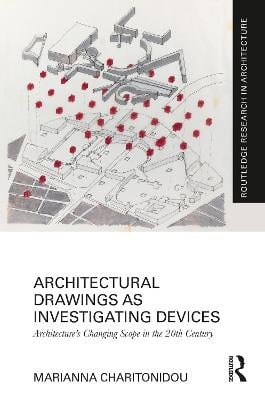
Architectural drawings as investigating devices : Architecture’s changing scope in the 20th century
Explores how the changing modes of representation in architecture and urbanism relate to the transformation of how the addressees of architecture and urbanism are conceived. Diagnoses the dominant epistemological debates in architecture and urbanism during the 20th and 21st centuries. It traces their transformations, paying special attention to Le Corbusier and Ludwig Mies van der Rohe’s preference for perspective representation, to the diagrams of Team 10 architects, to the critiques of functionalism, and the upgrade of the artefactual value of architectural drawings in Aldo Rossi, John Hejduk, Peter Eisenman, and Oswald Mathias Ungers, and, finally, to the reinvention of architectural programme through the event in Bernard Tschumi and the Office for Metropolitan Architecture (OMA). Particular emphasis is placed on the spirit of truth and clarity in modernist architecture, the relationship between the individual and the community in post-war era architecture, the decodification of design process as syntactic analogy and the paradigm of autonomy in the 1970s and 1980s architecture, the concern about the dynamic character of urban conditions and the potentialities hidden in architectural programme in the post-autonomy era.
Anaphora : Analysis, Algorithms and Applications ; 6th Discourse Anaphora and Anaphor Resolution Colloquium, DAARC 2007, Lagos Portugal, March 29-30, 2007, Selected Papers
This book presented sections on human processing and performance, language analysis and representation, resolution methodology and algorithms, as well as computational systems and applications.
An Introduction to Language Processing with Perl and Prolog : An Outline of Theories, Implementation, and Application with Special Consideration of English, French, and German
This book teaches the principles of natural language processing, first covering linguistics issues such as encoding, entropy, and annotation schemes; defining words, tokens and parts of speech; and morphology. It then details the language-processing functions involved, including part-of-speech tagging using rules and stochastic techniques; using Prolog to write phase-structure grammars; parsing techniques and syntactic formalisms; semantics, predicate logic and lexical semantics; and analysis of discourse, and applications in dialog systems. The key feature of the book is the author's hands-on approach throughout, with extensive exercises, sample code in Prolog and Perl, and a detailed introduction to Prolog. The reader is supported with a companion website that contains teaching slides, programs, and additional material.
