



الصفحة 1
الصفحة 1

Molecular Mechanisms of Synaptogenesis
Molecular Mechanisms of Synaptogenesis is a compilation of recent exciting findings that summarizes the ever-expanding knowledge of how neuronal contacts develop in the normal brain and how their functions are affected in mental disorders. In the last decade, advances in molecular and cellular biology, combined with the development of sophisticated fluorescence microscopy tools to visualize synapses in live neurons, have revealed many intriguing and unexpected findings regarding the dynamics of synapse formation. Studies by a number of researchers have identified several critical protein components of synapses and shown the time course of their arrival at the synapse. Several molecules serve to hold the synaptic contacts between nerve cells and regulate their function.

Molecular Mechanisms of Neurotransmitter Release
Within the complex neuronal network of the nervous system, neuron-to-neuron communication occurs mainly through chemical synapses, where the presynaptic nerve terminal releases neurotransmitters that control the function of postsynaptic neurons by acting on postsynaptic receptors. Recent decades have brought groundbreaking new developments and a wealth of knowledge to this field. In Molecular Mechanisms of Neurotransmitter Release, leading experts provide concise, up-to-date information on all major molecular mechanisms involved, with complete background information and figures and diagrams to further elucidate key concepts or experiments.Comprehensive and cutting-edge, Molecular Mechanisms of Neurotransmitter Release is sure to provide a learning tool for neuroscience students, a solid reference for neuroscientists, and a source of knowledge for all those who have a general interest in the ever-evolving field of neuroscience.

Handbook of neurochemistry and molecular neurobiology : Sensory neurochemistry
This volume of the Handbook of Neurochemistry and Molecular Biology focuses on molecular events involved in synapse formation, synaptic plasticity and ongoing neural activity. The volume explores axonal growth cones, synapse development, and mechanisms of LTP and LTD, and calcium dynamics.

Ctenophores : Methods and protocols
Explores emerging approaches and methods inspired by recent research using ctenophores or placozoans, facilitating the study of these enigmatic species and ancient animal lineages. Practical protocols are integrated with introductory chapters about general biology, summarizing the diversity, evolution, genomics, development, and neurobiology of these organisms. Special chapters outline strategies and applications for culturing, microscopy, physiology, electrical synapses, and bioluminescence, molecular and single-cell biology, transcription factors, as well as gene and protein expression analyses. The book also contains bioinformatics and computational chapters covering peptidomics and epigenomics. Written for the highly successful Methods in Molecular Biology series, chapters include detailed implementation advice that leads to dependable results in the laboratory.

Corticofugal Modulation of Sensory Information
Sensory signals reach the cerebral cortex after having made synapses in different relay stations along the sensory pathway. The flow of sensory information in subcortical relay stations is controlled by the action of precise topographic connections from the neocortex. Several lines of research indicate that the massive corticifugal system improves ongoing subcortical sensory processing and reorganizes the receptive fields in visual, auditory and somatosensory systems. In all these sensory systems cortical neurons mediate both the highly focused positive feedback to subcortical neurons with ove
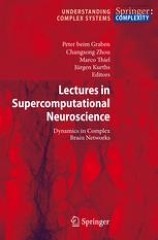
Lectures in Supercomputational Neurosciences : Dynamics in Complex Brain Networks
The present volume is an introduction, largely from the physicists' perspective, to the subject matter with in-depth contributions by system neuroscientists. A conceptual model for complex networks of neurons is introduced that incorporates many important features of the real brain, such as various types of neurons, various brain areas, inhibitory and excitatory coupling and the plasticity of the network. The computational implementation on supercomputers, which is introduced and discussed in detail in this book, will enable the readers to modify and adapt the algortihm for their own research.

Cell Communication in Nervous and Immune System
At first glance, the nervous and immune systems appear very different. However, both systems have developed mechanisms for memory formation – though of quite different quality and significance for the organism. One striking example is that both systems form and communicate via synapses armed with similar sets of proteins. This collection of reviews, contributed by internationally recognized immunologists and molecular and cellular neurobiologists, puts side by side cellular communication devices and signaling mechanisms in the immune and nervous systems and discusses mechanisms of interaction between the two systems, the significance of which has only recently been fully appreciated.

Brain Dynamics : Synchronization and Activity Patterns in Pulse-Coupled Neural Nets with Delays and Noise
This book addresses a large variety of models in mathematical and computational neuroscience.He devotes the main part to the synchronization problem. He presents neural net models more realistic than the conventional ones by taking into account the detailed dynamics of axons, synapses and dendrites, allowing rather arbitrary couplings between neurons. He gives a complete stabile analysis that goes significantly beyond what has been known so far. He also derives pulse-averaged equations including those of the Wilson--Cowan and the Jirsa-Haken-Nunez types and discusses the formation of spatio-temporal neuronal activity pattems. An analysis of phase locking via sinusoidal couplings leading to various kinds of movement coordination is included.

Axon growth and guidance
The complexarchitectureofneuronal networks togetherwith the extraordinary associated functions make the nervous system a fascinating biological structure. The considerable work performed to explore this cellular machinery is nowadays successfulbecause the mysteryofnervous system developmentisbeing unravelled. As described in their outstanding review published 10 years ago in Science.' Marc Tessier-Lavigne and Corey Goodman-the pioneers of the molecular era of axon guidance-summarized the assembly of nervous system connections as a subtle game of attraction and repulsion of neuronal growth cones. The cellular ballet ensuring the formation of billions of synapses, which ultimately gives rise to the highest cognitive functions, is primarily orchestrated by a step-by-step mechanism of growth driven by multiple molecular cues. While our general concept of axon guidance remains identical, a profound evolution ofour knowledge ofthe molecular identityofthe guidance cues together with their interactions and signalling pathways occurred over the past ten years.

Advances in Network Electrophysiology : Using Multi-Electrode Arrays
This book book is an attempt to review the recent progress in both electronics and computational tools developed to analyze the functional operations of large ensembles of neurons and to provide the readers with a sense of the applications made possible by these technological tools. While considerable progress has been made over the last decades in our understanding of electrophysiological processes at the single channel, single synapse, and single neuron levels, our understanding of electrophysiological
