



الصفحة 1
الصفحة 1

Observing the Sun with Coronado™ Telescopes
At around the turn of the millennium, the introduction of the Coronado range of solar telescopes and filters heralded the ‘coming of age’ of amateur solar astronomy. Before then, solar astronomy was mostly white-light only. Hydrogen-alpha systems were expensive and difficult to use, but today even the budget-priced Coronado PST (Personal Solar Telescope) provides a band pass of one Angstrom and is thermally stable. That means that today’s amateur solar observers can see – and image – sunspots, flares, prominences, plage, filaments, and active regions of the Sun, all in amazing detail.

Essays in Dynamic General Equilibrium Theory: Festschrift for David Cass
This collection of essays including the study of dynamic general equilibrium, the concept of sunspot equilibria, and general equilibrium theory when markets are incomplete.

Magneto-Fluid Dynamics : Fundamentals and Case Studies of Natural Phenomena
Concerns the generation of electric currents and of electric space charges inside conducting media that move in magnetic fields. The authors postulate nothing but the Maxwell equations. They discuss at length the disk dynamo, which serves as a model for the natural self-excited dynamos that generate magnetic fields such as that of sunspots. There are 36 Examples and 13 Case Studies. The Case Studies concern solar phenomena -- magnetic elements, sunspots, spicules, coronal loops -- and the Earth's magnetic field.
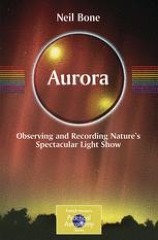
Aurora : Observing and Recording Nature's Spectacular Light Show
The uniquely beautiful light display of an aurora is the result of charged particles colliding with tenuous atmospheric oxygen and nitrogen, more than 60 miles above the Earth, when the magnetosphere is disturbed by changes in the solar wind. Often - and incorrectly - regarded as being confined to high northern and southern latitudes, major auroral displays are visible from even the southern USA and the south of England, and occur perhaps twenty times in each eleven-year sunspot cycle. This book describes the aurora from the amateur observational viewpoint, discusses professional studies of auroral and geomagnetic phenomena to put amateur work in context, and explains how practical observers can go about observing and recording auroral displays.
