



الصفحة 1
الصفحة 1
Methods for measuring greenhouse Gas balances and evaluating mitigation options in smallholder agriculture
This book provides standards and guidelines for quantifying greenhouse gas emissions and removals in smallholder agricultural systems and comparing options for climate change mitigation based on emission reductions and livelihood trade-offs. Globally, agriculture is directly responsible for about 11% of annual greenhouse gas (GHG) emissions and induces an additional 17% through land use change, mostly in developing countries. Farms in the developing countries of sub-Saharan Africa and Asia are predominately managed by smallholders, with 80% of land holdings smaller than ten hectares. However, little to no information exists on greenhouse gas emissions and mitigation potentials in smallholder agriculture.

Mathematics Education in East Africa : Towards Harmonization and Enhancement of Education Quality
In the increasingly global and technological world mathematics is seen as a significant gatekeeper of opportunities for social and economic advancement and mobility. Hence, countries and development agencies in the broader sub-Saharan Africa region are looking towards increasing access to relevant and high-quality secondary education as a lever towards economic development. Policy makers and other key decision makers in education look towards improvement in mathematics teaching and learning as a key focus in education reform. In the East Africa region also a number of initiatives have been taken at the national level in the respective countries to improve the quality of mathematics education. This book provides an in-depth comparative analysis of the developments and issues in mathematics education in Kenya, Tanzania, Rwanda and Uganda, and advances our understanding of the state of secondary mathematics education in East Africa.

International Competitiveness in Africa : Policy Implications in the Sub-Saharan Region
The effects of international trade and foreign direct investment on developing economies have always been controversial. With the unstoppable spread of globalization and the supremacy of "open" policies over "closed" ones, the debate between "participating" and "not participating" in the world economy has been superseded by discussions on the best policy measures for expanding participation and enhancing the accrued welfare gains. Policies to strengthen international competitiveness are almost unanimously considered important means towards those ends. This book examines two policies frequently used to enhance international competitiveness in Sub-Saharan African economies: exchange rate policy and productivity-related policy.

HIV, resurgent infections and population change in Africa
This book aims to contribute to these efforts by offering a demographic and epidemiological perspective on emerging and reemerging infections in sub-Saharan Africa.

Health Dimensions of COVID-19 in India and Beyond
This book addresses the multiple health dimensions posed by the COVID-19 pandemic in India and other countries including nine in Asia, five in Sub-Saharan Africa, and New Zealand. It explores the impact of the pandemic on mental health, sexual and reproductive health and rights, health financing, self-care, and vaccine development and distribution. The contributing authors discuss its impact on vulnerable populations, including interstate migrants and female sex workers. The significant role of media and communications, rapid dissemination of information in social media, and its impact during the COVID-19 pandemic era are discussed. It closes with lessons learned from the experiences of countries that have contained the pandemic.

Financing clean energy access in Sub-Saharan Africa : Risk mitigation strategies and innovative financing structures
This book analyses barriers and challenges associated with the financing of clean energy access in sub-Saharan Africa. By considering various economic, financial, political, environmental and social factors, it explores the consequences of energy poverty across the region and maps the real and perceived investment risks for potential capital providers, both domestic and international. Furthermore, it analyses risk mitigation strategies and innovative financing structures available to the public and private sectors, which are aimed at leveraging capital in the clean energy sector at scale and fostering the creation of an enabling business and investment environment.

Enhancing Smallholder Farmers' Access to Seed of Improved Legume Varieties Through Multi-stakeholder Platforms : Learning from the TLIII project Experiences in sub-Saharan Africa and South Asia
This book shares the experiences of Tropical Legumes III (TLIII) project in facilitating access to seed of improved legume varieties to smallholder farmers through innovation platforms. It highlights practices and guiding principles implemented in eight developing countries of sub-Saharan Africa and South Asia. This book details key processes that respective teams employed to create an innovation space that delivers seed, other inputs, knowledge and financial services to agricultural communities and most importantly, the underserved farmers in remote areas of the drylands

Energy in Africa : Challenges and Opportunities
This open access book presents a picture of the current energy challenges on the African continent (and the Sub-Saharan region in particular) and proposes pathways to an accelerated energy transition. Starting with an analysis of the status quo and the outlook for Africa’s energy demand and energy access, it provides an account of the available resources, including hydrocarbons and renewable energy resources, which are playing an increasingly crucial role. It then moves on to analyze the level of investment required to scale-up Africa’s energy systems, shedding light on the key barriers and elaborating on potential solutions. It also provides a suggestion for improving the effectiveness of EU–Africa cooperation. While mainly intended for policymakers and academics, this book also speaks to a broader audience interested in gaining an overview of the challenges and opportunities of the African energy sector today and in the future.

Economics of Land Degradation and Improvement : A Global Assessment for Sustainable Development
This volume deals with land degradation, which is occurring in almost all terrestrial biomes and agro-ecologies, in both low and high income countries and is stretching to about 30% of the total global land area. About three billion people reside in these degraded lands. However, the impact of land degradation is especially severe on livelihoods of the poor who heavily depend on natural resources. The annual global cost of land degradation due to land use and cover change (LUCC) and lower cropland and rangeland productivity is estimated to be about 300 billion USD. Sub-Saharan Africa (SSA) accounts for the largest share (22%) of the total global cost of land degradation.

Malaria disease and modern treatments
Some population groups are at considerably higher risk of contracting malaria and developing severe disease: infants, children under 5 years of age, pregnant women and patients with HIV/AIDS, as well as people with low immunity moving to areas with intense malaria transmission such as migrant workers, mobile populations and travellers. Malaria is an acute febrile illness caused by Plasmodium parasites, which are spread to people through the bites of infected female Anopheles mosquitoes. There are 5 parasite species that cause malaria in humans, and 2 of these species – P. falciparum and P. vivax – pose the greatest threat. P. falciparum is the deadliest malaria parasite and the most prevalent on the African continent. P. vivax is the dominant malaria parasite in most countries outside of sub-Saharan Africa.
Community Schools in Africa : Reaching the Unreached
Over the past decade, community schools similar to those supported by Save the Children have been established in many developing countries, and especially in sub-Saharan Africa. As large numbers of children attend schools started and managed by their own communities and/or by nongovernmental organizations, questions have come up about the impact of such schools at large scale: "Can village-based or community schools have a national impact on access to education, spur improved long-term development strategies and education policy, or achieve or influence Education for All? This book explores these and related questions, drawing on Save the Children’s experience with community-based schooling in four countries: Ethiopia, Malawi, Mali, and Uganda.
Climate risk in Africa : Adaptation and resilience
This book highlights the complexities around making adaptation decisions and building resilience in the face of climate risk. It is based on experiences in sub-Saharan Africa through the Future Climate For Africa (FCFA) applied research programme. It begins by dealing with underlying principles and structures designed to facilitate effective engagement about climate risk, including the robustness of information and the construction of knowledge through co-production
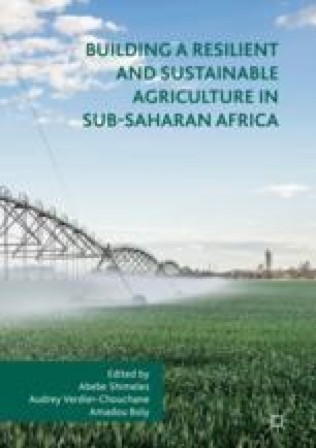
Building a Resilient and Sustainable Agriculture in Sub-Saharan Africa
What are the challenges and action points for agricultural sustainability in Sub-Saharan Africa? This collection of papers offers technical analyses, policy recommendations and an overview of success stories to date. Each carefully selected paper provides valuable insights for improved policy making and defines relevant strategic priorities on Africa’s sustainable transformation process, which is in line with the international development agenda. Although agriculture remains the main source of income for Africa’s population, the sector is rain-fed subjecting it to the vagaries of weather and climate change. This volume demonstrates the rationale of developing a competitive, inclusive and sustainable agribusiness sector for Africa’s food security and structural transformation.
Agriculture for Economic Development in Africa : Evidence from Ethiopia
This book explores the role of agriculture in long-term economic growth. With a particular focus on Ethiopia, the role of the state in igniting agricultural growth and in sustaining economic growth is highlighted as essential for low-income countries. Taking ideas from both economic history and development economics, the ability of Ethiopia and the rest of Africa to sustain recent rapid growth into something that can tackle the development agenda is discussed, alongside policy suggestions.
Advances in Integrated Soil Fertility Research in sub-Saharan Africa : Challenges and Opportunities
Food insecurity is a central concern and a fundamental challenge for human welfare and economic growth in Africa. Low agricultural production, results in low incomes, poor nutrition, vulnerability to risks and lack of empowerment. Land degradation and soil fertility depletion are considered the major threats to food security and natural resource conservation in sub-Saharan Africa (SSA). Investments in technology, policy and institutional reforms are needed to increase agricultural productivity to ensure food security and sustained national economies. Past research has generated numerous soil fertility management technologies which if adopted could propel the African continent out of the poverty trap. However, these technologies have had little, if any, impact due to low adoption by the smallholder farmers.
