



الصفحة 1
الصفحة 1

Open and Distance Education in Australia, Europe and the Americas : National Perspectives in a Digital Age
This book describes the history, structure and institutions of open and distance education in six countries: Australia, Brazil, Canada, Germany, the UK and the US. It discusses how open and distance education is evolving in a digital age to reflect the needs and circumstances of national higher education systems in these countries, and explores the similarities and differences between the ways in which they are organized and structured. It is the first book to make such comparisons and draw conclusions about the nature of open and distance education in the context of various national higher education systems. In a digital era with growing use of online education as well as open and distance education.

Open and distance education in Asia, Africa and the Middle East : National perspectives in a digital age
This book describes the history, structure and institutions of open and distance education in six countries: China, India, Russia, Turkey, South Africa and South Korea. It describes how open and distance education is evolving in a digital age to reflect the needs and circumstances of the national higher education systems in these countries. It also explores the similarities and differences between how their open and distance higher education systems are managed and structured. The book compare and draw conclusions about the nature of open and distance education in the context of various national higher education systems. In a digital era characterized by the growing use of online, open and distance education, this book will prove particularly valuable for policy-makers and senior administrators who want to learn about establishing or expanding open and distance education services. In addition, it offers a valuable reference guide for researchers, academics and students interested in understanding the different approaches to open and distance education.
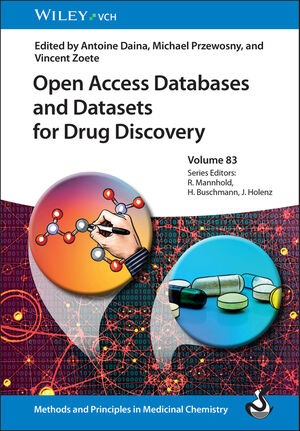
Open access databases and datasets for drug discovery
With an overview of 90 freely accessible databases and datasets on all aspects of drug design, development, and discovery, Open Access Databases and Datasets for Drug Discovery is a comprehensive guide to the vast amount of “free data” available to today’s pharmaceutical researchers. The applicability of open-source data for drug discovery and development is analyzed, and their usefulness in comparison with commercially available tools is evaluated. The most relevant databases for small molecules, drugs and druglike substances, ligand design, protein 3D structures (both experimental and calculated), and human drug targets are described in depth, including practical examples of how to access and work with the data. The first part is focused on databases for small molecules, followed by databases for macromolecular targets and diseases. The final part shows how to integrate various open-source tools into the academic and industrial drug discovery and development process.

Ontologies for Urban Development
Action C21 of the European programme for Cooperation in the field of Scientific and Technical Research (COST—http://www.cost.esf.org/) is dedicated to investigating urban ontologies for an improved communication in urban civil engineering projects. The Action, known informally as "Towntology", brings together a large and heterogeneous grouping from across Europe, whose interests range from construction to urban tourism and from transport infrastructure to resource visualisation. On 6-7 November 2006, in Geneva, the Action convened a successful workshop to address emerging issues in the field. This volume presents the contributions to that workshop, in many cases revised afterwards to capture some of the outcomes of discussion.

Ontologies for Software Engineering and Software Technology
The editors structured the contributions into three parts: first, a detailed introduction into the use of ontologies in software engineering and software technology in general; second, the use of ontologies to conceptualize different process-related domains such as software maintenance, software measurement, or SWEBOK, initiated by IEEE; third, the use of ontologies as artifacts in several software processes, like, for example, in OMG’s MOF or MDA.

Ontologies for Agents : Theory and Experiences
On the other hand, ontologies have established themselves as a powerful tool to enable kno- edge sharing, and a growing number of applications have bene?ted from the use of ontologies as a means to achieve semantic interoperability among heterogeneous, distributed systems. In principle ontologies and agents are a match made in heaven, that has failed to happen. What makes a simple piece of software an agent is its ability to communicate in a ”social” environment, to make autonomous decisions, and to be proactive on behalf of its user. Communication ultimately depends on und- standing the goals, preferences, and constraints posed by the user. Autonomy is theabilitytoperformataskwithlittleornouserintervention,whileproactiveness involves acting autonomously with no need for user prompting. Communication, but also autonomy and proactiveness, depend on knowledge. The ability to c- municate depends on understanding the syntax (terms and structure) and the semantics of a language. Ontologies provide the terms used to describe a domain and the semantics associated with them. In addition, ontologies are often comp- mented by some logical rules that constrain the meaning assigned to the terms. These constraints are represented by inference rules that can be used by agents to perform the reasoning on which autonomy and proactiveness are based.

One-Dimensional Nanostructures
One-dimensional (1D) nanostructures, including nanowires, nanotubes and quantum wires, have been regarded as the most promising building blocks for nanoscale electronic and optoelectronic devices. Worldwide efforts in both the theory and the experimental investigation of growth, characterization and applications of 1D nanostructures have resulted in a mature, multidisciplinary field. In this book, a wealth of state-of-the-art information offers the opportunity to uncover the underlying science from diverse perspectives. Leading researchers elucidate the synthesis and properties of 1D nanostructures for various morphologies and compositions (semiconductor, metal, carbon, etc.) as well as their considerable impact on spintronics, information storage, and the design of field-effect transistors.

On the Way to the Web : The Secret History of the Internet and its Founders
On the Way to the Web: The Secret History of the Internet and Its Founders is an absorbing chronicle of the inventive, individualistic, and often cantankerous individuals who set the Internet free. Michael A. Banks describes how the online population created a new culture and turned a new frontier into their vision of the future. This book will introduce you to the innovators who laid the foundation for the Internet and the World Wide Web, the man who invented online chat, and the people who invented the products all of us use online every day. Learn where, when, how and why the Internet came into being, and exactly what hundreds of thousands of people were doing online before the Web. See who was behind it all, and what inspired them.

On the Uniqueness of Humankind
Europäische Akademie organized the conference "The Uniqueness of Humankind – Über die Sonderstellung des Menschen". The proceedings of the conference documented in this volume approached the theoretical and practical concept of the "Sonderstellung" against the background of present day knowledge in biosciences.

On the Topology of Isolated Singularities in Analytic Spaces
The aim of this book is to give an overview of selected topics on the topology of real and complex isolated singularities, with emphasis on its relations to other branches of geometry and topology. The first chapters are mostly devoted to complex singularities and a myriad of results spread in a vast literature, which are presented here in a unified way, accessible to non-specialists. Among the topics are the fibration theorems of Milnor; the relation with 3-dimensional Lie groups; exotic spheres; spin structures and 3-manifold invariants; the geometry of quadrics and Arnold's theorem which states that the complex projective plane modulo conjugation is the 4-sphere. The second part of the book studies pioneer work about real analytic singularities which arise from the topological and geometric study of holomorphic vector fields and foliations. In the low dimensional case these turn out to be related to fibred links in the 3-sphere defined by meromorphic functions. This provides new methods for constructing manifolds equipped with a rich geometry.
On the move to meaningful internet systems : OTM 2008 Workshops ; OTM Confederated International Workshops and Posters, ADI, AWeSoMe, COMBEK, EI2N, IWSSA, MONET, OnToContent + QSI, ORM, PerSys, RDDS, SEMELS, and SWWS 2008, Monterrey, Mexico, November 9-14, 2008. Proceedings
This volume constitutes the refereed proceedings of 13 international workshops held as part of OTM 2008 in Monterrey, Mexico, in November 2008.The 106 revised full papers presented were carefully reviewed and selected from a total of 171 submissions to the workshops. The volume starts with 19 additional revised poster papers of the OTM 2008 main conferences CoopIS and ODBASE. Topics of the workshop papers are ambient data integration (ADI 2008), agents and web services merging in distributed environment (AWeSoMe 2008), community-based evolution of knowledge-intensive systems (COMBEK 2008), enterprise integration, interoperability and networking (EI2N 2008), system/software architectures .

On The Interpretation of Treaties : The Modern International Law as Expressed in the 1969 Vienna Convention on the Law of Treaties
This book investigates the contents and structure of this system. By importing knowledge from linguistics, and pragmatics in particular, a model is established giving representation to the concept of a rule of interpretation. Drawing on this model, the book then proceeds to reconstruct the contents of the various rules of interpretation. To facilitate reference, the conclusions suggest a list of 44 rules, all of which can be invoked by appliers citing VCLT Articles 31-33.

omputer science : Theory and applications ; 3rd International computer science symposium in Russia, CSR 2008 Moscow, Russia, June 7-12, 2008 Proceedings
This book constitutes the refereed proceedings of the Third International Computer Science Symposium in Russia, CSR 2008, held in Moscow, Russia, June 7-12, 2008.

Old Buildings New Designs
Increasingly, architects are hired to design new work for existing structures. Whether for reasons of preservation, sustainability, or cost-effectiveness, the movement to reuse buildings presents a variety of design challenges and opportunities. Old Buildings, New Designs is an Architecture Brief devoted to working within a given architectural fabric from the technical issues that arise from aging construction to the controversy generated by the various project stakeholders to the unique aesthetic possibilities created through the juxtaposition of old and new.

Offshore Risk Assessment : Principles, Modelling and Applications of QRA Studies
This updated and expanded second edition has been informed by a major R&D programme on offshore risk assessment in Norway (2002–2006), and reflects the trend of expanded use of floating production installations. It starts with a thorough discussion of risk metrics and risk analysis methodology with subsequent chapters devoted to analytical approaches to escalation, escape, evacuation and rescue analysis of safety and emergency systems. Separate chapters analyse the main hazards of offshore structures: fire, explosion, collision and falling objects. Risk mitigation and control are discussed, as well as an illustration of how the results from quantitative risk assessment studies should be presented. The second edition has a stronger focus on the use of risk assessment techniques in the operation of offshore installations. Also decommissioning of installations is covered.

Odell's clinical problem solving in dentistry
Explores care planning and treatment alternatives and evaluates their advantages and disadvantages as well as medico-legal implications Integrates material from all the dental disciplines in order to cover an extensive range of clinical problems which will be encountered in daily practice A practical approach to learning - includes a large number of real-life clinical cases including those relevant to new techniques and issues such as implantology, use of CAD-CAM, CBCT (cone beam computed tomography) Designed to help the reader use the knowledge gained in a clinically useful, practically applied format Highly visual guide with more than 350 colour illustrations, artwork and tables presenting clinical, diagnostic and practical information in an easy-to-follow structure

Object-Oriented Data Structures Using Java ; 4th ed.
an essential resource for students learning data structures using the Java programming language. It presents both the traditional and modern data structure topics with an emphasis on problem-solving and object-oriented software design. Beginning early and continuing throughout the text, it introduces and expands upon the use of many Java features such as classes, objects, generics, polymorphism, packages, interfaces, library classes, inheritance, exceptions, and threads.
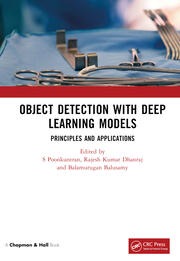
Object detection with deep learning models : Principles and applications
Discusses recent advances in object detection and recognition using deep learning methods, which have achieved great success in the field of computer vision and image processing. It provides a systematic and methodical overview of the latest developments in deep learning theory and its applications to computer vision, illustrating them using key topics, including object detection, face analysis, 3D object recognition, and image retrieval / A structured overview of deep learning in object detection / A diversified collection of applications of object detection using deep neural networks / Emphasize agriculture and remote sensing domains / Exclusive discussion on moving object detection

Nutraceuticals : Sources, processing methods, properties, and applications
Explores the impact of nutraceutical compounds on human health and their main pharmacological contributions. Organized into three parts, this book addresses nutraceutical production, applications for disease prevention and treatment, and current trends, especially the role of nutraceuticals in cosmeceutical. Nutraceuticals are a class of products that can help people improve their health, reduce the risk of disease, extend their lives, and control the structure and functioning of their bodies. However, due to multiple hurdles that prevent nutraceuticals from circulating in an active form in the body, their use is associated with diminished therapeutic efficacy. Recognizing this problem, the book explores the root of the nutraceutical delivery system and its codelivery methods with a focus on medicines. With contributions from experienced nutraceutical experts, this book serves as a valuable reference for nutrition researchers, food scientists, pharmacologists, and those who are researching and studying in related areas.

Numerical Methods for General and Structured Eigenvalue Problems
The purpose of this book is to describe recent developments in solving eig- value problems, in particular with respect to the QR and QZ algorithms as well as structured matrices. Outline Mathematically speaking, the eigenvalues of a square matrix A are the roots of its characteristic polynomial det(A??I). An invariant subspace is a linear subspace that stays invariant under the action of A. In realistic applications, it usually takes a long process of simpli?cations, linearizations and discreti- tions before one comes up with the problem of computing the eigenvalues of a matrix. In some cases, the eigenvalues have an intrinsic meaning, e.g., for the expected long-time behavior of a dynamical system; in others they are just meaningless intermediate values of a computational method. The same applies to invariant subspaces, which for example can describe sets of initial states for which a dynamical system produces exponentially decaying states. Computing eigenvalues has a long history, dating back to at least 1846 when Jacobi [172] wrote his famous paper on solving symmetric eigenvalue problems. Detailed historical accounts of this subject can be found in two papers by Golub and van der Vorst [140, 327].
