



الصفحة 1
الصفحة 1
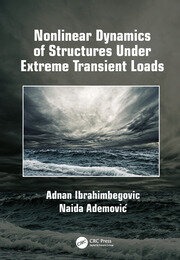
Nonlinear Dynamics of Structures Under Extreme Transient Loads
Covers model building for different engineering structures and provides detailed presentations of extreme loading conditions. A number of illustrations are given quantifying; a plane crash or explosion induced impact loading, the effects of strong earthquake motion, and the impact and long-duration effects of strong stormy winds—along with a relevant framework for using modern computational tools. The book considers the levels of reserve in existing structures, and ways of reducing the negative impact of high-risk situations by employing sounder design procedures.

Multibody Dynamics : Computational Methods and Applications
Multibody Dynamics is an area of Computational Mechanics which blends together various disciplines such as structural dynamics, multi-physics - chanics, computational mathematics, control theory and computer science, in order to deliver methods and tools for the virtual prototyping of complex mechanical systems. Multibody dynamics plays today a central role in the modeling, analysis, simulation and optimization of mechanical systems in a variety of ?elds and for a wide range of industrial applications.

Modeling and Control of Antennas and Telescopes
Modeling and Control of Antennas and Telescopes presents the author’s research and field experience in the area of antenna modeling, dynamics, and control. The required spacecraft tracking accuracy of 1 mdeg was the impetus for the new approaches to the antenna controls that use model based controllers (LQG and H¥ ). Consequently, modeling also required a new approach using system identification techniques. Most of the material presented is new in the telescope industry. The methods have been not only analyzed and tested, but actually implemented, giving confidence in the final result, which is significantly increased antenna pointing accuracy.

Fundamentals of Structural Mechanics, Dynamics, and Stability
Presents the material from the general (theory and fundamentals) to the particular (specific applications). Emphasizes the relevant mathematical concepts as related to structural mechanics in each chapter. Presents structural simulations using strucutral analysis software (ANSYS). Explains the Finite Element Method for elastic bodies, trusses, frames, non-linear behavior of materials, and more. Includes numerous worked examples and case studies throughout

Fundamentals of Structural Dynamics : Theory and Computation
Emphasizes numerical methods, nonlinear response of structures, and the analysis of continuous systems (e.g., wave propagation). Fundamentals of Structural Dynamics: Theory and Computation builds the theory of structural dynamics from simple single-degree-of-freedom systems through complex nonlinear beams and frames in a consistent theoretical context supported by an extensive set of MATLAB codes that not only illustrate and support the principles, but provide powerful tools for exploration. The book is designed for students learning structural dynamics for the first time but also serves as a reference for professionals throughout their careers.

Fundamentals of Structural Dynamics
Explains foundational concepts and principles surrounding the theory of vibrations and gives equations of motion for complex systems. The book presents classical vibration theory in a clear and systematic way, detailing original work on vehicle-bridge interactions and wind effects on bridges. Chapters give an overview of structural vibrations, including how to formulate equations of motion, vibration analysis of a single-degree-of-freedom system, a multi-degree-of-freedom system, and a continuous system, the approximate calculation of natural frequencies and modal shapes, and step-by-step integration methods. Each chapter includes extensive practical examples and problems.

Finite Elements in Structural Analysis : Theoretical Concepts and Modeling Procedures in Statics and Dynamics of Structures
Introduces the basic concepts of the finite element method in the static and dynamic analysis of beam, plate, shell and solid structures, discussing how the method works, the characteristics of a finite element approximation and how to avoid the pitfalls of finite element modeling. Presenting the finite element theory as simply as possible, the book allows readers to gain the knowledge required when applying powerful FEA software tools. Further, it describes modeling procedures, especially for reinforced concrete structures, as well as structural dynamics methods, with a particular focus on the seismic analysis of buildings, and explores the modeling of dynamic systems. Featuring numerous illustrative examples, the book allows readers to easily grasp the fundamentals of the finite element theory and to apply the finite element method proficiently.

Dynamics : An introduction for civil and structural engineers
Provides civil and structural engineers with introductory information on all the main principles and important aspects of the subject.

Dynamic Methods for Damage Detection in Structures
Presents an overview of dynamic methods for structural health monitoring and damage detection in structures. This book explains both theoretical and experimental aspects of dynamic non-destructive methods and their connection with inverse and identification problems in structural dynamics.

Dynamic Analysis of Structures
Reflects the latest application of structural dynamics theory to produce more optimal and economical structural designs. The author includes carefully worked-out examples which are solved utilizing more recent numerical methods. These examples pave the way to more accurately simulate the behavior of various types of structures. The essential topics covered include principles of structural dynamics applied to particles, rigid and deformable bodies, thus enabling the formulation of equations for the motion of any structure.

Dimension Reduction of Large-Scale Systems ; Proceedings of a Workshop held in Oberwolfach, Germany, October 19-25, 2003
In the past decades, model reduction has become an ubiquitous tool in analysis and simulation of dynamical systems, control design, circuit simulation, structural dynamics, CFD, and many other disciplines dealing with complex physical models. The aim of this book is to survey some of the most successful model reduction methods in tutorial style articles and to present benchmark problems from several application areas for testing and comparing existing and new algorithms. As the discussed methods have often been developed in parallel in disconnected application areas.
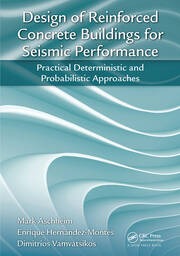
Design of Reinforced Concrete Buildings for Seismic Performance : Practical Deterministic and Probabilistic Approaches
Presents an elegant, simple and theoretically coherent design framework. Required strength is determined on the basis of an estimated yield displacement and desired limits of system ductility and drift demands. A simple deterministic approach is presented along with its elaboration into a probabilistic treatment that allows for design to limit annual probabilities of failure. The design method allows the seismic force resisting system to be designed on the basis of elastic analysis results, while nonlinear analysis is used for performance verification. Detailing requirements of ACI 318 and Eurocode 8 are presented. Students will benefit from the coverage of seismology, structural dynamics, reinforced concrete, and capacity design approaches, which allows the book to be used as a foundation text in earthquake engineering.

Blast effects on buildings
Provides the latest practical guidance on designing buildings to optimise their resilience to blast loading. Focused specifically on the design of commercial buildings, it is an indispensible guide to help engineers reduce the risks posed to building occupants and businesses from terrorist and other explosions. This book provides the engineer with a single and comprehensive source of reference for all the main elements of blast engineering design in modern practice. Industry-accepted methods for the design of glazing to resist blast loading are published for the first time, as well as a new chapter on hostile vehicle mitigation techniques. Guidance on structural steelwork and reinforced concrete design is extended and enhanced, supplemented with material on design in new materials such as steel-concrete-steel composites, this latter addition being published for the first time.
