



الصفحة 1
الصفحة 1

New Introduction to Multiple Time Series Analysis
This reference work and graduate level textbook considers a wide range of models and methods for analyzing and forecasting multiple time series. The models covered include vector autoregressive, cointegrated,vector autoregressive moving average, multivariate ARCH and periodic processes as well as dynamic simultaneous equations and state space models. Least squares, maximum likelihood and Bayesian methods are considered for estimating these models. Different procedures for model selection and model specification are treated and a wide range of tests and criteria for model checking are introduced. Causality analysis, impulse response analysis and innovation accounting are presented as tools for structural analysis. The book is accessible to graduate students in business and economics. In addition, multiple time series courses in other fields such as statistics and engineering may be based on it. Applied researchers involved in analyzing multiple time series may benefit from the book as it provides the background and tools for their tasks. It bridges the gap to the difficult technical literature on the topic.

Modeling, Control and Implementation of Smart Structures : A FEM-State Space Approach
This monograph presents an introductory overview of smart structures, their concepts, their active involvement in the vibration control, their applications and the extensive research work done on it so far. The modelling of flexible beams using two types of beam theories, viz., the Euler-Bernoulli theory and the Timoshenko beam theory is presented, including a new concept of finite element modeling of the flexible structures using Timoshenko beam theory with the inclusion of the shear both in the piezo-patches as well as in the host structure. It presents the design of the periodic output feedback control system for smart structure systems, the design of the FOS controllers for active vibration control and the design of Discrete Sliding Mode controllers using multirate output feedback technique.
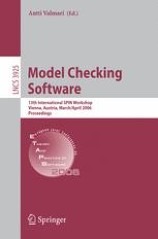
Model Checking Software ; Vol. 3925 ; 13th International SPIN Workshop, Vienna, Austria, March 30 - April 1, 2006, Proceedings
he name “SPIN” refers both to a workshopon model checking and to a famous model checking tool. The SPIN workshop is an annual forum for practitioners and researchersinterested in state space-based techniques for the validation and analysis of software and hardware systems, including communication protocols. It focuses on techniques based on explicit representations of state spaces, as implemented in the SPIN model checker or other tools, and techniques based on a combination of explicit representations with other representations. The SPIN model checker has proven to be particularly suited for the analysis of concurrent asynchronous systems. The workshop aims to encourage interaction and exchange of ideas with all related areas in software engineering.

Mathematical Systems Theory I : Modelling, State Space Analysis, Stability and Robustness
This book presents the mathematical foundations of systems theory in a self-contained, comprehensive, detailed and mathematically rigorous way. This volume is devoted to the analysis of dynamical systems with emphasis on problems of uncertainty, whereas the second volume will be devoted to control. It combines features of a detailed introductory textbook with that of a reference source. The book contains many examples and figures illustrating the text which help to bring out the intuitive ideas behind the mathematical constructions.

Inference in Hidden Markov Models
This book is a comprehensive treatment of inference for hidden Markov models, including both algorithms and statistical theory. Topics range from filtering and smoothing of the hidden Markov chain to parameter estimation, Bayesian methods and estimation of the number of states.In a unified way the book covers both models with finite state spaces, which allow for exact algorithms for filtering, estimation etc. and models with continuous state spaces (also called state-space models) requiring approximate simulation-based algorithms that are also described in detail. Simulation in hidden Markov models is addressed in five different chapters that cover both Markov chain Monte Carlo and sequential Monte Carlo approaches. Many examples illustrate the algorithms and theory. The book also carefully treats Gaussian linear state-space models and their extensions and it contains a chapter on general Markov chain theory and probabilistic aspects of hidden Markov models.

Forecasting with Exponential Smoothing : The State Space Approach
Exponential smoothing methods have been around since the 1950s, and are the most popular forecasting methods used in business and industry. Recently, exponential smoothing has been revolutionized with the introduction of a complete modeling framework incorporating innovations state space models, likelihood calculation, prediction intervals and procedures for model selection. In this book, all of the important results for this framework are brought together in a coherent manner with consistent notation. In addition, many new results and extensions are introduced and several application areas are examined in detail.

Factorization of Matrix and Operator Functions : The State Space Method
The present book deals with factorization problems for matrix and operator functions. The problems originate from, or are motivated by, the theory of non-selfadjoint operators, the theory of matrix polynomials, mathematical systems and control theory, the theory of Riccati equations, inversion of convolution operators, theory of job scheduling in operations research. The book systematically employs a geometric principle of factorization which has its origins in the state space theory of linear input-output systems and in the theory of characteristic operator functions. This principle allows one to deal with different factorizations from one point of view. Covered are canonical factorization, minimal and non-minimal factorizations, pseudo-canonical factorization, and various types of degree one factorization.

Dynamic Programming : A Computational Tool
This book provides a practical introduction to computationally solving discrete optimization problems using dynamic programming. From the unusually numerous and varied examples presented, readers should more easily be able to formulate dynamic programming solutions to their own problems of interest. We also provide and describe the design, implementation, and use of a software tool, named DP2PN2Solver, that has been used to numerically solve all of the problems presented earlier in the book. This computational tool can be used by students to solve academic problems if this book is used in coursework, and by practitioners to solve many real-world problems if the state space is not too large.

Dynamic Analysis of Petri Net-Based Discrete Systems
Design of modern digital hardware systems and of complex software systems is almost always connected with parallelism. For example, execution of an object-oriented p- gram can be considered as parallel functioning of the co-operating objects; all modern operating systems are multitasking, and the software tends to be multithread; many complex calculation tasks are solved in distributed way. But designers of the control systems probably have to face parallelism in more evident and direct way. Controllers rarely deal with just one controlled object. Usually a system of several objects is to be controlled, and then the control algorithm naturally turns to be parallel. So, classical and very deeply investigated model of discrete device, Finite State Machine, is not expressive enough for the design of control devices and systems. Theoretically in most of cases behavior of a controller can be described by an FSM, but usually it is not convenient; such FSM description would be much more complex, than a parallel specification (even as a network of several communicating FSMs).

Digital Control Systems : Design, Identification and Implementation
Digital Control Systems demonstrates in detail how to design and implement high-performance model-based controllers combining system identification and control design techniques extensively tested in industrial milieux. The effective use of these techniques is illustrated in the context of various systems including: d.c. motors, flexible transmissions, air heaters, distillation columns and hot-dip galvanizing. Topics covered include: • essentials of computer-based control systems; • controller design methods (robust pole placement, long-range-predictive control, state space, digital PID, etc.); • system identification techniques; • practical aspects of system identification and digital control.

Correlated Data Analysis : Modeling, Analytics, and Applications
Presents some recent developments in correlated data analysis. It utilizes the class of dispersion models as marginal components in the formulation of joint models for correlated data. This enables the book to handle a broader range of data types than those analyzed by traditional generalized linear models.

Continuous-Time Systems
The book systematically covers major foundations of the systems theory. First, the quantitative and qualitative methods of systems description are presented along with the stability analysis. The representation of linear time-invariant systems in the time domain is provided using the convolution, ordinarily differential equations (ODEs), and state space. In the frequency domain, these systems are analyzed using the Fourier and Laplace transforms. The linear time-varying systems are represented using the general convolution, ODEs, and state space. The nonlinear time-invariant systems are described employing the Taylor and Volterra series expansions, ODEs, state space, and approximate methods such as averaging, equivalent linearization, and describing function. Finally, the representation of nonlinear time-varying systems is given using the Taylor and Volterra series, ODEs, modulation functions method, and state space modelling.

Computer Performance Engineering ; 5th European Performance Engineering Workshop, EPEW 2008, Palma de Mallorca, Spain, September 24-25, 2008. Proceedings
This book constitutes the proceedings of the Fifth European Performance Engineering Workshop, EPEW 2008, held in Palma de Mallorca, Spain, in September 24-25, 2008.
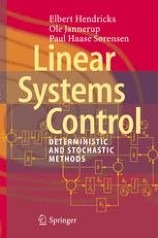
Linear Systems Control : Deterministic and Stochastic Methods
Modern control theory and in particular state space or state variable methods can be adapted to the description of many different systems because it depends strongly on physical modeling and physical intuition. The laws of physics are in the form of differential equations and for this reason, this book concentrates on system descriptions in this form. This means coupled systems of linear or nonlinear differential equations. The physical approach is emphasized in this book because it is most natural for complex systems. It also makes what would ordinarily be a difficult mathematical subject into one which can straightforwardly be understood intuitively and which deals with concepts which engineering and science students are already familiar.
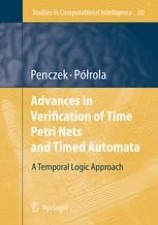
Advances in verification of time Petri Nets and timed automata : A temporal logic approach
This monograph presents a comprehensive introduction to timed automata (TA) and time Petri nets (TPNs) which belong to the most widely used models of real-time systems. Some of the existing methods of translating time Petri nets to timed automata are presented, with a focus on the translations that correspond to the semantics of time Petri nets, associating clocks with various components of the nets. "Advances in Verification of Time Petri Nets and Timed Automata – A Temporal Logic Approach" introduces timed and untimed temporal specification languages and gives model abstraction methods based on state class approaches for TPNs and on partition refinement for TA. Moreover, the monograph presents a recent progress in the development of two model checking methods, based on either exploiting abstract state spaces or on application of SAT-based symbolic techniques.
