



الصفحة 1
الصفحة 1
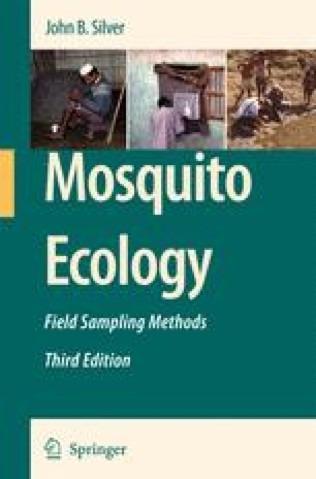
Mosquito Ecology : Field Sampling Methods
The purpose of this book is in keeping with the original vision of Professor Service to describe the methods and rationale for sampling mosquitoes, with particular emphasis on the ecology and behaviour of those species that play a role as vectors of human and animal diseases and infections. The book is designed to serve as a practical reference for field entomologists and mosquito control specialists and describes the sampling methods and available trapping technologies and tools for the collection of all life-stages of mosquitoes, from egg to adult. It also describes the techniques available for data analysis and discusses ecological principles of relevance to the study of field populations of mosquitoes. While concentrating primarily on mosquitoes, many of the techniques described are suitable for the study of other Diptera, including Ceratopogonidae, Chironomidae, Simuliidae, Phlebotominae, etc.

Forest ecosystems and environments : Scaling up from shoot module to watershed
The Global Change Impacts on Terrestrial Ecosystems in Monsoon Asia (TEMA) project was carried out as a unique contribution to the international project Global Change and Terrestrial Ecosystems. TEMA aimed to integrate forest ecosystem processes. This volume presents the scaling-up concept for better understanding of ecosystem functioning.

Forest Diversity and Management
Natural forests with thousands of years of ecological continuity are unrivalled as the treasure store of terrestrial biodiversity on Earth. And while there is currently no fully comprehensive inventory of the biota associated with any given forest, it is reasonable to assume that in conserving natural forests we can conserve the myriads of unnamed bacteria, fungi, insects, mites and nematodes that forests support. Drawing on diverse research from biodiversity experts around the world, this collection of papers reflects the diversity of forest types and forest issues that concern forest scientists globally. Forest types considered vary from savannah and tropical rainforests to the ancient oak forests of Poland; issues explored include the effects of logging, management practices, forest dynamics and climate change on forest structure and biodiversity.
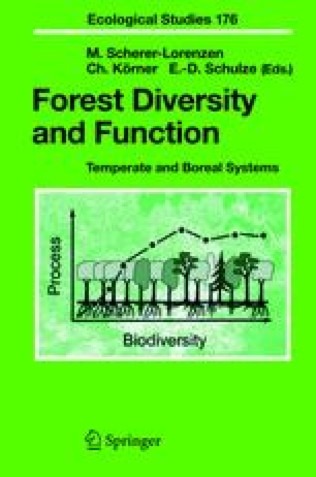
Forest Diversity and Function : Temperate and Boreal Systems
One of the central research themes in ecology is evaluating the extent to which biological richness is necessary to sustain the Earth's system and the functioning of individual ecosystems. In this volume, for the first time, the relationship between biodiversity and ecosystem processes in forests is thoroughly explored. The text examines the multiple effects of tree diversity on productivity and growth, biogeochemical cycles, animals, pests, and disturbances.

Equidosimetry : Ecological Standardization and Equidosimetry for Radioecology and Environmental Ecology
Considerable experience with radioecological and related ecological research on terrestrial and aquatic ecosystems has been achieved, especially after the Chernobyl accident. The combined effects of the radiation, chemical and biological factors, after a contamination of the environment and during its remediation have shown an interactive complexity that highlights the need for equidosimetrical evaluations of the influence of the various stressors and the need for their ecological normalization. In radioecology and radiation protection, methods of radiation dosimetry are key for dose assessment. It is therefore highly desirable to develop a clear theoretical approach as well as a practical method of equidosimetry that would allow for an ecological normalization of the different stressors in unified uniform units, especially for comparison purposes.

Environmental Effects of Afforestation in North-Western Europe : From Field Observations to Decision Support
Recognising the need for effective decision making in relation to land-use change, this timely book develops a series of tools for estimating the environmental impacts of afforestation. It also presents guidelines and decision support systems (DSS) to enable both policy makers and forest managers to maximize the benefits and minimize the adverse effects of afforestation. This book will provide a valuable resource for both graduate students and researchers in forest, environmental and biological sciences, as well as for landscape planners and policy makers involved in afforestation projects at local, regional and international levels.

Ecology of Riparian Forests in Japan : Disturbance, Life History, and Regeneration
It presents the dynamics and mechanisms that govern the coexistence of riparian tree species, tree demography, the response to water stress of trees, and the conservation of endangered species, and focuses on natural disturbances, life-history strategies, and the ecophysiology of trees. Because many riparian landscapes have been degraded and are disappearing at an alarming rate, the regeneration of the remaining riparian ecosystems is urgent. With contributions by more than 20 experts in diverse fields, this book offers useful information for the conservation, restoration, and rehabilitation of riparian ecosystems that remain in world streams and rivers.

Cold-Water Corals and Ecosystems
Following the exciting exploration of hot vent and cold seep ecosystems, the rediscovery of cold-water coral ecosystems with high-technology instrumentation is currently another hot topic in multidisciplinary marine research. Conventionally, coral reefs are regarded as restricted to warm and well-illuminated tropical seas, not associated with cold and dark waters of higher latitudes. However, ongoing scientific missions have shed light on the global significance of this overlooked ecosystem. Cold-water coral ecosystems are involved in the formation of large seabed structures such as reefs and giant carbonate mounds, and they represent unexploited paleo-environmental archives of earth history. Like their tropical cousins, cold-water coral ecosystems harbour rich species diversity. Despite the great water depths, commercial interests overlap more and more with the coral occurrences. Human activities already impinge directly on cold-water coral reefs causing severe damage to this vulnerable ecosystem. In this volume, the current key institutions involved in cold-water coral research have contributed 62 state-of-the-art articles from geology and oceanography to biology and conservation.

Clusia : A woody neotropical genus of remarkable plasticity and diversity
Clusia is the only dicotyledonous tree genus with crassulacean acid metabolism (CAM), and in some cases all variants of CAM can be expressed in one given species. These unique features as well as Clusia's extreme flexibility have put it in the limelight of international research. The studies presented in this volume embrace anatomy, morphology and plant architecture, phytogeographical distribution and community ecology, phylogeny and genetic diversity, physiology and metabolism, physiological ecology and functional diversity, circadian rhythmicity and biological timing. Covering all aspects of tree biology, this richly illustrated volume is an invaluable source of information for any plant scientist.
Marine, Freshwater, and Wetlands Biodiversity
Marine, coastal and wetland habitats are threatened, not only through exploitation, but also by the prospect of climate change – as ocean currents change course, sea levels rise, and rainfall patterns change. Even the once-common cod is now under threat from the combined effects of over-fishing and a dramatic change-induced decrease in the plankton that cod larvae feed on. Meanwhile, coral reefs remain especially vulnerable to rapid sea-level changes exacerbated by the effects of tourism and disease. This book gathers together a wide range of papers reporting on key research into the biodiversity conservation of these critical and increasingly threatened habitats. Collectively these papers provide a snap-shot of the types of problems they are experiencing, and offer a wealth of topical examples which render this volume especially valuable to teachers of courses in marine, freshwater and wetlands ecology, biological conservation and ecological restoration.
Biodiversity in Enclosed Seas and Artificial Marine Habitats ; Proceedings of the 39th European Marine Biology Symposium, held in Genoa, Italy, 21-24 July 2004
The main themes of the Symposium were biodiversity in enclosed and semi-enclosed seas and artificial habitats, and the restoration of degraded systems. These themes are highly relevant today both from a basic scientific point of view and from an applied approach. The papers dealing with the first theme represent current research and concerns about marine biodiversity in enclosed seas and will have wide appeal to all those interested in understanding and preserving the biodiversity of the seas and in particular of the Mediterranean and Black Seas. The papers in the second theme represent a synthesis of up-to-date knowledge on artificial habitats and how they can contribute to protection of coastal marine ecosystems, to enhancement of species diversity and biological resources and to restoration of degraded marine environments.
