



الصفحة 1
الصفحة 1

How Apollo flew to the moon
Out of the technological battlefield of World War II came a team of gifted German engineers and designers who developed the vengeance weapon, the V-2, which evolved into the peaceful, powerful Saturn V rocket to take men to the Moon. David Woods tells the exciting story, starting from America’s post war astronautical research facilities, that used the V-2 for the development of the robust, resilient and reliable Saturn V launcher. He describes the initial launches through manned orbital spaceflights, comprehensively detailing each step, including computer configuration, the role of ground control, trajectory planning, lunar orbiting, separation of the lander, walking and working on the Moon, retrieval of the lunar astronauts and returning to Earth in this massive technical accomplishment.

Fundamentals of Space Medicine
Topics discussed in this book include: adaptation of sensory-motor, cardio-vascular, bone, and muscle systems to the microgravity of spaceflight; psychological and sociological issues of living in a confined, isolated, and stressful environment; operational space medicine, such as crew selection, training and in-flight health monitoring, countermeasures and support; results of space biology experiments on individual cells, plants, and animal models; and the impact of long-duration missions such as the human mission to Mars. The author also provides a detailed description of how to fly a space experiment, based on his own experience with research projects conducted onboard Salyut-7, Mir, Spacelab, and the Space Shuttle. Now is the time to look at the future of human spaceflight and what comes next. The future human exploration of Mars captures the imagination of both the public and the scientific community. Many physiological, psychological, operational, and scientific issues need to be solved before the first crew can explore the enigmatic Red Planet. This book also identifies the showstoppers that can be foreseen and what we need to learn to fully understand the implications and risks of such a mission.

Fundamentals of Space Biology : Research on Cells, Animals, and Plants in Space
This book is intended as an overview at the undergraduate or early university level and describes the effects of spaceflight at cellular and organism levels. Past, current, and future research on the effects of gravity--or its absence--and ionizing radiation on the evolution, development, and function of living organisms is presented in layman's terms by researchers who have been active in this field. The purpose is to enlighten science and non-science readers to the benefits of space biology research for conducting basic and applied research to support human exploration of space. Also covered are the advantages of approaching the space environment as a laboratory for scientific, technological, and commercial research.

Exploring the Moon : The Apollo Exped.s
the book develops the scientific theme of lunar geology, and therefore will be of use as background reading for undergraduate students of planetary sciences. In addition, with the prospect of a resumption of human missions, it will help journalists understand what Apollo achieved after the 'flags and footprints' of the Apollo 11 landing in July1969 and will commemorate the fortieth anniversary of that momentous event.

Lonely Minds in the Universe
Probes the subject of extraterrestrial intelligent life, offering scientific and technological implications, discussing the philosophical and religious connotations and rebuffing pseudo-scientific assertions such as 'rare earth'.
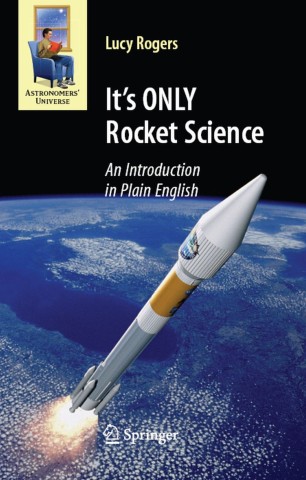
Its ONLY Rocket Science: An Introduction in Plain English
"Well, it’s not rocket science, is it?" How many times have you heard people use that expression when they mean something pretty simple? There are other areas of science and technology that are arguably more challenging than rocket science, but no other (perhaps apart from brain surgery) has entered mainstream English vocabulary as a byword for ‘difficult’.
Celestial Mechanics : The Waltz of the Planets
Contents are divided into major topics where the three "souls" of modern celestial mechanics (dynamical systems, Solar System and stellar systems, spaceflight dynamics) play a major role.
Animals in space : From research rockets to the space shuttle
Animals in Space will explain why dogs, primates, mice and other rodents were chosen and tested, at a time when dedicated scientists from both space nations were determined to establish the survivability of human subjects on both ballistic and orbital space flights. It will also recount the way this happened; the secrecy involved and the methods employed, and offer an objective analysis of how the role of animals as spaceflight test subjects not only evolved, but subsequently changed over the years in response to a public outcry led by animal activists. It will explore the ways in which animal high-altitude and space flight research impacted on space flight biomedicine and technology, and how the results - both successful and disappointing - allowed human beings to then undertake that same hazardous journey with far greater understanding and confidence.
