



الصفحة 1
الصفحة 1

Neutron Stars 1 : Equation of State and Structure
The book gives an extended review of theoretical and observational aspects of neutron star physics. With masses comparable to that of the Sun and radii of about ten kilometres, neutron stars are the densest stars in the Universe. This book describes all layers of neutron stars, from the surface to the core, with the emphasis on their structure and equation of state.

Modeling Solar Radiation at the Earth’s Surface : Recent Advances
Solar radiation data is important for a wide range of applications, e.g. in engineering, agriculture, health sector, and in many fields of the natural sciences. A few examples showing the diversity of applications may include: architecture and building design e.g. air conditioning and cooling systems; solar heating system design and use; solar power generation; weather and climate prediction models; evaporation and irrigation; calculation of water requirements for crops; monitoring plant growth and disease control; skin cancer research.

Mercury
Mercury, the planet closest to the Sun, is different in several respects from the other three terrestrial planets. In appearance, it resembles the heavily cratered surface of the Moon, but its density is high, it has a magnetic field and magnetosphere, but no atmosphere or ionosphere. This book reviews the progress made in Mercury studies since the flybys by Mariner 10 in 1974-75, based on the continued research using the Mariner 10 archive, on observations from Earth, and on increasingly realistic models of its interior evolution.

Ionospheric multi-spacecraft analysis tools : Approaches for deriving ionospheric parameters
This book provides a comprehensive toolbox of analysis techniques for ionospheric multi-satellite missions. The immediate need for this volume was motivated by the ongoing ESA Swarm satellite mission, but the tools that are described are general and can be used for any future ionospheric multi-satellite mission with comparable instrumentation.
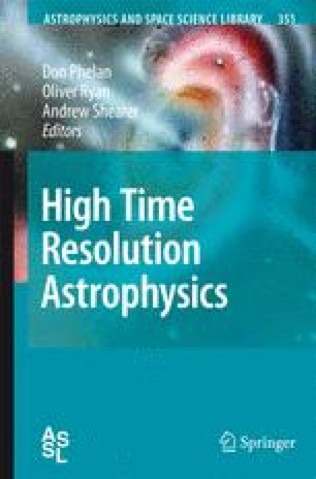
High Time Resolution Astrophysics
High Time Resolution Astrophysics (HTRA) is an important new window to the universe and a vital tool in understanding a range of phenomena from diverse objects and radiative processes. This importance is demonstrated in this volume with the description of a number of topics in astrophysics, including quantum optics, cataclysmic variables, pulsars, X-ray binaries and stellar pulsations to name a few. Underlining this science foundation, technological developments in both instrumentation and detectors are described. These instruments and detectors combined cover a wide range of timescales and can measure fluxes, spectra and polarisation. These advances make it possible for HTRA to make a big contribution to our understanding of the Universe in the next decade.

Galaxy Formation
This second edition of Galaxy Formation is an up-to-date text on astrophysical cosmology, expounding the structure of the classical cosmological models from a contemporary viewpoint. This forms the background to a detailed study of the origin of structure and galaxies in the Universe. The derivations of many of the most important results are derived by simple physical arguments which illuminate the results of more advanced treatments. A very wide range of observational data is brought to bear upon these problems, including the most recent results from WMAP, the Hubble Space Telescope, galaxy surveys like the Sloan Digital Sky Survey and the 2dF Galaxy Redshift Survey, studies of Type 1a supernovae, and many other observations.

Galaxies in the Local Vol.
Studies of Nearby Galaxies are currently the focus of many observations and numerical simulations. This book presents an overview of the galaxies within the Local Volume (D < 10 Mpc), including the Local Group (D < 1 Mpc) and our closest neighbours, the Andromeda Galaxy and the Magellanic Clouds. Presented are the latest results from radio, infrared and optical surveys as well as detailed multi-wavelength studies of individual galaxies. Accurate distances are now available for the majority of Local Volume galaxies providing a true 3-dimensional view of their distribution and flow pattern as well as their star formation.

Fisica solare = Solar physics
An introduction to Solar Physics, intended to illustrate to those who intend to approach this discipline (students, PhDs, researchers) the physical mechanisms underlying the complex phenomena observed on our closest star. It does not claim to be exhaustive (suffice it to say that solar physics spans a wide range of disciplines, such as nuclear physics, thermodynamics, electrodynamics, atomic and molecular physics, spectroscopy across all bands of the electromagnetic spectrum, magnetohydrodynamics, plasma physics, the development of new instrumentation, optics, etc.). Rather, a number of topics of fundamental relevance to the current study of the Sun have been selected (especially with regard to ground-based observations with large telescopes), and an attempt has been made to provide a general overview of these topics, including their historical evolution, without going into excessive detail. Since Solar Physics can rightfully be considered the "Rosetta Stone" of all Astrophysics, the volume can also be considered a valid introduction to this subject.

Exploring the Moon : The Apollo Exped.s
the book develops the scientific theme of lunar geology, and therefore will be of use as background reading for undergraduate students of planetary sciences. In addition, with the prospect of a resumption of human missions, it will help journalists understand what Apollo achieved after the 'flags and footprints' of the Apollo 11 landing in July1969 and will commemorate the fortieth anniversary of that momentous event.

Exoplanets : Detection, Formation, Properties, Habitability
This edited, multi-author volume will be an invaluable introduction and reference to all key aspects in the field of exoplanet research. The reviews cover: Detection methods and properties of known exoplanets, Detection of extrasolar planets by gravitational microlensing. The formation and evolution of terrestrial planets in protoplanetary and debris disks. The brown dwarf-exoplanet connection. Formation, migration mechanisms and properties of hot Jupiters. Dynamics of multiple exoplanet systems. Doppler exoplanet surveys. Searching for exoplanets in the stellar graveyard. Formation and habitability of extra solar planets in multiple star systems. Exoplanet habitats and the possibilities for life. Moons of exoplanets: habitats for life.

Elementary physics of complex plasmas
Complex plasmas are dusty plasmas in which the density and electric charges of the dust grains are sufficiently high to induce long-range grain-grain interactions, as well as strong absorption of charged-plasma components. Together with the sources replenishing the plasma such systems form a highly dissipative thermodynamically open system that exhibits many features of collective behaviour generally found in complex systems. Most notably among them are self-organized patterns such as plasma crystals, plasma clusters, dust stars and further spectacular new structures. Beyond their intrinsic scientific interest, the study of complex plasmas grows in importance in a great variety of fields, ranging from space-plasma sciences to applied fields such as plasma processing, thin-film deposition and even the production of computer chips by plasma etching, in which strongly interacting clouds of complex plasmas can cause major contamination of the final product.

Dynamics of extended celestial bodies and rings
Taking both a theoretical and observational perspective, this book is an introduction to recent developments in the field of celestial mechanics. It emphasizes the application to extended celestial bodies and devotes much attention to rotational aspects. In particular, it explains the state of art for accurate modelling of the rotation of celestial bodies such as the Earth, the Moon, and Mercury, which involves principles related to hydrodynamics and geodesy. Comparisons between the light curves of the asteroids and their rotational state are made and spatial techniques leading to the determination of the Earth's gravitational field are explained. Also, the book provides a general overview of the collisional processes in the solar system and of the dynamics of the rings. It is addressed to graduate students and researchers in space sciences and celestial dynamics.

Dynamic Magma Evolution
Understanding the magmatic processes responsible for the chemical and textural signatures of volcanic products and igneous rocks is crucial for monitoring, forecasting, and mitigating the impacts of volcanic activity. Dynamic Magma Evolution is a compilation of recent geochemical, petrological, physical, and thermodynamic studies. It combines field research, experimental results, theoretical approaches, unconventional and novel techniques, and computational modeling to present the latest developments in the field.

Dictionary of Minor Planet Names : Addendum to Fifth ed.: 2006 - 2008
Dictionary of Minor Planet Names, Fifth Edition, is the official reference for the field of the IAU, which serves as the internationally recognised authority for assigning designations to celestial bodies and any surface features on them. It provides authoritative information about the basis for all names of minor planets.

Cold Aqueous Planetary Geochemistry with FREZCHEM : From Modeling to the Search for Life at the Limits
At the core of the technical chapters is the FREZCHEM model, initially developed over many years by one of the authors to quantify aqueous electrolyte properties and chemical thermodynamics at subzero temperatures. FREZCHEM, of general relevance to biogeochemists and geochemical modelers, cold planetary scientists, physicochemists and chemical engineers, is subsequently applied to the exploration of biogeochemical applications to solar systems bodies in general, and to speculations about the limits for life in cold environments in particular.

Clusters of Galaxies : Beyond the Thermal View
Clusters of galaxies are the largest structures in the Universe. Most of the visible matter is in the form of hot gas permeating the volume of the cluster. The bulk of this gas is in thermal equilibrium in the dark matter-dominated potential. This book discusses all aspects of cluster physics beyond this thermal view. It covers topics such as the warm-hot intergalactic medium outside the clusters, non-thermal radiation components, shocks, equilibration processes and the chemical evolution of these structures. The topics are covered from an observational, theoretical and numerical point of view.
Life in the Universe : Expectations and Constraints
Energy, chemistry, solvents, and habitats -- the basic elements of living systems - define the opportunities and limitations for life on other worlds. This class-tested text examines each of these parameters in crucial depth and makes the argument that life forms we would recognize may be more common in our solar system than many assume. It also considers, however, exotic forms of life that would not have to rely on carbon as basic chemical element, solar energy as a main energy source, or water as primary solvent. Finally the question of detecting bio- and geosignature of such life forms is discussed, ranging from Earth environments to deep space. While speculative considerations in this emerging field of science cannot be avoided, the authors have tried to present their study with the breadth and seriousness that a scientific approach to this issue requires. They seek an operational definition of life and investigate the realm of possibilities that nature offers to realize this very special state of matter and avoid scientific jargon wherever possible to make this intrinsically interdisciplinary subject understandable to a broad range of readers.
Lasers, Clocks and Drag-Free Control : Exploration of Relativistic Gravity in Space
Over the next decade the gravitational physics community will benefit from dramatic improvements in many technologies critical to testing gravity. Highly accurate deep space navigation, interplanetary laser communication, interferometry and metrology, high precision frequency standards, precise pointing and attitude control, together with drag-free technologies, will revolutionize the field of experimental gravitational physics. The centennial of the general theory of relativity in 2015 will motivate a significant number of experiments designed to test this theory with unprecedented accuracy.
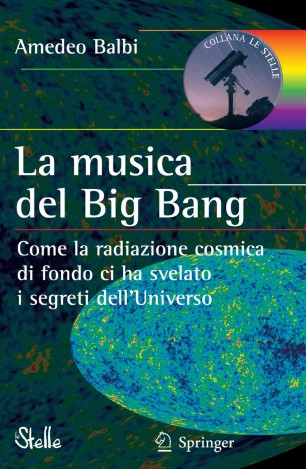
La musica del Big Bang : Come la radiazione cosmica di fondo ci ha svelato i segreti dell’Universo = The music of the Big Bang : How the cosmic background radiation revealed the secrets of the Universe to us
Cosmic microwave background radiation is the residue of the great heat following the Big Bang. A tenuous sign, over 13 billion years old, in which the answers to many of the questions about the nature of our Universe are hidden. Discovered by chance in 1964, in the last forty years this fossil trace of the origins of the Cosmos has been explored with every available means. Two Nobel Prizes in physics have already been awarded for research involving it, the last in 2006 for the results of the COBE satellite. Much of the information encoded in the cosmic background radiation was impressed by the superimposition of acoustic waves present in the early Universe: a "music" of the Big Bang, which cosmologists have tried for years to reconstruct, using techniques similar to those that allow to distinguish the sound of different musical instruments. Only recently have the first notes of this extraordinary cosmic symphony finally been revealed, but the investigation is not over yet. This book illustrates, with a language suitable even for non-specialists, the theories, observations and discoveries that have brought cosmology into a new era.
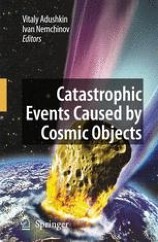
Catastrophic Events Caused by Cosmic Objects
Many times all of us could hear from mass media that an asteroid approached and swept past the Earth. Such an asteroid or comet will inevitably strike the planet some day. This volume considers hazards due to collisions with cosmic objects, particularly in light of recent investigations of impacts by the authors. Each chapter written by an expert contains an overview of an aspect and new findings in the field. The main hazardous effects – cratering, shock, aerial and seismic waves, fires, ejection of dust and soot, tsunami are described and numerically estimated. Numerical simulations of impacts and impact consequences have received much attention in the book. Fairly small impacting objects 50 -100 m in diameter pose a real threat to humanity and their influence on the atmosphere and ionosphere is emphasized.
