



الصفحة 1
الصفحة 1

Nonlinear Finite Element Methods
Finite element methods have become ever more important to engineers as tools for design and optimization, now even for solving non-linear technological problems. However, several aspects must be considered for finite-element simulations which are specific for non-linear problems: These problems require the knowledge and the understanding of theoretical foundations and their finite-element discretization as well as algorithms for solving the non-linear equations. This book provides the reader with the required knowledge covering the complete field of finite element analyses in solid mechanics.

Multiscale fatigue crack initiation and propagation of engineering materials ; Structural integrity and microstructural worthiness : Fatigue crack growth behaviour of small and large bodies
This book elucidates the correlation of fatigue crack growth data to multiscale cracking, particularly to the understanding of micrographs influenced by mechanical disturbance and thermodynamic variables. Attention is given to the interpretation of test data by fatigue crack growth rate using two empirical parameters in consistence with the fracture control methodology currently used by industry.

Multiscale Biomechanics and Tribology of Inorganic and Organic Systems : In memory of Professor Sergey Psakhie
This book gathers authoritative contributions concerning multiscale problems in biomechanics, geomechanics, materials science and tribology. It is written in memory of Sergey Grigorievich Psakhie to feature various aspects of his multifaceted research interests, ranging from theoretical physics, computer modeling of materials and material characterization at the atomic scale, to applications in space industry, medicine and geotectonics, and including organizational, psychological and philosophical aspects of scientific research and teaching as well

Modern Testing Techniques for Structural Systems : Dynamics and Control
The articles in this book describe new developments in the area of structural testing, particularly those based upon the principle of fusing numerical and experimental methods such as real-time dynamic substructuring and hardware-in-the loop testing. In addition to the hybrid methods, chapters on the latest develoments in more established techniques, such as shaking table testing, provide a completely up-to-date survey of structural testing methods.

Micro-Macro-interaction : In Structured media and Particle Systems
This book presents the development of new methods in this interdisciplinary field of macro- micro-interactions of different engineering branches like mechanical and process engineering, applied mathematics, theoretical, and computational physics. In particular, solids with microstructures and particle systems are considered.
Meshless Methods in Solid Mechanics
The main objective of this book is to provide a textbook for graduate courses on the computational analysis of continuum and solid mechanics based on meshless (also known as mesh free) methods. It can also be used as a reference book for engineers and scientists who are exploring the physical world through computer simulations. Emphasis of this book is given to the understanding of the physical and mathematical characteristics of the procedures of computational solid mechanics. It naturally brings the essence, advantages and challenging problems of meshless methods into the picture. The subjects in this book cover the fundamentals of continuum mechanics, the integral formulation methods of continuum problems, the basic concepts of finite element methods, and the methodologies, formulations, procedures, and applications of various meshless methods. It also provides general and detailed procedures of meshless analysis on elastostatics, elastodynamics, non-local continuum mechanics and plasticity with a large number of numerical examples. Some basic and important mathematical methods are included in the Appendixes. For the readers who want to gain knowledge through hands-on experience, the meshless programs for elastostatics and elastodynamics are also introduced in the book and included in the disc.
Mechanics of Materials
Provides a review of statics, covering the topics needed to begin the study of mechanics of materials including free-body diagrams, equilibrium, trusses, frames, centroids, and distributed loads. It presents the foundations and applications of mechanics of materials with emphasis on visual analysis, using sequences of figures to explain concepts and giving detailed explanations of the proper use of free-body diagrams. The Cauchy tetrahedron argument is included, which allows determination of the normal and shear stresses on an arbitrary plane for a general state of stress. An optional chapter discusses failure and modern fracture theory, including stress intensity factors and crack growth.

Mechanics and Strength of Materials
This treatise contains topics on Solid Mechanics, the Theory of Slender Members and an Introduction to the Theory of Structures, usually taught in the disciplines of Strength of Materials of most Engineering courses, such as Civil, Mechanical and Aeronautical Engineering.
Mechanics and Physics of Fracture : Multiscale Modeling of the Failure Behavior of Solids
Provides a comprehensive understanding of the macroscopic failure behavior of solids from the description of the microscopic failure processes and their coupling with the microstructure. Several fundamental questions were addressed: the relation between the microstructural features of materials and their fracture properties and crack trajectories; the role of damage mechanisms and non-linear deformations near the crack tip on the failure behavior of solids; and finally the role of dynamic inertial effects during fast fracture was more briefly evoked.
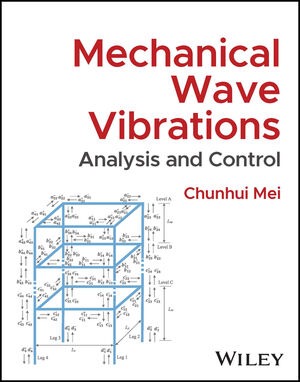
Mechanical Wave Vibrations: Analysis and Control
Delivers an expert discussion of the wave analysis approach (as opposed to the modal-based approach) to mechanical vibrations in structures. The book begins with deriving the equations of motion using the Newtonian approach based on various sign conventions before comprehensively covering the wave vibration analysis approach. It concludes by exploring passive and active feedback control of mechanical vibration waves in structures.

Mechanical Behavior of Materials : Fundamentals, Analysis, and Calculations
Provides a holistic understanding of mechanical behavior of materials, and enables critical thinking through mathematical modeling and problem solving.Each of the 15 chapters first introduces readers to the technologic importance of the topic and provides basic concepts with diagrammatic illustrations; and then its engineering analysis/mathematical modelling along with calculations are presented.

Introduction to Relativistic Continuum Mechanics
This mathematically-oriented introduction takes the point of view that students should become familiar, at an early stage, with the physics of relativistic continua and thermodynamics within the framework of special relativity. Therefore, in addition to standard textbook topics such as relativistic kinematics and vacuum electrodynamics, the reader will be thoroughly introduced to relativistic continuum and fluid mechanics. Emphasis in the presentation is on the 3+1 splitting technique, widely used in general relativity for introducing the relative observers point of view.
Introduction to finite element analysis : A textbook for engineering students
Covers the basic concepts and applications of finite element analysis. It is specifically aimed at introducing this advanced topic to undergraduate-level engineering students and practicing engineers in a lucid manner. It also introduces a structural and heat transfer analysis software FEASTSMT which has wide applications in civil, mechanical, nuclear and automobile engineering domains.
Introduction to Contact Mechanics
Introduction to Contact Mechanics, Second Edition is a gentle introduction to the mechanics of solid bodies in contact for graduate students, post doctoral individuals, and the beginning researcher. This second edition maintains the introductory character of the first with a focus on materials science as distinct from straight solid mechanics theory. Every chapter has been updated to make the book easier to read and more informative. A new chapter on depth sensing indentation has been added, and the contents of the other chapters have been completely overhauled with added figures, formulae and explanations.

Handbook of damage mechanics : Nano to macro Scale for materials and structures
A wide range of materials that engineers may encounter are covered, including metals, composites, ceramics, polymers, biomaterials, and nanomaterials. The internationally recognized team of contributors employs a consistent and systematic approach, offering readers a user-friendly reference that is ideal for frequent consultation.

Handbook of contact mechanics : Exact solutions of axisymmetric contact problems
This book contains a structured collection of complete solutions of all significant axially symmetric contact problems. It provides solutions for classical profiles such as the sphere, cone or flat cylindrical punch as well as a multitude of other technically relevant shapes, e.g. the truncated cone, the worn sphere, rough profiles, hollow cylinders, etc. Normal, tangential and torsional contacts with and without adhesion are examined. Elastically isotropic, transversally isotropic, viscoelastic and functionally graded media are addressed. The solutions of the contact problems cover the relationships between the macroscopic quantities of force and displacement, the contact configuration as well as the stress and displacement fields at the surface and in some cases within the half-space medium. The solutions are obtained by the simplest available method – usually involving the method of dimensionality reduction or approaches of reduction to the non-adhesive normal contact problem.

Fundamentals of Structural Dynamics : Theory and Computation
Emphasizes numerical methods, nonlinear response of structures, and the analysis of continuous systems (e.g., wave propagation). Fundamentals of Structural Dynamics: Theory and Computation builds the theory of structural dynamics from simple single-degree-of-freedom systems through complex nonlinear beams and frames in a consistent theoretical context supported by an extensive set of MATLAB codes that not only illustrate and support the principles, but provide powerful tools for exploration. The book is designed for students learning structural dynamics for the first time but also serves as a reference for professionals throughout their careers.

Finite Elements in Structural Analysis : Theoretical Concepts and Modeling Procedures in Statics and Dynamics of Structures
Introduces the basic concepts of the finite element method in the static and dynamic analysis of beam, plate, shell and solid structures, discussing how the method works, the characteristics of a finite element approximation and how to avoid the pitfalls of finite element modeling. Presenting the finite element theory as simply as possible, the book allows readers to gain the knowledge required when applying powerful FEA software tools. Further, it describes modeling procedures, especially for reinforced concrete structures, as well as structural dynamics methods, with a particular focus on the seismic analysis of buildings, and explores the modeling of dynamic systems. Featuring numerous illustrative examples, the book allows readers to easily grasp the fundamentals of the finite element theory and to apply the finite element method proficiently.

Finite Element Methods for Engineering Sciences : Theoretical Approach and Problem Solving Techniques
This self-tutorial offers a concise yet thorough grounding in the mathematics necessary for successfully applying FEMs to practical problems in science and engineering. The enlarged English-language edition, based on the original French, also contains a chapter on the approximation steps derived from the description of nature with differential equations and then applied to the specific model to be used.

Finite element methods and their applications
This book serves as a text for one- or two-semester courses for upper-level undergraduates and beginning graduate students and as a professional reference for people who want to solve partial differential equations (PDEs) using finite element methods. The author has attempted to introduce every concept in the simplest possible setting and maintain a level of treatment that is as rigorous as possible without being unnecessarily abstract. Quite a lot of attention is given to discontinuous finite elements, characteristic finite elements, and to the applications in fluid and solid mechanics including applications to porous media flow, and applications to semiconductor modeling. An extensive set of exercises and references in each chapter are provided.
