



الصفحة 1
الصفحة 1

Nanostructured and advanced materials for applications in sensor, optoelectronic and photovoltaic technology ; Proceedings of the NATO Advanced Study Institute on nanostructured and advanced materials for applications in sensors, optoelectronic and photovoltaic technology ; Sozopol, Bulgaria, 6-17 September 2004
Nanotechnology is an emerging scientific field receiving significant worldwide attention. On a nanometer scale, materials or structures may possess new and unique physical properties. Some of these are now known to the scientific community, but there may well be many properties not yet known to us, rendering it as a fascinating area of research and a suitable subject for a NATO ASI. Yet another aspect of the field is the possibility for creating meta-stable phases with unconventional properties and the ultra-miniaturization of current devices, sensors, and machines. Such nanotechnological and related advanced materials have an extremely wide range of potential applications, viz. nanoscale electronics, sensors, optoelectronics, photonics, nano-biological systems, na- medicine, energy storage systems, etc. This is a wide-ranging subject area and therefore requires the formation of multi-disciplinary teams of physicists, chemists, materials scientists, engineers, molecular biologists, pharmacologists, and others to work together on the synthesis and processing of materials and structures, the understanding of their physical properties, the design and fabrication of devices.

Move : Architecture in Motion - Dynamic Components and Elements
Dynamic components and adaptive elements are becoming increasingly important in contemporary architecture, and not just because of their visual effect. If architects and engineers are engaging more and more with the issue of movement – whether in the form of sun-tracking solar cells, lowerable walls, or intelligently programmed elevators – it’s because they are busy exploring responses to three challenges: How can we control and reduce the energy requirement of buildings? How can we expand the range of possible uses? And how can we represent, illustrate, accommodate, and control dynamic movements in buildings?

Dilute III-V Nitride Semiconductors and Material Systems : Physics and Technology
A major current challenge for semiconductor devices is to develop materials for the next generation of optical communication systems and solar power conversion applications. Recently, extensive research has revealed that an introduction of only a few percentages of nitrogen into III-V semiconductor lattice leads to a dramatic reduction of the band gap. This discovery has opened the possibility of using these material systems for applications ranging from lasers to solar cells. Physics and Technology of Dilute III-V Nitride Semiconductors & Novel Dilute Nitride Material Systems reviews the current status of research and development in dilute III-V nitrides, with 24 chapters from prominent research groups covering recent progress in growth techniques, experimental characterization of band structure, defects carrier transport, transport properties, dynamic behavior of N atoms, device applications, modeling of device design, novel optoelectronic integrated circuits, and novel nitrogen containing III-V materials.

Concentrator Photovoltaics
In fact, photovoltaic conversion of concentrated sunlight insures an efficient and cost-effective sustainable power resource. This book gives an overview of all components. The authors report on significant results related to design, technology, and applications, and also cover the fundamental physics and market considerations.

Cognitive Computing in Human Cognition : Perspectives and Applications
This edited book designs the Cognitive Computing in Human Cognition to analyze to improve the efficiency of decision making by cognitive intelligence. The book is also intended to attract the audience who work in brain computing, deep learning, transportation, and solar cell energy. Due to this in the recent era, smart methods with human touch called as human cognition is adopted by many researchers in the field of information technology with the Cognitive Computing.
Lifetime Spectroscopy : A Method of Defect Characterization in Silicon for Photovoltaic Applications
Lifetime spectroscopy is one of the most sensitive diagnostic tools for the identification and analysis of impurities in semiconductors. Since it is based on the recombination process, it provides insight into precisely those defects that are relevant to semiconductor devices such as solar cells. This book introduces a transparent modeling procedure that allows a detailed theoretical evaluation of the spectroscopic potential of the different lifetime spectroscopic techniques. The various theoretical predictions are verified experimentally with the context of a comprehensive study on different metal impurities. The quality and consistency of the spectroscopic results, as explained here, confirms the excellent performance of lifetime spectroscopy.
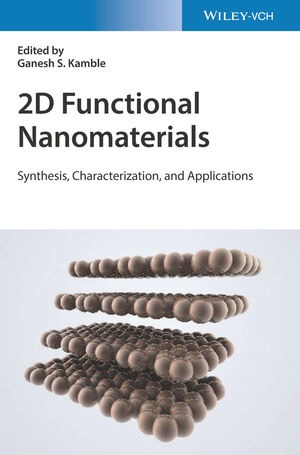
2D Functional Nanomaterials : Synthesis, Characterization, and Applications
In 2D Functional Nanomaterials: Synthesis, Characterization, and Applications, Dr. Ganesh S. Kamble presents an authoritative overview of the most recent progress in the rational design and synthesis of 2D nanomaterials and their applications in semiconducting catalysts, biosensors, electrolysis, batteries, and solar cells. This interdisciplinary volume is a valuable resource for materials scientists, electrical engineers, nanoscientists, and solid-state physicists looking for up-to-date information on 2D heterojunction nanomaterials.
