



الصفحة 1
الصفحة 1

Nutritional Management of the Surgical Patient
Provides the first comprehensive evidence-based overview of the nutritional and dietary therapies for surgical patients. It takes clinicians through every stage of surgery, from pre-operative and immediate post-operative care, through to long term recovery and survivorship. This book describes the impact of surgical procedures and their complications and the effect these have on nutritional status as well as the nutritional strategies utilised to manage patients in these settings.

Nutrition, Health and Disease : A Lifespan Approach
Delivers an easy-to-read and student-friendly textbook on the changing demands for nutrients made by the body throughout the human lifespan.

Modern hospice design : The architecture of palliative and social care
Takes cognisance of the new conditions of social care in the 21st century, principally in the UK, Europe and North America. It does so with regard to the development of new building types, but also in response to new philosophies of palliative care and the status of the elderly and the dying. At its core is a public discussion of a philosophy of design for providing care for the elderly and the vulnerable, taking the importance of architectural aesthetics, the use of quality materials, the porousness of design to the wider world, and the integration of indoor and outdoor spaces as part of the overall care environment.

Methodological Investigations in Agent-Based Modelling : With Applications for the Social Sciences
Examines the methodological complications of using complexity science concepts within the social science domain. The opening chapters take the reader on a tour through the development of simulation methodologies in the fields of artificial life and population biology, then demonstrates the growing popularity and relevance of these methods in the social sciences. Following an in-depth analysis of the potential impact of these methods on social science and social theory, the text provides substantive examples of the application of agent-based models in the field of demography. This work offers a unique combination of applied simulation work and substantive, in-depth philosophical analysis, and as such has potential appeal for specialist social scientists, complex systems scientists, and philosophers of science interested in the methodology of simulation and the practice of interdisciplinary computing research.

In Silico Dreams : How Artificial Intelligence and Biotechnology Will Create the Medicines of the Future
In Silico Dreams: How Artificial Intelligence and Biotechnology Will Create the Medicines of the Future delivers an illuminating and fresh perspective on the convergence of two powerful technologies: AI and biotech. Accomplished genomics expert, executive, and author Brian Hilbush offers readers a brilliant exploration of the most current work of pioneering tech giants and biotechnology startups who have already started disrupting healthcare.

Improving Interagency Collaboration, Innovation and Learning in Criminal Justice Systems : Supporting Offender Rehabilitation
This book to improve collaboration between criminal justice and welfare services in order to help prepare offenders for life after serving a prison sentence. It examines the potential tensions between criminal justice agencies and other organisations which are involved in the rehabilitation and reintegration of offenders, most notably those engaged in mental health care or third sector organisations

Hypoplastic Left Heart Syndrome
Hypoplastic Left Heart Syndrome draws together the experiences of the leading experts in the field. Through their work in all aspects of congenital cardiac care, they have become acknowledged as the world leaders in the diagnostic, medical and social needs of children born with hypoplasia of the left heart. More importantly, for the first time the book recognizes the crucial contributions made by the families of these children. Diagnostic possibilities, options for medical and surgical treatment and a history of their evolution are looked into and the book also gives an insight into the longer-term effects that treatment has on the child and its family. As well as including contributions from medical clinicians, nurses, and psychologists, for the first time a forum is provided for the parents, who have complemented the contributions from the medical and nursing experts to provide a holistic view of the lives and experiences of the children born with this condition. No other publication, currently available, offers such a comprehensive overview of the care required by a child with hypoplasia of the left heart. This book provides the ultimate reference for anyone treating children with this heart condition, particularly paediatric cardiac clinical and nursing teams, radiologists and radiographers, obstetric medical and nursing teams, psychologists, pathologists, geneticists and workers in social care.

Health Promotion in Health Care – Vital Theories and Research
This book represents a vital contribution to global health education, offering insights into health promotion as part of patient care for bachelor’s and master’s students in health care (nurses, occupational therapists, physiotherapists, radiotherapists, social care workers etc.) as well as health care professionals, and providing an overview of the field of health science and health promotion for PhD students and researchers.
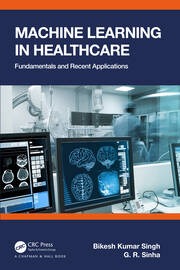
Machine learning in healthcare : Fundamentals and recent applications
Discusses how to build various ML algorithms and how they can be applied to improve healthcare systems. Healthcare applications of AI are innumerable: medical data analysis, early detection and diagnosis of disease, providing objective-based evidence to reduce human errors, curtailing inter- and intra-observer errors, risk identification and interventions for healthcare management, real-time health monitoring, assisting clinicians and patients for selecting appropriate medications, and evaluating drug responses. Extensive demonstrations and discussion on the various principles of machine learning and its application in healthcare is provided, along with solved examples and exercises.
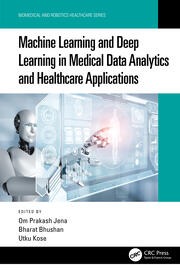
Machine learning and deep learning in medical data analytics and healthcare applications
Introduces and explores a variety of schemes designed to empower, enhance, and represent multi-institutional and multi-disciplinary machine learning (ML) and deep learning (DL) research in healthcare paradigms. Serving as a unique compendium of existing and emerging ML/DL paradigms for the healthcare sector, this book demonstrates the depth, breadth, complexity, and diversity of this multi-disciplinary area. It provides a comprehensive overview of ML/DL algorithms and explores the related use cases in enterprises such as computer-aided medical diagnostics, drug discovery and development, medical imaging, automation, robotic surgery, electronic smart records creation, outbreak prediction, medical image analysis, and radiation treatments.
Care Poverty : When Older People’s Needs Remain Unmet
This book turns the research attention of social policy scholars and long-term care researchers from comparative descriptions of care systems, focusing mostly on expenditures and volumes of long-term care services, to outcomes, and in particular to the question whether older people really receive the support that they need. Without knowledge about which needs and which social groups are currently inadequately covered, it is impossible to guide policy development.

Architecture for residential care and ageing communities : Spaces for dwelling and healthcare
A guide to the planning, architecture, and design of schools that are healthy, stimulating, and will conserve energy and resources. Written with the needs of architects, construction professionals, educators, and school administration in mind, the book provides a road map for sustainable planning, design, construction, and operations.
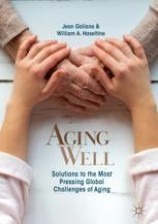
Aging Well : Solutions to the Most Pressing Global Challenges of Aging
Outlines the challenges of supporting the health and wellbeing of older adults around the world and offers examples of solutions designed by stakeholders, healthcare providers, and public, private and nonprofit organizations in the United States. The solutions presented address challenges including: providing person-centered long-term care, making palliative care accessible in all healthcare settings and the home, enabling aging-in-place, financing long-term care, improving care coordination and access to care, delivering hospital-level and emergency care in the home and retirement community settings, merging health and social care, supporting people living with dementia and their caregivers, creating communities and employment opportunities that are accessible and welcoming to those of all ages and abilities, and combating the stigma of aging. The innovative programs of support and care in Aging Well serve as models of excellence that, when put into action, move health spending toward a sustainable path and greatly contribute to the well-being of older adults.
