



الصفحة 1
الصفحة 1

Mnemonic Solidarity : Global Interventions
This book provides a concise introduction to a critical development in memory studies. A global memory formation has emerged since the 1990s, in which memories of traumatic histories in different parts of the world, often articulated in the terms established by Holocaust memory, have become entangled, reconciled, contested, conflicted and negotiated across borders

Investigating the Body in the Victorian Asylum : Doctors, Patients, and Practices
This book explores how the body was investigated in the late nineteenth-century asylum in Britain. As more and more Victorian asylum doctors looked to the bodily fabric to reveal the ‘truth’ of mental disease, a whole host of techniques and technologies were brought to bear upon the patient's body. These practices encompassed the clinical and the pathological, from testing the patient's reflexes to dissecting the brain.

International Impacts on Social Policy : Short Histories in Global Perspective
This book consists of 39 short essays that exemplify how interactions between inter- and trans-national interdependencies and domestic factors have shaped the dynamics of social policy in various parts of the world at different points in time. Each chapter highlights a specific type of interdependence which has been identified to provide us with a nuanced understanding of specific social policy developments at discrete points in history. The volume is divided into four parts that are concerned with a particular type of cross-border interrelation. The four parts examine the impact on social policy of trade relations and economic crises, violence, international organisations and cross-border communication and migration.

Interdisciplinary Perspectives on Mortality and its Timings : When is Death?
This volume provides a series of illuminating perspectives on the timings of death, through in-depth studies of Shakespearean tragedy, criminal execution, embalming practices, fears of premature burial, rumours of Adolf Hitler’s survival, and the legal concept of brain death. In doing so, it explores a number of questions, including: how do we know if someone is dead or not? What do people experience at the moment when they die? Is death simply a biological event that comes about in temporal stages of decomposition, or is it a social event defined through cultures, practices, and commemorations? In other words, when exactly is death? Taken together, these contributions explore how death emerges in a series of stages that are uncertain, paradoxical, and socially contested.

Improving Psychiatric Care for Older People : Barbara Robb’s Campaign 1965-1975
This book tells the story of Barbara Robb and her pressure group, Aid for the Elderly in Government Institutions (AEGIS). In 1965, Barbara visited 73-year-old Amy Gibbs in a dilapidated and overcrowded National Health Service psychiatric hospital back-ward. She was so appalled by the low standards that she set out to make improvements. Barbara’s book Sans Everything: A case to answer was publicly discredited by a complacent and self-righteous Ministry of Health. However, inspired by her work, staff in other hospitals ‘whistle-blew’ about events they witnessed, which corroborated her allegations. Barbara influenced government policy, to improve psychiatric care and health service complaints procedures, and to establish a hospitals' inspectorate and ombudsman.

Histories of experience in the world of lived religion
This book offers a theoretical introduction to the history of experience on three conceptual levels: everyday experience, experience as process, and experience as structure. Chapters apply 'experience' to empirical case studies, exploring how people have made and shared their religion through experience in history. This book understands experience as a simultaneously socially constructed and intimately personal process that connects individuals to communities and past to future, thereby forming structures that create and direct societies. It represents the crossroads of a new field of the history of experience, and an established tradition of the history of lived religion.

Healthy Minds in the Twentieth Century : In and Beyond the Asylum
This book contributes a new dimension to the study of mental health and psychiatry in the twentieth century. It takes the present literature beyond the ‘asylum and after’ paradigm to explore the multitude of spaces that have been permeated by concerns about mental well-being and illness.

From Melancholia to Depression : Disordered Mood in Nineteenth-Century Psychiatry
This book maps a crucial but neglected chapter in the history of psychiatry: how was melancholia transformed in the nineteenth century from traditional melancholy madness into a modern biomedical mood disorder

Forest Policies and Social Change in England
The book stresses how values and perceptions shape policies, and conversely how policies can modify perceptions, and also how policies can fail if they do not take perceptions into account. She concludes that many of the issues facing English forestry in the 21st century – from leisure, health and amenity provision, through education and rural as well as urban regeneration, to biodiversity conservation – go well beyond both national borders and the scope of forestry. This novel synthesis provides a valuable resource for advanced students and researchers from all areas of natural resource studies, including those interested in social history, socio-economics, cultural geography and environmental psychology, as well as those studying landscape ecology, environmental history, policy analysis and natural resource management.

Executing magic in the modern era : Criminal bodies and the Gallows in popular medicine
This book explores the magical and medical history of executions from the eighteenth to the early twentieth century by looking at the afterlife potency of criminal corpses, the healing activities of the executioner, and the magic of the gallows site. The use of corpses in medicine and magic has been recorded back into antiquity. The lacerated bodies of Roman gladiators were used as a source of curative blood, for instance. In early modern Europe, a great trade opened up in ancient Egyptian mummies and the fat of executed criminals, plundered as medicinal cure-alls. However, this is the first book to consider the demand for the blood of the executed, the desire for human fat, the resort to the hanged man’s hand, and the trade in hanging rope in the modern era. It ends by look at the spiritual afterlife of dead criminals.

Encounters and Practices of Petty Trade in Northern Europe, 1820–1960 : Forgotten Livelihoods
Uncovers one important, yet forgotten, form of itinerant livelihoods, namely petty trade, more specifically how it was practiced in Northern Europe during the period 1820–1960. It investigates how traders and customers interacted in different spaces and approaches ambulatory trade as an arena of encounters by looking at everyday social practices. Petty traders often belonged to subjugated social groups, like ethnic minorities and migrants, whereas their customers belonged to the resident population. How were these mobile traders perceived and described? What goods did they peddle? How did these commodities enable and shape trading encounters? What kind of narratives can be found, and whose? These questions pertaining to daily practices on a grass-root level have not been addressed in previous research.

Early Public Libraries and Colonial Citizenship in the British Southern Hemisphere
This Pivot book is a comparative study of six early colonial public libraries in nineteenth-century Australia, South Africa, and Southeast Asia. Drawing on networked conceptualisations of empire, transnational frameworks, and ‘new imperial history’ paradigms that privilege imbricated colonial and metropolitan ‘intercultures’, it looks at the neglected role of public libraries in shaping a programme of Anglophone civic education, scientific knowledge creation, and modernisation in the British southern hemisphere. The book’s six chapters analyse institutional models and precedents, reading publics and types, book holdings and catalogues, and regional scientific networks in order to demonstrate the significance of these libraries for the construction of colonial identity, citizenship, and national self-government as well as charting their influence in shaping perceptions of social class, gender, and race. Using primary source material from the recently completed ‘Book Catalogues of the Colonial Southern Hemisphere’ digital archive, the book argues that public libraries played a formative role in colonial public discourse, contributing to broader debates on imperial citizenship and nation-statehood across different geographic, cultural, and linguistic borders.

Drinking in Victorian and Edwardian Britain : Beyond the Spectre of the Drunkard
Investigates the reasons why Victorians and Edwardians consumed alcohol in the ways that they did and explores the ideas about alcohol that circulated in the period. This book shows that they had many reasons for purchasing and consuming alcoholic substances and these were driven by broader social, cultural, medical and commercial factors. Although drunkenness may have been the most visible consequence of alcohol consumption, it was not the only type of drinking behaviour. Alcohol played an important social role in the everyday lives of Victorians and Edwardians where its consumption held many different meanings.

Dissecting the Criminal Corpse : Staging Post-Execution Punishment in Early Modern England
Those convicted of homicide were hanged on the public gallows before being dissected under the Murder Act in Georgian England. Yet, from 1752, whether criminals actually died on the hanging tree or in the dissection room remained a medical mystery in early modern society. Dissecting the Criminal Corpse takes issue with the historical cliché of corpses dangling from the hangman’s rope in crime studies. Some convicted murderers did survive execution in early modern England. Establishing medical death in the heart-lungs-brain was a physical enigma. Criminals had large bullnecks, strong willpowers, and hearty survival instincts. Extreme hypothermia often disguised coma in a prisoner hanged in the winter cold. The youngest and fittest were capable of reviving on the dissection table. Many died under the lancet. Capital legislation disguised a complex medical choreography that surgeons staged. They broke the Hippocratic Oath by executing the Dangerous Dead across England from 1752 until 1832.
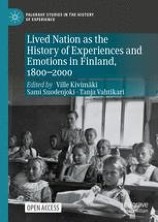
Lived Nation as the History of Experiences and Emotions in Finland, 1800-2000
It revolves around the following questions: What kinds of experiences have engendered national mobilization and feelings of national belonging? How have political and societal conflicts turned into new communities of experience and emotion? What kinds of experiences have been integrated into, or excluded from, the national context in different instances? How have people internalized or contested the nation as a context for their personal, family and minority-group experiences? In what ways has the nation entered and affected people’s intimate spheres of life? How have “national” experiences been transmitted to children in the renewal of the nation? This edited collection points to the histories of experience and emotions as a novel way of studying nations and nationalism. Building on current debates in nationalism studies, it offers a theoretical framework for analyzing the historical construction of “lived nations,” and introduces a number of new methodological approaches to understand the experiences of the nation, extending from the investigation of personal reminiscences and music records to the study of dreams and children’s drawings.
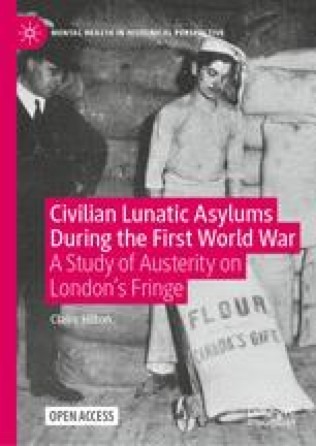
Civilian Lunatic asylums during the First World War : A study of Austerity on London's Fringe
This book explores the history of asylums and their civilian patients during the First World War, focusing on the effects of wartime austerity and deprivation on the provision of care.

Children's diabetes
Diabetes in infants, toddlers, older children, and adolescents poses serious physical, mental, and emotional challenges. Striking a balance among hypoglycemia/hyperglycemia, growth/development, and other life factors is not easy for health care providers, patients, or families. In addition, personal, family, or environmental conditions present before the onset of diabetes may compound the delicate balance needed to maintain good glycemic control. Therefore, there is a great need, especially at the time of initial diagnosis, to assess the developmental, behavioral, and psychosocial history of children with diabetes and their families.
Bright modernity : Color, commerce, and consumer culture
Color is a visible technology that invisibly connects so many puzzling aspects of modern Western consumer societies research and development, making and selling, predicting fashion trends, and more. Building on Regina Lee Blaszczyk’s go-to history of the “color revolution” in the United States, This book explores further transatlantic and multidisciplinary dimensions of the topic. Covering history from the mid nineteenth century into the immediate past, it examines the relationship between color, commerce, and consumer societies in unfamiliar settings and in the company of new kinds of experts. Readers will learn about the early dye industry, the dynamic nomenclature for color, and efforts to standardize, understand, and educate the public about color.
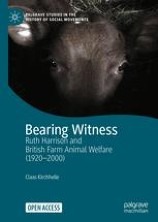
Bearing Witness : Ruth Harrison and British Farm Animal Welfare (1920–2000)
This book is the biography of one of Britain’s foremost animal welfare campaigners and of the world of activism, science, and politics she inhabited. In 1964, Ruth Harrison’s bestseller Animal Machines triggered a gear change in modern animal protection by popularising the term ‘factory farming’ alongside a new way of thinking about animal welfare.
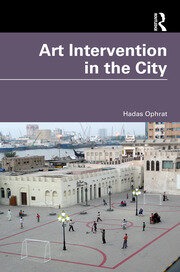
Art Intervention in the City
This book focuses on the phenomenon of art intervention—an expression of local initiatives by artists, collectives, and art centers wishing to influence the design of the space or make a change in its lifestyle.
