



الصفحة 1
الصفحة 1

On the Topology of Isolated Singularities in Analytic Spaces
The aim of this book is to give an overview of selected topics on the topology of real and complex isolated singularities, with emphasis on its relations to other branches of geometry and topology. The first chapters are mostly devoted to complex singularities and a myriad of results spread in a vast literature, which are presented here in a unified way, accessible to non-specialists. Among the topics are the fibration theorems of Milnor; the relation with 3-dimensional Lie groups; exotic spheres; spin structures and 3-manifold invariants; the geometry of quadrics and Arnold's theorem which states that the complex projective plane modulo conjugation is the 4-sphere. The second part of the book studies pioneer work about real analytic singularities which arise from the topological and geometric study of holomorphic vector fields and foliations. In the low dimensional case these turn out to be related to fibred links in the 3-sphere defined by meromorphic functions. This provides new methods for constructing manifolds equipped with a rich geometry.

Mixed Hodge Structures
The text of this book has its origins more than twenty- ve years ago. In the seminar of the Dutch Singularity Theory project in 1982 and 1983, the second-named author gave a series of lectures on Mixed Hodge Structures and Singularities, accompanied by a set of hand-written notes. The publication of these notes was prevented by a revolution in the subject due to Morihiko Saito: the introduction of the theory of Mixed Hodge Modules around 1985. Understanding this theory was at the same time of great importance and very hard, due to the fact that it uni es many di erent theories which are quite complicated themselves: algebraic D-modules and perverse sheaves. The present book intends to provide a comprehensive text about Mixed Hodge Theory with a view towards Mixed Hodge Modules.

Isomonodromic Deformations and Frobenius Manifolds : An Introduction
The notion of a Frobenius structure on a complex analytic manifold appeared at the end of the seventies in the theory of singularities of holomorphic functions. Motivated by physical considerations, further development of the theory has opened new perspectives on, and revealed new links between, many apparently unrelated areas of mathematics and physics. Based on a series of graduate lectures, this book provides an introduction to algebraic geometric methods in the theory of complex linear differential equations. Starting from basic notions in complex algebraic geometry, it develops some of the classical problems of linear differential equations and ends with applications to recent research questions related to mirror symmetry.

Introduction to Singularities and Deformations
This book presents the basic singularity theory of analytic spaces, including local deformation theory, and the theory of plane curve singularities. Plane curve singularities are a classical object of study, rich of ideas and applications, which still is in the center of current research and as such provides an ideal introduction to the general theory. Deformation theory is an important technique in many branches of contemporary algebraic geometry and complex analysis. This introductory text provides the general framework of the theory while still remaining concrete.

Geometry of Principal Sheaves
The book provides a detailed introduction to the theory of connections on principal sheaves in the framework of Abstract Differential Geometry (ADG). This is a new approach to differential geometry based on sheaf theoretic methods, without use of ordinary calculus. This point of view complies with the demand of contemporary physics to cope with non-smooth models of physical phenomena and spaces with singularities. Starting with a brief survey of the required sheaf theory and cohomology, the exposition then moves on to differential triads (the abstraction of smooth manifolds) and Lie sheaves of groups (the abstraction of Lie groups). Having laid the groundwork, the main part of the book is devoted to the theory of connections on principal sheaves, incorporating connections on vector

Fuchsian Reduction : Applications to Geometry, Cosmology, and Mathematical Physics
Fuchsian reduction is a method for representing solutions of nonlinear PDEs near singularities. The technique has multiple applications including soliton theory, Einstein's equations and cosmology, stellar models, laser collapse, conformal geometry and combustion. Developed in the 1990s for semilinear wave equations, Fuchsian reduction research has grown in response to those problems in pure and applied mathematics where numerical computations fail.

Deformations of Algebraic Schemes
This study has become increasingly important in algebraic geometry in every context where variational phenomena come into play, and in classification theory, e.g. the study of the local properties of moduli spaces.Today deformation theory is highly formalized and has ramified widely within mathematics. This self-contained account of deformation theory in classical algebraic geometry (over an algebraically closed field) brings together for the first time some results previously scattered in the literature, with proofs that are relatively little known, yet of everyday relevance to algebraic geometers. Based on Grothendieck's functorial approach it covers formal deformation theory, algebraization, isotriviality, Hilbert schemes, Quot schemes and flag Hilbert schemes. It includes applications to the construction and properties of Severi varieties of families of plane nodal curves, space curves, deformations of quotient singularities, Hilbert schemes of points, local Picard functors, etc. Many examples are provided. Most of the algebraic results needed are proved.
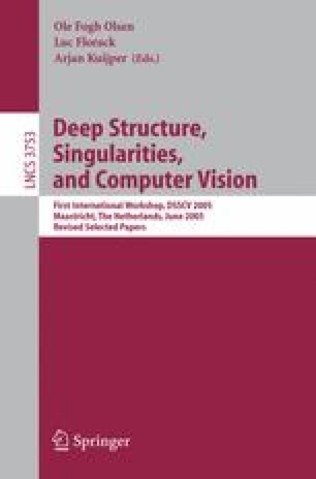
Deep structure, singularities, and computer vision ; 1st international workshop, DSSCV 2005, Maastricht, The Netherlands, June 9-10, 2005, revised selected papers
Constitutes the refereed post-proceedings of the First International Workshop on Deep Structure, Singularities, and Computer Vision, DSSCV 2005, held in Maastricht. This book represents in understanding the relation between structural, topological information represented by singularities and metric information of signals, shapes, and colors.

Courbes algébriques planes = Plane Algebraic Curves
Resulting from a master's course at the University of Paris VII, this text is re-edited as it appeared in 1978. Various tools are introduced in connection with Bézout's theorem necessary for the development of the notion of the multiplicity of intersection of two algebraic curves in the complex projective plane. Starting from elementary notions on affine and projective algebraic subsets, we define the intersection multiplicities and interpret their sum in terms of the resultant of two polynomials. The local study is a pretext for the introduction of formal or convergent series rings; it culminates in Puiseux's theorem, the convergence of which is reduced by splits to that of the theorem of implicit functions. Various figures illuminate the text: we "see" in particular that the homogeneous equation x3 + y3 + z3 = 0 defines a torus in the complex projective plane.

Local and Semi-Local Bifurcations in Hamiltonian Dynamical Systems : Results and Examples
Once again KAM theory is committed in the context of nearly integrable Hamiltonian systems. While elliptic and hyperbolic tori determine the distribution of maximal invariant tori, they themselves form n-parameter families. Hence, without the need for untypical conditions or external parameters, torus bifurcations of high co-dimension may be found in a single given Hamiltonian system. The text moves gradually from the integrable case, in which symmetries allow for reduction to bifurcating equilibria, to non-integrability, where smooth parametrisations have to be replaced by Cantor sets. Planar singularities and their versal unfoldings are an important ingredient that helps to explain the underlying dynamics in a transparent way.

An Undergraduate Primer in Algebraic Geometry
This book consists of two parts. The first is devoted to an introduction to basic concepts in algebraic geometry: affine and projective varieties, some of their main attributes and examples. The second part is devoted to the theory of curves: local properties, affine and projective plane curves, resolution of singularities, linear equivalence of divisors and linear series, Riemann–Roch and Riemann–Hurwitz Theorems.The approach in this book is purely algebraic. The main tool is commutative algebra, from which the needed results are recalled, in most cases with proofs. The prerequisites consist of the knowledge of basics in affine and projective geometry, basic algebraic concepts regarding rings, modules, fields, linear algebra, basic notions in the theory of categories, and some elementary point–set topology.
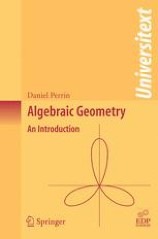
Algebraic Geometry : An Introduction
The book starts with easily-formulated problems with non-trivial solutions – for example, Bézout’s theorem and the problem of rational curves – and uses these problems to introduce the fundamental tools of modern algebraic geometry: dimension; singularities; sheaves; varieties; and cohomology. The treatment uses as little commutative algebra as possible by quoting without proof (or proving only in special cases) theorems whose proof is not necessary in practice, the priority being to develop an understanding of the phenomena rather than a mastery of the technique. A range of exercises is provided for each topic discussed, and a selection of problems and exam papers are collected in an appendix to provide material for further study.

Algebraic Cycles, Sheaves, Shtukas, and Moduli : Impanga Lecture Notes
The articles in this volume are devoted to: - moduli of coherent sheaves. - principal bundles and sheaves and their moduli. - new insights into Geometric Invariant Theory. - stacks of shtukas and their compactifications. - algebraic cycles vs. commutative algebra. - Thom polynomials of singularities. - zero schemes of sections of vector bundles.
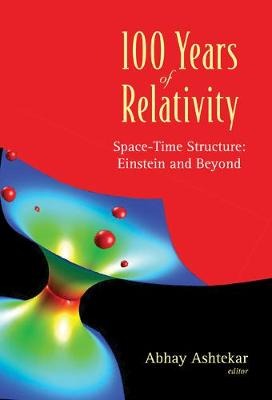
100 years of relativity : Space-time structure - Einstein and beyond
Contains contributions from leading researchers, worldwide, who have thought deeply about the nature and consequences of this interplay. The articles take a long-range view of the subject and distill the most important advances in broad terms, making them easily accessible to non-specialists. The first part is devoted to a summary of how relativity theories were born (J Stachel). The second part discusses the most dramatic ramifications of general relativity, such as black holes (P Chrusciel and R Price), space-time singularities (H Nicolai and A Rendall), gravitational waves (P Laguna and P Saulson), the large scale structure of the cosmos (T Padmanabhan); experimental status of this theory (C Will) as well as its practical application to the GPS system (N Ashby). The last part looks beyond Einstein and provides glimpses into what is in store for us in the 21st century.
