



الصفحة 1
الصفحة 1
New Trends and Technologies in Computer-Aided Learning for Computer-Aided Design ; IFIP International Working Conference: EduTech 2005, Perth, Australia, October 20-21, 2005
Computation and communication technologies underpin work and development in many different areas. Among them, Computer-Aided Design of electronic systems and E-Learning technologies are two areas which are different but share many concerns. The design of CAD and E-Learning systems already touches on a number of parallels, such as system interoperability, user interfaces, standardization, EML-based formats, reusability aspects (of content or designs), and intellectual property rights. Furthermore, the teaching of Design Automation tools and methods is particularly amenable to a distant or blended learning setting, and implies the interconnection of typical CAD tools, such as simulators or synthesis tools, with e-learning tools. There are many other aspects in which synergy can be found when using E-Learning technology for teaching and learning technology. This workshop, sponsored by IFIP WG 10.5 Design and Engineering of Electronic Systems in cooperation with IFIP WG 3.6 Distance Education, will explore the interrelationship between these two subjects, where Computer-Aided Design meets Computer-Aided Learning. New Trends and Technologies in Computer-Aided Learning for Computer-Aided Design documents recent approaches and results presented at the EduTech 2005 Workshop, which was held in October 2005 in Perth, Australia and sponsored by the International Federation for Information Processing (IFIP). The topics chosen for this working conference are very timely: learning environments, tools and applications for education, education technologies and trends, and teaching in the hardware design area.

IP Network-based Multi-agent Systems for Industrial Automation : Information Management, Condition Monitoring and Control of Power Systems
IP Network-based Multi-agent Systems for Industrial Automation is the first book to present an introduction to the use of the Internet protocol suite and multi-agent systems for the information management, online monitoring and control of distributed power system substations. An open architecture is proposed, in which mobile agents are applied to the retrieval and analysis of substation data, and to remote operator intervention. A prototype implementation of this architecture is also described, which has been demonstrated and evaluated using a substation simulator.

Human-Like Biomechanics : A Unified Mathematical Approach to Human Biomechanics and Humanoid Robotics
The book contains six Chapters and an Appendix. The first Chapter is an Introduction, giving a brief review of mathematical techniques to be used in the text. The second Chapter develops geometrical basis of human-like biomechanics, while the third Chapter develops its mechanical basis, mainly from generalized Lagrangian and Hamiltonian perspective. The fourth Chapter develops topology of human-like biomechanics, while the fifth Chapter reviews related nonlinear control techniques. The sixth Chapter develops covariant biophysics of electro-muscular stimulation. The Appendix consists of two parts: classical muscular mechanics and modern path integral methods, which are both used frequently in the main text.
High performance computing in science and engineering 04 ; Transactions of the High Performance Computing Center, Stuttgart (HLRS) 2004
This book presents the state-of-the-art in modelling and simulation on supercomputers. Leading German research groups present their results achieved on high-end systems of the High Performance Computing Center Stuttgart (HLRS) for the year 2004. The reports cover all fields of computational science and engineering ranging from computational fluid dynamics via computational physics and chemistry to computer science. Special emphasis is given to industrially relevant applications. Presenting results for both vector-systems and micro-processor based systems the book allows to compare performance levels and usability of a variety of supercomputer architectures. In the light of the success of the Japanese Earth-Simulator this book may serve as a guide book for a US response
Fundamentals of Robotic Mechanical Systems : Theory, Methods, and Algorithms
Fundamentals of Robotic Mechanical Systems, Third Edition addresses robots at large - such as multi-fingered hands, walking machines, flight simulators, and machine tools - that rely on mechanical systems to perform their tasks. The author establishes the foundations on which the design, control, and implementation of the underlying mechanical subsystems are based. The treatment assumes familiarity with some calculus, linear algebra, and elementary mechanics; however, the elements of rigid-body mechanics and linear transformations are reviewed in the first chapters, making the presentation self-contained.
EM Modeling of Antennas and RF Components for Wireless Communication Systems
The book focuses on the practical aspects of computational electrodynamics. A short review of electromagnetic field theory and an illustrative introduction to basic concepts of numerical methods provide the mathematical and physical background. The main part the book guides the reader step-by-step through the modelling process: from the initial "what question shall the model answer?", through the setting up of a computer model by creating geometry, boundary conditions, sources, …, to post processing, validation, and optimization. A number of antenna and filter examples demonstrate the advantages and disadvantages of different numerical methods. So the book provides a realistic view on the capabilities and limits of state-of-the-art 3D-field simulators and on how to apply this knowledge efficiently to EM analysis and designing of RF applications in modern communication systems.

DNA Computing ; Vol. 4287 ; 12th International Meeting on DNA Computing, DNA12, Seoul, Korea, June 5-9, 2006, Revised Selected Papers
This book constitutes the thoroughly refereed postproceedings of the 12th International Meeting on DNA Computing, DNA12, held in Seoul, Korea in June 2006. The 34 revised full papers presented are organized in topical sections on molecular and membrane computing models, complexity analysis, sequence and tile designs and their properties, DNA tile self-assembly models, simulator and software for DNA computing, DNA computing algorithms and new applications, novel experimental approaches, and experimental solutions.

Design and implementation of an array of patch antenna
Wireless technology is one of the main areas of research in global communication systems today and the study of communication systems is incomplete without an understanding of the process and manufacture of antennas. This was the main reason for choosing this project to focus on this area. This paper presents the design and implementation of an antenna array consisting of 4 patch antenna elements that work on 2.4GHz frequency,the substrate FR4, It was analyzed using HFSS (High Frequency Simulator Structure). In order to achieve a gain of 7 db, and a reflection coefficient of s11 of -10db Then the board was printed And he made measurements in the laboratory on the spectrum analyzer and the kit for the antennas As a result of the measurements, we obtained the antenna gain, the antenna radiation pattern, and the s11

Conjoint measurement : Methods and applications
Covering developments in Conjoint Analysis, this book presents the theory and applications of this technique. It discusses: normative models that maximize return, extension of choice-based conjoint simulations, latent class, hierarchical Bayes modelling, choice simulators, and normative models for representing competitive actions and reactions.

Computational Electronic Circuits : Simulation and Analysis with MATLAB®
This textbook teaches in one, coherent presentation the three distinct topics of analysis of electronic circuits, mathematical numerical algorithms and coding in a software such as MATLAB®. By combining the capabilities of circuit simulators and mathematical software, the author teaches key concepts of circuit analysis and algorithms, using a modern approach. The DC, Transient, AC, Noise and behavioral analyses are implemented in MATLAB to study the complete characteristics of a variety of electronic circuits, such as amplifiers, rectifiers, hysteresis circuits, harmonic traps and passes, polyphaser filters, directional couplers, electro-static discharge and piezoelectric crystals. This book teaches basic and advanced circuit analysis, by incorporating algorithms and simulations that teach readers how to develop their own simulators and fully characterize and design electronic circuits.
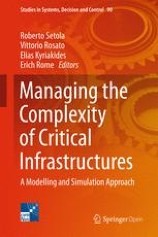
Managing the Complexity of Critical Infrastructures : A Modelling and Simulation Approach
This book summarizes work being pursued in the context of the CIPRNet (Critical Infrastructure Preparedness and Resilience Research Network) research project, co-funded by the European Union under the Seventh Framework Programme (FP7). The project is intended to provide concrete and on-going support to the Critical Infrastructure Protection (CIP) research communities, enhancing their preparedness for CI-related emergencies, while also providing expertise and technologies for other stakeholders to promote their understanding and mitigation of the consequences of CI disruptions, leading to enhanced resilience.
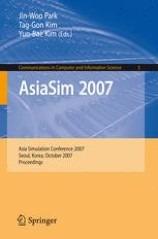
AsiaSim 2007 ; Asia Simulation Conference 2007, Seoul, Korea, October 10-12, 2007, Proceedings
This book contains modeling, simulation, and their applications.It also contains e-business, supply chain management, general and engineering applications, manufacturing, medical, military,networks, transportation, traffic and virtual reality.

A healthcare professionals training system
The Objective Structured Clinical Examination (OSCE) is a type of examination often used in health sciences. It is designed to test clinical skill performance and competence in a range of skills. It is a practical, real-world approach to learning and assessment. Comprises a circuit of short (5-10 minutes) stations, in which each candidate is examined on a one-to-one basis with one or two impartial examiner(s) and patients who are either real or simulated (actors or electronic patient simulators). Each station has a different examiner; in comparison, the traditional method of clinical examination is when a candidate is assigned to an examiner for the entire examination.
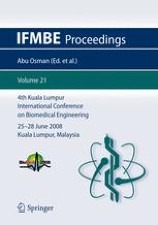
4th Kuala Lumpur International Conference on Biomedical Engineering 2008 ; BIOMED 2008 25–28 June 2008 Kuala Lumpur, Malaysia
The topics covered in the conference proceedings include: Artificial organs, bioengineering education, bionanotechnology, biosignal processing, bioinformatics, biomaterials, biomechanics, biomedical imaging, biomedical instrumentation, bioMEMS, clinical engineering, prosthetics.
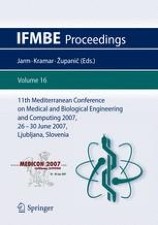
11th Mediterranean Conference on Medical and Biomedical Engineering and Computing 2007 ; MEDICON 2007, 26-30 June 2007, Ljubljana, Slovenia
Biomedical engineering today is a well-recognized area of research. It brings together bright minds from diverse disciplines ranging from engineering, physics, and computer sciences on one side to biology and medicine on the other side. With valuable assistance of members of the International Advisory Committee and Scientific Program Committee, the co-organizing institutions and societies, our sponsors, and distinguished invited lecturers we will ensure that the research and development presented at MEDICON 2007 plenary meetings, scientific sessions, and workshops will truly be relevant and up-to-date. The MEDICON conferences are international events of high scientific standards with long lasting tradition held every third year in one of the Mediterranean countries under the auspices of the International Federation for Medical and Biological Engineering.
