



الصفحة 1
الصفحة 1

Notch Signaling in Embryology and Cancer : Notch Signaling in Cancer
This thoroughly revised second edition is an up-to-date overview of the current knowledge of Notch and Notch signaling in embryology and cancer. It discusses this topic from Notch’s role in the development of the embryo to the Notch signaling pathway’s role in the development of a number of cancers, including breast cancer, malignant melanoma, Non-melanoma skin cancer, intestinal cancer and others. In the years since the previous edition, there have been numerous developments and insights within this rapidly moving field, making this new edition urgently needed. This volume also features discussions of current insights on Notch’s role in senescence, the regulation of Notch signaling by microRNAs, Notch’s role in the microbiome, diet and its influence on Notch signaling and more.

Molecular Mechanisms of Cancer
Cancer may constitute the most extensively studied functions constitute a second line of defense that disease entity of our time. Nevertheless, our com- protects against transforming defects in oncogenes prehension of the cellular and molecular pathology or tumor-suppressor genes and are here considered of malignant transformation is incomplete.

Molecular Biology of Human Cancers: An Advanced Student's Textbook
Presents many of the molecules and mechanisms generally important in human cancers. Following an overview on the cancer problem, individual chapters deal with cancer genetics and epigenetics, DNA damage and repair, oncogenes, tumor suppressors, regulatory pathways in cancer, apoptosis, cellular senescence, tumor invasion, and metastasis. A consensus is emerging that while these common mechanisms and molecules are all relevant to human cancers, in each cancer type (or even subtype) a selection of them are extremely important. For selected cancers, the route from genetic and epigenetic changes to their biological and clinical behavior can already be traced. Part II of the book presents a broad, but exemplary selection of cancers that serve as paradigms to illustrate this point. In fact, cancer research has now reached a critical stage, in which the accumulated knowledge on molecular mechanisms is gradually translated into improved prevention, diagnosis, and treatment. The state, pitfalls, and potential of these efforts are summarized in Part III. More than ever, cancer research is now an interdisciplinary effort which requires a basic knowledge of commonly used terms, facts, issues, and concepts. The aim of this book is to provide advanced students and practitioners of different disciplines with this basis, bridging the gap between standard textbooks of molecular biology, pathology, and oncology on the one hand and the specialized cancer literature on the other.

Immunosenescence
In this volume not only the mechanisms responsible for immune ageing in humans but consider what might be accomplished to redress the erosion of immune competence with age.

Heat Shock Proteins in Cancer
Heat shock proteins are emerging as important molecules in the development of cancer and as key targets in cancer therapy. These proteins enhance the growth of cancer cells and protect tumors from treatments such as drugs or surgery.

Growth, Differentiation and Sexuality
Since publication of the first edition of Volume I in 1994, the field of fungal biology has developed tremendously, mainly through the advancement of various molecular techniques and international fungal genome projects. To accommodate these developments, the second edition has been completely updated. Six chapters have been revised by former authors, others by newly recruited experts, and also novel subjects, emerged in more recent years, have been added to the book. Leading scientists in the field have compiled comprehensive overviews as well as latest results obtained from cytological, genetic and molecular studies. Topics include: cellular and colony growth of fungi, cellular fusion and incompatibility, senescence and programmed cell death, environmental and physiological signalling in differentiation processes, asexual and sexual reproduction, mitosis and meiosis of various types of fungi. Both parallels and differences become visible between individual fungi as well as between fungal classes.

Ethylene Action in Plants
The plant hormone ethylene plays a prominent role among several intrinsic and extrinsic factors that control growth and physiology of plants. Its biological activity was discovered over a century ago. However, extensive studies on its mode of action came later. To date, it is well documented that ethylene is a versatile signaling molecule that plays an important role in many physiological processes - like growth, senescence, fruit ripening, stress responses, symbioses, and photosynthesis. Molecular-genetic analyses have revealed mechanisms responsible for ethylene production, perception, and signal transduction. The present work brings into focus the recent developments on the biochemical, physiological, and molecular basis for ethylene action in plants.

Developmental Biology of Neoplastic Growth
In this book, tumour growth is perceived as a deviation from the normal development of the human organism. The molecular, cellular, and tissue determinants of different tumours are discussed showing that each is a different disease, often corresponding to a particular developmental stage. The natural history of several cancers illustrates how clinical incidence can be just the visible part of the iceberg, while the first changes at the tissue level sometimes occur several years before tumour growth becomes manifest.
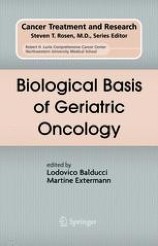
Biological Basis of Geriatric Oncology
Biological Basis of Geriatric Oncology highlights research issues that are specific to geriatric oncology in the field of carcinogenesis and cancer prevention and treatment, based on the biologic interactions of cancer and age. It illustrates the benefit of the principles of geriatrics in the management of cancer in the older individual.
Biochemistry and cell biology of ageing ; Part III : Biomedical science
Covering interesting and significant biomedical ageing topics not included in the earlier volumes. Comprehensive and cutting-edge, this book is a valuable resource for experienced researchers and early career scientist alike, who are interested in learning more about the fascinating and challenging question of why and how our cells age.
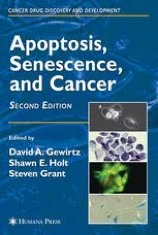
Apoptosis, Senescence, and Cancer
Apoptosis, Senescence and Cancer provides insight into established practices and research into apoptosis and senescence by thoroughly examining novel and emerging techniques and research in the fields of cell death pathways, senescence growth arrest, drugs and resistance, DNA damage response, and other topics which still hold mysteries for researchers.this volume provides basic scientists and clinicians with a deeper and more complete understanding of the cellular responses of malignancies which may determine the effectiveness of treatment.

Aging and Senescence
Aging is characterized by a progressive loss of physiological integrity, leading to impaired function and increased vulnerability to death. This deterioration is the primary risk factor for major human pathologies, including cancer, diabetes, cardiovascular disorders, and neurodegenerative diseases. Aging research has experienced an unprecedented advance over recent years, particularly with the discovery that the rate of aging is controlled, at least to some extent, by genetic pathways and biochemical processes conserved in evolution. Although recent developments in molecular biology are far from understanding the biological basis of aging, research suggests that targeting the aging process itself could ameliorate many age-related pathologies.

Advances in Plant Ethylene Research ; Proceedings of the 7th International Symposium on the Plant Hormone Ethylene
The rapid advances in elucidating the biosynthesis and mode of action of the plant hormone ethylene as well as its involvement in the regulation of the whole plant physiology made imperative the organization of a series of dedicated conferences. This volume contains the main lectures and poster contributions presented at the 7th International Symposium on the Plant Hormone Ethylene held in Pisa in 2006. The book is organized in seven sections dedicated to 1) Ethylene biosynthesis, perception and signal transduction, 2) Interactions between ethylene and other hormones, 3) Role of ethylene in plant growth and differentiation, 4) Fruit development, ripening and quality, 5) Abscission and senescence, 6) Ethylene involvement in biotic and abiotic stresses, and 7) Biotechnology and applied aspects.
