



الصفحة 1
الصفحة 1

Microearthquake Seismology and Seismotectonics of South Asia
This volume comprehensively deals with plate tectonics and seismic waves in general and earthquake monitoring by permanent and temporary networks for active fault mapping, aftershock, swarm and induced seismicity investigations in interplate collision and subduction zones and in intraplate shield region.

Ionospheric Precursors of Earthquakes
Changes included changing my career from the field of space plasma physics to Earth sciences and geophysics, and changes in my personal life giving me h- piness and compliance in my present family.

Historical Seismology : Interdisciplinary Studies of Past and Recent Earthquakes
Modern seismology has faced new challenges in the study of earthquakes and their physical characteristics. This volume is dedicated to the use of new approaches and presents a state of the art in historical seismology. Selected historical and recent earthquakes are chosen to document and constrain related seismic parameters using updated methodologies in the macroseismic analysis, field observations of damage distribution and tectonic effects, and modelling of seismic waveforms. A critical re-evaluation of historical accounts and early seismograms provides us with the basis for a realistic seismic hazard assessment.

Geodetic and geophysical observations in Antarctica : An overview in the IPY perspective
This book is a collection of papers on various aspects of the scientific investigation and observation techniques of the polar regions at both temporary and permanent observatories. Most papers focus on regional models based on data acquired in polar regions. Geodetic satellite positions systems (GNSS: GPS, GLONASS, GALILEO) will also be discussed as well as other space techniques (DORIS, VLBI). Gravimetry, absolute gravimetry, and tidal gravimetry are also discussed, as well as seismology and meteorology.

Fossil earthquakes : The formation and preservation of pseudotachylytes
This book encompass the principl results of field investigations, analyses of meso-scale and micro-scale textures and structures, laboratory experiments, chemical analyses, conceptual fault models, as well as the implications of fault related pseudotachylyte an its related fault rocks for our understanding of earthquakes. We hope that this book helps to bridge the gap between seismology and geology and that it encourages further studies of earthquake and seismic faulting processes.

Earthquake Source Asymmetry, Structural Media and Rotation Effects
This is the first book on rotational effects in earthquakes, a revolutionary concept in seismology. Existing models do no yet explain the significant rotational and twisting motions that occur during an earthquake and cause the failure of structures. This breakthrough monograph thoroughly investigates rotational waves, basing considerations on modern observations of strong rotational ground motions and detection of seismic rotational waves. To describe the propagation of such waves the authors consider structured elastic media that allow for rotational motions and rotational deformations of the ground, sometimes stronger than translational deformations. The rotation and twist effects are investigated and described and their consequences for designing tall buildings and other important structures are presented. The book will change the way the world views earthquakes and will interest scientists and researchers in the fields of Geophysics, Geology and Civil Engineering.

Earthquake Monitoring and Seismic Hazard Mitigation in Balkan Countries
this book including deployment of modern seismograph stations and arrays and these developments are detailed in the book. Station and network operations require near real time record analysis and topics dealt with here are 2-D signal detector, epicenter location and earthquake monitoring. Balkan is seismically the most active part of Europe due to multiple plate interactions in the Aegean Sea. The tectonic evolution and on-going geodynamic deformations are described in 2 articles. Earthquake hazard analysis and topographic site effects are discussed and likewise large earthquake hazards in the Aegean and the Marmara seas relate to practical applications of such procedures. Foremost; the book gives a good account of past, present and likely future seismological developments in Balkan countries and various kinds of network operations on local to global scales.

Earthquake Geotechnical Engineering ; 4th International Conference on Earthquake Geotechnical Engineering-Invited Lectures
This book contains the full papers on which the invited lectures of the 4th International Conference on Geotechnical Earthquake Engineering (4ICEGE) were based. It provides a comprehensive overview of the progress achieved to date in soil dynamics and geotechnical earthquake engineering, as well as in engineering seismology and seismic risk assessment and management. In situ and laboratory testing, theoretical issues and numerical modeling of soil dynamics, seismic hazard with emphasis on the long-period ground motion displacements, site effects and microzonation, liquefaction assessment and mitigation, soil-structure interaction, performance based design of geotechnical structures, earthquake resistant design and performance of shallow and deep foundations, retaining structures, embankments and dams, underground structures and lifelines, are all among the different topics covered in this book. Interdisciplinary subjects such as vulnerability assessment of, transportation networks and lifelines as well as of geotechnical structures are also discussed. Finally, the book provides a thorough presentation of the existing worldwide important large-scale testing facilities and geotechnical strong ground motion arrays.

Drift-Driven Design of Buildings : Mete Sozen’s Works on Earthquake Engineering
Summarizes the most essential concepts that every engineer designing a new building or evaluating an existing structure should consider in order to control the damage caused by drift (deformation) induced by earthquakes. It presents the work on earthquake engineering done by Dr. Mete Sozen and dozens of his collaborators and students over decades of experimentation, analysis, and reconnaissance. Many of the concepts produced through this work are integral part of earthquake engineering today. Nevertheless, the connection between the concepts in use today and the original sources is not always explained.

Directions in strong motion instrumentation ; Proceedings of the NATO SFP Workshop on Future Directions in Instrumentation for Strong Motion and Engineering Seismology, Kusadasi, Izmir, May 17-21, 2004
This book, which contains papers by invited authorities, represents a unique interaction between seismologists and earthquake engineers who examine issues of mutual concern in an overlapping area of major interest. The papers have been grouped around three major areas. -Seismic Hazard and Extreme Motions -Engineering Uses of Strong Motion Seismograms -Arrays and Observations.
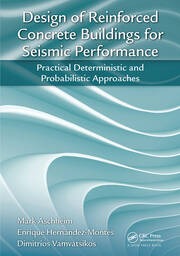
Design of Reinforced Concrete Buildings for Seismic Performance : Practical Deterministic and Probabilistic Approaches
Presents an elegant, simple and theoretically coherent design framework. Required strength is determined on the basis of an estimated yield displacement and desired limits of system ductility and drift demands. A simple deterministic approach is presented along with its elaboration into a probabilistic treatment that allows for design to limit annual probabilities of failure. The design method allows the seismic force resisting system to be designed on the basis of elastic analysis results, while nonlinear analysis is used for performance verification. Detailing requirements of ACI 318 and Eurocode 8 are presented. Students will benefit from the coverage of seismology, structural dynamics, reinforced concrete, and capacity design approaches, which allows the book to be used as a foundation text in earthquake engineering.

Case Studies in Spatial Point Process Modeling
Point process statistics is successfully used in fields such as material science, human epidemiology, social sciences, animal epidemiology, biology, and seismology. Its further application depends greatly on good software and instructive case studies that show the way to successful work. This book satisfies this need by a presentation of the spatstat package and many statistical examples.Researchers, spatial statisticians and scientists from biology, geosciences, materials sciences and other fields will use this book as a helpful guide to the application of point process statistics. No other book presents so many well-founded point process case studies.
Aging, shaking, and cracking of infrastructures : From mechanics to concrete dams and nuclear structures
Focuses on the safety assessment of existing structures subjected to multi-hazard scenarios through advanced numerical methods. Whereas the focus is on concrete dams and nuclear containment structures, the presented methodologies can also be applied to other large-scale ones. This book is composed of seven sections: Fundamentals: theoretical coverage of solid mechnics, plasticity, fracture mechanics, creep, / seismology, dynamic analysis, probability and statistics / Damage: that can affect concrete structures, such as cracking of concrete, AAR, chloride ingress, and rebar corrosion, / Finite Element: formulation for both linear and nonlinear analysis including stress, heat and fracture mechanics, / Engineering Models: for soil/fluid-structure interaction, uncertainty quantification, probablilistic and random finite element analysis, machine learning, performance based earthquake engineering, ground motion intensity measures, seismic hazard analysis, capacity/fragility functions and damage indeces, / Applications to dams through potential failure mode analyses, risk-informed decision making, deterministic and probabilistic examples, / Applications to nuclear structures through modeling issues, aging management programs, critical review of some analyses, / Other applications and case studies: massive RC structures and bridges, detailed assessment of a nuclear containment structure evaluation for license renewal.
Advanced Earthquake Engineering Analysis
The purpose of the book is to review the fundamentals of displacement based methods, starting from engineering seismology, earthquake geotechnical engineering, to focus on design, analysis and testing of structures with emphasis on buildings and bridges.
