



الصفحة 1
الصفحة 1

Observing systems for atmospheric composition : Satellite, aircraft, sensor web and ground-based observational methods and strategies
The new challenge in atmospheric chemistry is to understand the intercontinental transport and transformation of gases and aerosols. This book describes the observational and modeling techniques used to understand the atmospheric composition from satellites, aircraft and ground based platforms. The two common ideas presented throughout are the role of each component in an observing system for atmospheric composition, and the advances necessary to improve the understanding of atmospheric composition. The objective of this book is to provide a larger audience the opportunity to learn about these techniques and advances in atmospheric composition.

Observation of the Earth System from Space
A special highlight is the - termination of seasonal gravity variations caused by changes in continental water masses. For GOCE, to be launched in 2006, new gravity field analysis methods are under development and integrated into the ESA processing s- tem. 200,000 GPS radio occultation pro?les, observed by CHAMP, have been processed on an operational basis. They represent new and excellent inf- mation on atmospheric refractivity, temperature and water vapor. These new developments require geodetic space techniques (such as VLBI, SLR, LLR, GPS) to be combined and synchronized as if being one global instrument.
Object-Based Image Analysis and Treaty Verification : New Approaches in Remote Sensing – Applied to Nuclear Facilities in Iran
This book describes recent progress in object-based image interpretation, and also presents many new results in its application to verification of nuclear non-proliferation. A comprehensive workflow and newly developed algorithms for object-based high resolution image (pre-) processing, feature extraction, change detection, classification and interpretation are developed, applied and evaluated. The entire analysis chain is demonstrated with high resolution imagery acquired over Iranian nuclear facilities.
Object-Based Image Analysis : Spatial Concepts for Knowledge-Driven Remote Sensing Applications
This book discusses means, technologies and approaches related to the processing and analysis of multi-sensor, multi-resolution data with a focus on the generation, modelling and classification of objects. The applications also address the integration of Geographic Information and the concurrent developments of GIScience and vanquish limitations of pixelwise image processing by exploiting image information context-driven and "intelligently".

Nonlinear Time Series Analysis in the Geosciences : Applications in Climatology, Geodynamics and Solar-Terrestrial Physics
This book presents recent developments in nonlinear time series which have been motivated by present day problems in geosciences. Modern methods of spatio-temporal data analysis, time-frequency analysis, dimension analysis, nonlinear correlation and synchronization analysis and other nonlinear concepts are used to study emerging questions in climatology, geophysics, solar-terrestrial physics and related scientific disciplines. This volume collects contributions of some of the world's leading experts in geoscientific time series analysis.

Neural Nets ; 16th Italian Workshop on Neural Nets, WIRN 2005, International workshop on natural and artificial immune systems, NAIS 2005, Vietri sul Mare, Italy, June 8-11, 2005, Revised Selected Papers
This book constitutes the thoroughly refereed postproceedings of the 16th Italian Workshop on Neural Nets, WIRN 2005, as well as the satellite International Workshop on Natural and Artificial Immune Systems, NAIS 2005, held in Vietri sul Mare, Italy in June 2005. The 41 revised papers presented together with a lecture by the winner of the Premio Caianiello award were carefully reviewed and improved during two rounds of selection and refereeing.

Networking -- ICN 2005 ; Vol. 3420 : 4th International Conference on Networking, Reunion Island, France, April 17-21, 2005, Proceedings, Part I
The International Conference on Networking (ICN 2005) was the fourth conf- ence in its series aimed at stimulating technical exchange in the emerging and important ?eld of networking. On behalf of the International Advisory C- mittee, it is our great pleasure to welcome you to the proceedings of the 2005 event. Networking faces dramatic changes due to the customer-centric view, the venue of the next generation networks paradigm, the push from ubiquitous n- working, and the new service models. Despite legacy problems, which researchers and industry are still discovering and improving the state of the art, the ho- zon has revealed new challenges that some of the authors tackled through their submissions. In fact ICN 2005 was very well perceived by the international networking community. A total of 651 papers from more than 60 countries were submitted, from which 238 were accepted. Each paper was reviewed by several members of the Technical Program Committee. This year, the Advisory Committee revalidated various accepted papers after the reviews had been incorporated. We perceived a signi?cant improvement in the number of submissions and the quality of the submissions. The ICN 2005 program covered a variety of research topics that are of current interest, starting with Gridnetworks, multicasting, TCP optimizations, QoS and security, emergency services, and network resiliency. The Program Committee selected also three tutorials and invited speakers that addressed the latest - search results from the international industries and academia, and reports on ?ndings from mobile, satellite, and personal communications related to 3rd- and 4th-generation research projects and standardization.

Multiwavelength Mapping of Galaxy Formation and Evolution ; Proceedings of the ESO Workshop Held at Venice, Italy, 13-16 October 2003
The possibilities of astronomical observation have dramatically increased over the last decade. Major satellites, like the Hubble Space Telescope, Chandra and XMM Newton, are complemented by numerous large ground-based observatories, from 8m-10m optical telescopes to sub-mm and radio facilities. As a result, observational astronomy has access to virtually the whole electromagnetic spectrum of galaxies, even at high redshifts. Theoretical models of galaxy formation and cosmological evolution now face a serious challenge to match the plethora of observational data. In October 2003, over 170 astronomers from 15 countries met for a 4-day workshop to extensively illustrate and discuss all major observational projects and ongoing theoretical efforts to model galaxy formation and evolution. This volume contains the complete proceedings of this meeting and is therefore a unique and timely overview of the current state of research in this rapidly evolving field.
Multiwavelength Approach to Unidentified Gamma-Ray Sources : A 2nd Workshop on the Nature of the High-Energy Unidentified Sources
Nearly one half of the point-like gamma-ray sources detected by EGRET instrument of the late Compton satellite are still defeating our attempts at identifying them. To establish the origin and nature of these enigmatic sources has become a major problem of current high-energy astrophysics. The second workshop on Multiwavelength Approach to Unidentified Gamma-ray Sources intends to shed new and fresh light on the problem of the nature of these mysterious sources and the objects behind them. The proceedings contain 46 contributed papers in this subject, which cover theoretical models on gamma-ray sources as well as the best multiwavelength strategies for the identification of the promising candidates. The topics of this conference also include energetic phenomena ocurring both in galactic and extragalactic scenarios, phenomena that might lead to the appearance of what we have called high-energy unidentified sources. The book will be of interest for all active researchers in the high-energy astrophysics and related research areas as well as for scientists and graduate students interested in understanding the recent progress in this field.

Multi-Source National Forest Inventory : Methods and Applications
The book describes in detail the full MS-NFI process, and the input data used – including field data, satellite images, and digital map data, as well as coarse-scale variation of forest variables. It also presents comprehensive information on the types of outputs which can be derived, including maps and statistics, describing, for example, stock volumes and development, dominant tree species, age-class distribution, and large and small-scale variation. The book will provide an invaluable resource for those involved in forest inventory, including government departments and bodies involved in forest policy, management and monitoring, forest managers, and researchers and graduate students interested in forest inventory, modelling and analysis. It will find an additional market among those interested in Earth observation, ecology and broader areas of environmental and natural resource management.
Motion-Free Super-Resolution
With the explosion of Internet technology and graphics engines, digital images are now everywhere. Image capturing tools are all pervading - in our pockets to inside a satellite. And although imaging applications demand an availability to high resolution images, such images are not picture perfect and may be lacking sufficient details. This requires that these images be super-resolved for improved details. How to achieve this is what constitutes research in the area of image super-resolution. Motion-Free Super-Resolution explores new technology for image super-resolution - applying cues other than the motion cue in super-resolving a scene. This book will serve as an essential reference for both academecians and practicing engineers in the area of image processing and computer vision, as well as providing a basis for ongoing research in this field.
Models in Software Engineering ; Workshops and Symposia at MoDELS 2007, Nashville, TN, USA, September 30 - October 5, 2007, Reports and Revised Selected Papers
This book constitutes the thoroughly refereed post-workshop proceedings of 10 internationl workshops and 2 symposia held as satellite events of the 10th International Conference on Model Driven Engineering Languages and Systems, MoDELS 2007, in Nashville, TN, USA, in September/October 2007 (see LNCS 4735).The 29 revised full papers were carefully selected for inclusion in the book and are presented along with a doctoral and an educators' symposium section. The papers are organized in topical sections representing the various workshops: aspect-oriented modeling (AOM 2007), language engineering (ATEM2007), model driven development of advanced user interfaces (MDDAUI 2007), model size metrics (MSM 2007).

Models in Software Engineering ; Workshops and Symposia at MoDELS 2006, Genoa, Italy, October 1-6, 2006, Reports and Revised Selected Papers
This book constitutes the thoroughly refereed post-proceedings of 11 international workshops held as satellite events of the 9th International Conference on Model Driven Engineering Languages and Systems, MoDELS 2006, in Genoa, Italy, in October 2006 (see LNCS 4199). The 32 revised full papers were carefully selected for inclusion in the book.
Model checking and artificial intelligence ; 4th Workshop, MoChArt IV, Riva del Garda, Italy, August 29, 2006, Revised Selected and Invited Papers
This book constitutes the thoroughly refereed post-proceedings of the 4th Workshop on Model Checking and Artificial Intelligence, MoChArt IV, held in Riva Del Garda, Italy in August 2006, as a satellite event of ECAI0 2006, the 17th biannual European conference on Artificial Intelligence.

Mobile and Wireless Communications with Practical Use-Case Scenarios
While wireless technologies had a spectacular evolution over the past years, the present trend is to adopt a global heterogeneous network of shared standards that enables the provisioning of Quality of Service and Quality of Experience to the end-user. To this end, enabling technologies like Machine Learning, Internet of Things, Digital Twins, are seen as promising solutions for next generation networks that will enable an intelligent adaptive interconnected environment with support for prediction and decision making so that the heterogeneous applications and users requirements can be highly satisfied. The aim of this textbook is to provide the readers with a comprehensive technical foundation of the mobile communication systems and wireless network design, operations and applications of various radio access technologies. Additionally, it also introduces the reader to the latest advancements in technologies in terms of Internet of Things ecosystem, Machine Learning and Digital Twins for IoT-enabled intelligent environments. Furthermore, this textbook also includes practical use-case scenarios using Altair WinProp Software as well as Phyton, TensorFlow and Jupiter as support for practice-based laboratory sessions"
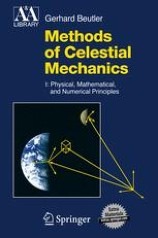
Methods of Celestial Mechanics: Vol. I: Physical, Mathematical, and Numerical Principles
G. Beutler's Methods of Celestial Mechanics is a coherent textbook for students in physics, mathematics and engineering as well as an excellent reference for practitioners. This Volume I gives a thorough treatment of celestial mechanics and presents all the necessary mathematical details that a professional would need. After a brief review of the history of celestial mechanics, the equations of motion (Newtonian and relativistic versions) are developed for planetary systems (N-body-problem), for artificial Earth satellites, and for extended bodies (which includes the problem of Earth and lunar rotation). Perturbation theory is outlined in an elementary way from generally known mathematical principles without making use of the advanced tools of analytical mechanics. The variational equations associated with orbital motion - of fundamental importance for parameter estimation (e.g., orbit determination), numerical error propagation, and stability considerations - are introduced and their properties discussed in considerable detail. Numerical methods, especially for orbit determination and orbit improvement, are discussed in considerable depth. The algorithms may be easily applied to objects of the planetary system and to Earth satellites and space debris.

Methods of Celestial Mechanics ; Vol. II : Application to Planetary System, Geodynamics and Satellite Geodesy
G. Beutler's Methods of Celestial Mechanics is a coherent textbook for students as well as an excellent reference for practitioners. Volume II is devoted to the applications and to the presentation of the program system CelestialMechanics. Three major areas of applications are covered: (1) Orbital and rotational motion of extended celestial bodies. The properties of the Earth-Moon system are developed from the simplest case (rigid bodies) to more general cases, including the rotation of an elastic Earth, the rotation of an Earth partly covered by oceans and surrounded by an atmosphere, and the rotation of an Earth composed of a liquid core and a rigid shell (Poincaré model). (2) Artificial Earth Satellites. The oblateness perturbation acting on a satellite and the exploitation of its properties in practice is discussed using simulation methods (CelestialMechanics) and (simplified) first order perturbation methods. The perturbations due to the higher-order terms of the Earth's gravitational potential and resonant perturbations are considered thereafter. Special attention is paid to satellites of the Global Navigation Satellite Systems and to geostationary satellites. The characteristics of and models for the two most important non-gravitational forces, atmospheric drag and radiation pressure, are presented as well as the most relevant forces acting on high- and low-orbiting satellites. (3) Evolution of the Planetary System. The outer planetary system consisting of the planets Jupiter to Pluto is studied over long time intervals using simulation methods and spectral analysis (CelestialMechanics). The properties of the inner systems, in particular of the Earth's orbit, are made visible by integrating the entire system over long time intervals relevant for climate change. The distribution of minor planets and their orbital properties, regular orbits, and chaotic orbits are easily generated and analyzed using CelestialMechanics. The volume concludes with the discussion of important mathematical tools of the program system and of the principles of spectral analysis.

Mediterranean Land-surface Processes Assessed from Space
1. 1 Space View and Ground Observations 1 1. 2 Mediterranean Climatic Environment 2 1. 3 Processes at Surfaces 10 1. 3. 1 Deforestation and Land-use Changes 10 1. 3. 2 Water Related Problems 16 1. 3. 3 Fire, Grazing, and Land Degradation 19 1. 3. 4 Drought, Floods, Frost, and Desertification 21 1. 3. 5 Coupling Between Surface and Atmosphere: The Role of the Atmospheric Boundary Layer 25 1. 4 Role and Capabilities of Measurements Made From Space 30 1. 4. 1 Research Programmes 30 1. 4. 2 Expected Information 32 1. 4. 3 Research Strategy 33 1. 4. 4 Observation of Changes in Heterogeneous Landscapes: Spatial and Temporal Scales 35 1. 4. 5 Land-surface Change Indicators Observable from Space 36 Spectral Characteristics of Vegetation and Soils (36); Responses of Remote Sensing Signals to Changes of Land-surface Properties (40) 1. 5 About this Book 48 Chapter 2 Processing and Archiving of Satellite and Ancillary Data 51 2. 1 Introduction 51 2. 2 The Remote Sensing Data Base 55 2. 2. 1 Satellite Instruments 55 The NOAA Observing System (55); Meteosat (57); Nimbus-7 (59); Landsat (59); SPOT (61); DMSP (62); ERS-1 and ERS-2 (62); TRMM (63); Terra (64); Envisat (65); Aqua (66) 2. 2. 2 Aircraft Instruments 66 The Use of Aircraft for Land-surface Process Studies (66); AVIRIS (67); TMS (68); AIRSAR (68); DIAL (69) 2. 3 Reception, Acquisition and Availability of Satellite Data 70 2. 3.

Measuring Precipitation from Space : EURAINSAT and the Future
More than 20 years after the last book on the subject the worldwide precipitation community has produced a comprehensive overview of its activities, achievements, ongoing research and future plans. Measuring Precipitation from Space presents state-of-the-art rainfall estimation algorithms, validation strategies, precipitation modelling, and assimilation in numerical weather prediction models. Clouds and precipitation observations and modelling are addressed for the improvement of the rainfall product quality. Special attention is given to the applications to monitoring and forecasting weather events and to climate monitoring in a frame of growing public interest.

MATLAB® Recipes for Earth Sciences
MATLAB® is used in a wide range of applications in geosciences, such as image processing in remote sensing, generation and processing of digital elevation models and the analysis of time series. This book introduces methods of data analysis in geosciences using MATLAB such as basic statistics for univariate, bivariate and multivariate datasets, jackknife and bootstrap resampling schemes, processing of digital elevation models, gridding and contouring, geostatistics and kriging, processing and georeferencing of satellite images, digitizing from the screen, linear and nonlinear time-series analysis and the application of linear time-invariant and adaptive filters. The revised and updated Second Edition includes new subchapters on windowed Blackman-Tukey, Lomb-Scargle and Wavelet powerspectral analysis, statistical analysis of point distributions and digital elevation models, and a full new chapter on the statistical analysis of directional data. The text includes a brief description of each method and numerous examples demonstrating how MATLAB can be used on data sets from earth sciences. All MATLAB recipes can be easily modified in order to analyse the reader's own data sets.
