



الصفحة 1
الصفحة 1

Mathematics Education in East Africa : Towards Harmonization and Enhancement of Education Quality
In the increasingly global and technological world mathematics is seen as a significant gatekeeper of opportunities for social and economic advancement and mobility. Hence, countries and development agencies in the broader sub-Saharan Africa region are looking towards increasing access to relevant and high-quality secondary education as a lever towards economic development. Policy makers and other key decision makers in education look towards improvement in mathematics teaching and learning as a key focus in education reform. In the East Africa region also a number of initiatives have been taken at the national level in the respective countries to improve the quality of mathematics education. This book provides an in-depth comparative analysis of the developments and issues in mathematics education in Kenya, Tanzania, Rwanda and Uganda, and advances our understanding of the state of secondary mathematics education in East Africa.

International Prosecution of Human Rights Crimes
It is intended for a wide variety of readers: academics, all kinds of jurists, as well as human rights activists, who sometimes know more about the applicable law than the legal experts. It owes its existence to a paradox: On the one hand, new structures for dealing with the most serious international crimes are being put into place.
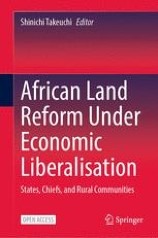
African Land Reform Under Economic Liberalisation: States, Chiefs, and Rural Communities
This book offers unique in-depth, comprehensive, and comparative analyses of the motivations, context, and outcomes of recent land reforms in Africa. Whereas a considerable number of land reforms have been carried out by African governments since the 1990s, no systematic analysis on their meaning has so far been conducted. In the age of land reform, Africa has seen drastic rural changes. Analysing the relationship between those reforms and change, the chapters in this book reveal not only their socio-economic outcomes, such as accelerated marketisation of land, but also their political outcomes, which have often been contrasting.
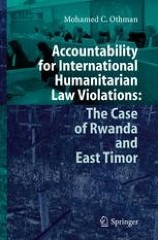
Accountability for International Humanitarian Law Violations : The Case of Rwanda and East Timor
The main objective of this book is to make available to an informed audience a le gal and policy oriented study on accountability for serious human rights and inter national humanitarian law violations. It is an attempt to share the lessons learnt in accountability for atrocity crimes as conducted by the International Criminal Tri bunal for Rwanda (ICTR), and the United Nations Transitional Administration in East Timor (UNTAET). The former established subsequent to egregious atrocities that took place in 1994, and the latter following the massive outburst of violence in 1999. The book is based on two cases: Rwanda and East Timor. It is expected that it will serve as reference literature to both the legal community and policy makers on accountability for heinous international crimes.
