



الصفحة 1
الصفحة 1

Non-metallic biomaterials for tooth repair and replacement
Focuses on the use of biomaterials for a range of applications in tooth repair and, in particular, dental restoration. Part one reviews the structure, modification and repair of dental tissues. The properties of enamel and dentin and their role in adhesive dental restoration are discussed, along with biomineralization and biomimicry of tooth enamel, and enamel matrix proteins (EMPs) for periodontal regeneration. Part two goes on to discuss the processing, bonding and wear properties of dental ceramics, glasses and sol-gel derived bioactive glass ceramics for tooth repair and replacement. Dental composites for tooth repair and replacement are then the focus of part three, including composite adhesive and antibacterial restorative materials for dental applications. T

Modern Operative Dentistry : Principles for Clinical Practice
Provides the theoretical knowledge required by students when learning how to diagnose oral diseases, plan treatment, and perform various types of dental restoration. It is also useful for clinicians wishing to update their treatment skills and broaden their understanding operative dentistry. Adopting an evidence-based approach, and in accordance with the philosophy of minimally invasive dentistry, it explains in detail the use of both classic and new restorative materials in various clinical situations. It also discusses the principles of smile analysis, as well the technique for esthetic composite restorations on posterior and anterior teeth, including direct and indirect veneers.

Glass-Ionomers in Dentistry
Covers all aspects of glass-ionomer cements, from the development of these materials in the early 1970s through to the current state of the art. Their physical, chemical, biological, and clinical properties are described as well as how their formulation and usage have evolved over time.

Extra-coronal restorations : Concepts and clinical application
A clinical guide to contemporary materials and techniques for the restoration of individual teeth and implants. It fully reflects the important developments in the field over the past 15 years, including in particular the shift away from wholesale use of crowns towards adhesive dentistry and less invasive extra-coronal restorations. The book opens by considering the principles and evidence base relating to the longevity of restorations of teeth and implants. Importantly, it explains how to ensure "a healthy start" and manage future risks. Material choice and aesthetic issues are then discussed, before all aspects of the planning and provision of extra-coronal restorations are examined in depth. The coverage also includes the adaptation of crowns to existing partial dentures. In line with modern dental education, each chapter begins with clinically relevant learning objectives, and helpful clinical tips are highlighted.

Esthetic & restorative dentistry : Material selection & technique
Provides the most up-to-date information on enhanced developments, materials, and techniques that have emerged since the publication of the second edition, offering the reader a completely updated, revised, and newly illustrated overview of modern esthetic and restorative dentistry complete with tutorial videos. New topics include web-based communication with the laboratory, indirect composite chairside CAD/CAM restorations, a comparison of digital and conventional techniques, the resin composite injection technique, as well as updated information on composites and ceramic systems, including esthetic zirconia. New cases illustrate the maintenance of esthetic restorative materials, esthetic contouring, immediate dentin sealing, and novel surgical techniques such as lip repositioning, connective tissue grafting, and ridge preservation with collagen membranes.

Dental caries : The selection of restoration methods and restorative materials
Includes seven chapters that focus on various important aspects of dental caries, including etiology, diagnosis, prevention, treatment, and management.

Craig’s Restorative Dental Materials ; 1st ed.
Covers everything you need to know to understand the science of selecting dental materials when designing and fabricating restorations. It begins with fundamentals and moves on to advanced skills in the manipulation of dental materials, providing insight on the latest advances and research along the way. From an expert author team led by Ronald Sakaguchi, this comprehensive resource is considered to be the standard in the field of dental restorations.

Color in Dentistry : A Clinical Guide to Predictable Esthetics
Provides step-by-step protocols to help dental professionals accurately match, communicate, and reproduce the color of teeth and gingiva. These authors demonstrate how to implement color science in simple problem-solving instructions for predictable esthetics in both clinical protocols and laboratory techniques. An extensive presentation of clinical cases is included to illustrate the use of recommended protocols in general practice. An outstanding contribution to the practice and theory of color management in contemporary dentistry

Manual of laboratory testing methods for dental restorative materials
Delivers a comprehensive and accessible review of the materials used in restorative dentistry. The book offers readers an evidence-based application of the materials and their mechanical, physical, and optical properties. Each chapter begins with key points and includes a glossary to aid in the learning and retention of the material contained within. The book also covers the methods used to study the properties and the advantages and disadvantages of various dental restorative materials as well as why they are selected.

Comparative analysis of failure mods in fiber posts, ever-x, ribboned fiber and natural teeth (control)
This randomized controlled trial aims to compare the failure modes of different restorative materials, including fiber posts, Ever-X, ribboned fiber, and natural teeth, under mechanical stress. Understanding the failure behavior of these materials will guide clinicians in selecting the most durable and repairable options for dental restorations.
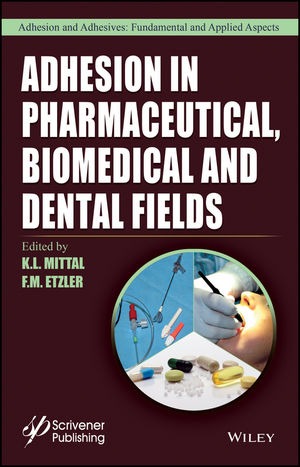
Adhesion in Pharmaceutical, Biomedical, and Dental Fields
The phenomenon of adhesion is of cardinal importance in the pharmaceutical, biomedical and dental fields. A few eclectic examples will suffice to underscore the importance/relevance of adhesion in these three areas. For example, the adhesion between powdered solids is of crucial importance in tablet manufacture. The interaction between biodevices (e.g., stents, bio-implants) and body environment dictates the performance of such devices, and there is burgeoning research activity in modifying the surfaces of such implements to render them compatible with bodily components. In the field of dentistry, the modern trend is to shift from retaining of restorative materials by mechanical interlocking to adhesive bonding.
