



الصفحة 1
الصفحة 1

Nutrient Cycling in Terrestrial Ecosystems
The first part of the book presents the fundamentals of nutrient cycling. Topics included are cycling of carbon, nitrogen, phosphorus, sulphur and micronutrients. The second part discusses nutrient cycling at an ecosystem scale, covering cropping systems, pastures, natural grasslands, arid lands, tundras and forests. The final chapter reviews current models of nutrient cycling.
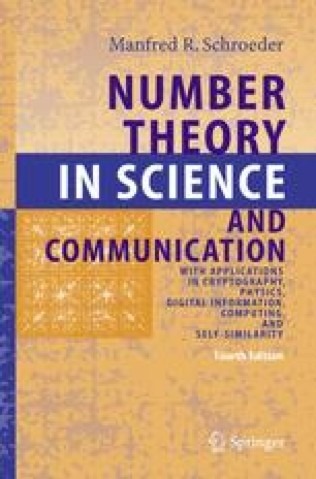
Number theory in science and communication : With applications in cryptography, physics, digital information, computing, and self-similarity
"Number Theory in Science and Communication" is a well-known introduction for non-mathematicians to this fascinating and useful branch of applied mathematics . It stresses intuitive understanding rather than abstract theory and highlights important concepts such as continued fractions, the golden ratio, quadratic residues and Chinese remainders, trapdoor functions, pseudoprimes and primitive elements. Their applications to problems in the real world are one of the main themes of the book. This revised fourth edition is augmented by recent advances in primes in progressions, twin primes, prime triplets, prime quadruplets and quintruplets, factoring with elliptic curves, quantum factoring, Golomb rulers and "baroque" integers.

Noncommutative Geometry and Number Theory : Where Arithmetic meets Geometry and Physics
This volume collects and presents up-to-date research topics in arithmetic and noncommutative geometry and ideas from physics that point to possible new connections between the fields of number theory, algebraic geometry and noncommutative geometry. The articles collected in this volume present new noncommutative geometry perspectives on classical topics of number theory and arithmetic such as modular forms, class field theory, the theory of reductive p-adic groups, Shimura varieties, the local Lfactors of arithmetic varieties. They also show how arithmetic appears naturally in noncommutative geometry and in physics, in the residues of Feynman graphs, in the properties of noncommutative tori, and in the quantum Hall effect.

Measuring Methane Production from Ruminants
The world’s livestock sector is amidst a major transformation, fuelled by high demand for meat and milk, which is likely to double over the next two decades in developing countries. The challenge is to enhance animal productivity without adversely affecting the environment. A key to this is reducing methane emissions from ruminants. The major limitation to ruminant production in many tropical regions of Africa, Asia and Latin America, where a large proportion of the global ruminant population is located, is poor nutrition. The productivity of animals is restricted by the low nitrogen and high fibre content of the native grasses and crop residues, which form the basis of the diets in these regions. Animals on these types of diets emit more methane than animals fed better quality temperate forages. These methane emissions represent a loss of digestible energy to the animal (up to 15%) as well as a threat to the environment.The challenge is to devise nutritional strategies and identify dietary components, particularly from locally available plant resources, that reduce methane emissions.

Introduction à la résolution des systèmes polynomiaux = Introduction to solving polynomial systems
This book is an introduction to algebraic methods for solving this type of equations. We show how the geometry of algebraic varieties defined by these equations, their dimension, their degree, or their components can be deduced from the properties of the corresponding quotient algebras. For this, we approach methods of effective algebraic geometry, such as Grobner bases, resolution by eigenvalues and vectors, resultants, bezoutians, duality, Gorenstein algebras and algebraic residues.

Environmental Impact Assessment of Recycled Wastes on Surface and Ground Waters ; Vol.1 : Concepts, methodology and cemical analysis
The state of the art of the impact assessment of recycled hazardous waste materials on surface and ground waters is presented. The topics include chemodynamics, toxicology, modeling and information systems. Due to the wealth of information on this topic, the texts of T. Kassim (ed.): Environmental Impact Assessment are published in three separate volumes: vol. 1: Concepts, Methodology and Chemical Analysis; vol. 2: Risk Analysis and vol. 3: Engineering Modeling and Sustainability. The book serves as a practical conceptual guide for those who have professional responsibility for the monitoring, design, management, or conduct of environmental impact assessment. It is believed that the book will prove useful to the reader who, regardless of disciplinary background, wants to examine in greater detail the kinds of interdisciplinary contributions to contemporary decision-making processes that characterize modern impact assessment project development.

Environmental Bioremediation Technologies
Environmental contamination from both natural and anthropogenic sources is, today, a major environmental concern due to pervasiveness and persistence of many toxicants. It is considered as an inevitable evil of our progress and modernization. To decontaminate the soils, sediments and waters, polluted by anthropogenic activities, the scientists and technologists have evolved different technologies over the years. Although we have to pay high cost for physical and chemical environmental technologies, but they are not eco-friendly and safe. Hence, it was deeply realized to develop viable technologies employing microbes and plants to remediate not only metallic residues and radionuclides, but also the xenobiotic compounds like PCBs, PAHs, PCPs, petroleum sludge and the military wastes. No doubt, the scientists have also got some success in this endeavour and as the result, many companies are in place today to promote the sale of plant or microbe-based technologies to deal with specific environmental contamination challenges. Besides, these technologies are se- driven and do not disturb the sites in cleaning process.
Emerging Contaminants from Industrial and Municipal Waste : Removal Technologies
This book focuses on innovative treatment technologies for the elimination of emerging contaminants from wastewater and drinking water. The respective treatment processes, such as membrane bioreactors, photocatalysis, ozonation and advanced oxidation are dealt with in detail. The book also discusses sources and occurrence of emerging contaminants in municipal and industrial waste, giving a concise and critical overview of state-of-the-art analytical methods for their identification. Further important aspects covered by the book include the acute and chronic effects and overall impact of emerging contaminants on the environment.

Emerging Contaminants from Industrial and Municipal Waste : Occurrence, Analysis and Effects
This book focuses on innovative treatment technologies for the elimination of emerging contaminants from wastewater and drinking water. The respective treatment processes, such as membrane bioreactors, photocatalysis, ozonation and advanced oxidation are dealt with in detail. The book also discusses sources and occurrence of emerging contaminants in municipal and industrial waste, giving a concise and critical overview of state-of-the-art analytical methods for their identification. Further important aspects covered by the book include the acute and chronic effects and overall impact of emerging contaminants on the environment.

Drug residues in animal products
The use of veterinary drugs in food-producing animals has the potential to generate residues in animal derived products (meat, milk, eggs and honey) and poses a health hazard to the consumer. There are many factors influencing the occurrence of residues in animal products such as drug's properties and their pharmacokinetic characteristics, physicochemical or biological processes of animals and their products. The most likely reason for drug residues might be due to improper drug usage and failure to keep the withdrawal period...

Current Developments in Solid-state Fermentation
Over the period of last two decades, there has been significant resurgence in solid-state fermentation due to the numerous benefits it offers, especially in the engineering and environmental aspects. SSF has shown much promise in the development of several bioprocesses and products. This resurgence gained further momentum during the last 5-6 years with the developments in fundamental and applied aspects. A good deal of information has been generated in published literature and patented information. Several commercial ventures have come up based on SSF in different parts of the world. The contents are organized into four parts: Part 1 deals with the General and Fundamentals aspects of SSF; Part 2 deals with the production of bulk chemicals and products such as enzymes, organic acids, spores and mushrooms in SSF; Part 3 is on the use of SSF for specialty chemicals such as gibberellic acid, antibiotics and other pharmaceutically valuable secondary metabolites, pigments, and aroma compounds; Part 4 deals with the use of SSF miscellaneous application such as SSF for food and feed applications, agro-industrial residues as substrates in SSF and the production of silage and vermicompost.

Coal combustion byproducts and environmental issues
Coal Combustion Byproducts and Environmental Issues addresses the major implications and critical issues surrounding coal combustion products and their impact upon the environment. It provides essential information for scientists conducting research on coal and coal combustion products, but also serves as a valuable reference for a wide variety of researchers and other professionals in the energy industry and in the fields of public health, engineering, and environmental sciences. The ultimate goal of this volume is to benefit both our economy and our environment as humanity enters the second half of the fossil fuel era.

Lie theory ; Vol.230 : Harmonic analysis on symmetric spaces, general Plancherel theorems
Van den Ban’s introductory chapter explains the basic setup of a reductive symmetric space along with a careful study of the structure theory, particularly for the ring of invariant differential operators for the relevant class of parabolic subgroups. Advanced topics for the formulation and understanding of the proof are covered, including Eisenstein integrals, regularity theorems, Maass–Selberg relations, and residue calculus for root systems. Schlichtkrull provides a cogent account of the basic ingredients in the harmonic analysis on a symmetric space through the explanation and definition of the Paley–Wiener theorem. Approaching the Plancherel theorem through an alternative viewpoint, the Schwartz space, Delorme bases his discussion and proof on asymptotic expansions of eigenfunctions and the theory of intertwining integrals.
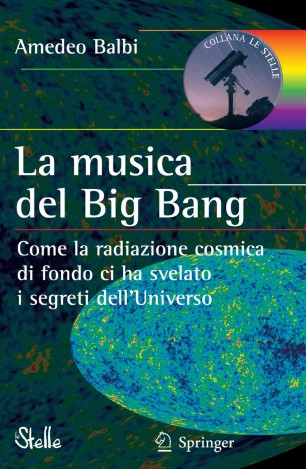
La musica del Big Bang : Come la radiazione cosmica di fondo ci ha svelato i segreti dell’Universo = The music of the Big Bang : How the cosmic background radiation revealed the secrets of the Universe to us
Cosmic microwave background radiation is the residue of the great heat following the Big Bang. A tenuous sign, over 13 billion years old, in which the answers to many of the questions about the nature of our Universe are hidden. Discovered by chance in 1964, in the last forty years this fossil trace of the origins of the Cosmos has been explored with every available means. Two Nobel Prizes in physics have already been awarded for research involving it, the last in 2006 for the results of the COBE satellite. Much of the information encoded in the cosmic background radiation was impressed by the superimposition of acoustic waves present in the early Universe: a "music" of the Big Bang, which cosmologists have tried for years to reconstruct, using techniques similar to those that allow to distinguish the sound of different musical instruments. Only recently have the first notes of this extraordinary cosmic symphony finally been revealed, but the investigation is not over yet. This book illustrates, with a language suitable even for non-specialists, the theories, observations and discoveries that have brought cosmology into a new era.
La correspondance entre Henri Poincaré et les physiciens, chimistes et ingénieurs = The correspondence between Henri Poincaré and physicists, chemists and engineers
Cosmic microwave background radiation is the residue of the great heat following the Big Bang. A tenuous sign, over 13 billion years old, in which the answers to many of the questions about the nature of our Universe are hidden. Discovered by chance in 1964, in the last forty years this fossil trace of the origins of the Cosmos has been explored with every available means. Two Nobel Prizes in physics have already been awarded for research involving it, the last in 2006 for the results of the COBE satellite. Much of the information encoded in the cosmic background radiation was impressed by the superimposition of acoustic waves present in the early Universe: a "music" of the Big Bang, which cosmologists have tried for years to reconstruct, using techniques similar to those that allow to distinguish the sound of different musical instruments. Only recently have the first notes of this extraordinary cosmic symphony finally been revealed, but the investigation is not over yet. This book illustrates, with a language suitable even for non-specialists, the theories, observations and discoveries that have brought cosmology into a new era.
Complex Variables with Applications
Complex numbers can be viewed in several ways: as an element in a field, as a point in the plane, and as a two-dimensional vector. Examined properly, each perspective provides crucial insight into the interrelations between the complex number system and its parent, the real number system. It explore these relationships by adopting both generalization and specialization methods to move from real variables to complex variables, and vice versa, while simultaneously examining their analytic and geometric characteristics, using geometry to illustrate analytic concepts and employing analysis to unravel geometric notions. The engaging exposition is replete with discussions, remarks, questions, and exercises, motivating not only understanding on the part of the reader, but also developing the tools needed to think critically about mathematical problems. This focus involves a careful examination of the methods and assumptions underlying various alternative routes that lead to the same destination.
Complex analysis
The guiding principle of this presentation of ``Classical Complex Analysis'' is to proceed as quickly as possible to the central results while using a small number of notions and concepts from other fields. Thus the prerequisites for understanding this book are minimal; only elementary facts of calculus and algebra are required.

Chemokines and Viral Infection
This edition of Current Topics in Microbiology and Immunology examines the role of chemokines and chemokine receptors in host defense and disease development following viral infection. Chemokines represent a family of over 40 small proteins that, for the most part, are secreted into the environment and function by binding to G protein-coupled receptors (GPCRs) that are expressed on numerous different cell types. When initially identified close to 30 years ago, these molecules were associated with various human inflammatory diseases and it was recognized that expression may be integral in leukocyte recruitment to inflamed tissue. There are now four sub-families of chemokines identified based on defined structural criteria relating to the positional location of conserved cysteine residues within the amino-terminus of the protein. Chemokines are now recognized as important in numerous biological processes ranging from maintaining the organizational integrity of secondary lymphoid tissue to participating in various aspects of both innate and adaptive immune responses following microbial infection. With this in mind, this book highlights the functional roles of chemokines and their receptors in participating in various aspects of the immune response against well-known viral pathogens.

Chemical residues in food from animal produce
One Health' is an approach to designing and implementing programmers, policies, legislation and research in which multiple sectors communicate and work together to achieve better public health outcomes . The areas of work in which a One Health approach is particularly relevant include food safety, the control of zoo noses (diseases that can spread between animals and humans, such as flu, rabies and Rift Valley Fever), and combating antibiotic resistance (when bacteria change after being exposed to antibiotics and become more difficult to.

C*-algebras and Elliptic Theory
This volume contains the proceedings of the conference on "C*-algebras and Elliptic Theory" held in Bedlewo, Poland, in February 2004. It consists of original research papers and expository articles focussing on index theory and topology of manifolds.The collection offers a cross-section of significant recent advances in several fields, the main subject being K-theory (of C*-algebras, equivariant K-theory). A number of papers is related to the index theory of pseudodifferential operators on singular manifolds (with boundaries, corners) or open manifolds. Further topics are Hopf cyclic cohomology, geometry of foliations, residue theory, Fredholm pairs and others.
