



الصفحة 1
الصفحة 1
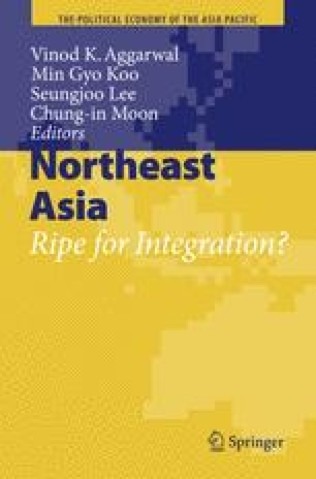
Northeast Asia : Ripe for Integration?
Can regional mechanisms better institutionalize the increasing complexity of economic and security ties among the countries in Northeast Asia? As the international state system undergoes dramatic changes in both security and economic relations in the wake of the end of the Cold War, the Asian financial crisis, and the attack of 9/11, this question is now at the forefront of the minds of both academics and policymakers. Still, little research has been done to integrate the analysis of security and economic analysis of changes in the region within a broader context that will give us theoretically-informed policy insights. Against this backdrop, this book investigates the origins and evolution of Northeast Asia's new institutional architecture in trade, finance, and security from both a theoretical and empirical perspective.

Nordic consumer culture : State, market and consumers
Unpacking the complexities of Nordic consumer culture, this edited collection responds to the growing interest in regionalism within consumer research and marketing. By taking a closer look at the interaction between the state and the market in Nordic countries, The authors examine how consumer behaviour is impacted by the region’s unique context. Important elements of Nordic culture are explored, Such as its underlying element of mythology and the concept of ‘hygge,’ an object of global consumption.

Multilateralism, regionalism and bilateralism in trade and investment : 2006 World report on regional integration
The present first volume of the World Report on Regional Integration is a timely product of the research undertaken at UNU-CRIS. This new series of World Reports will certainly contribute to the discussion on the interaction between regional and global governance. And by bringing together insights from different parts of the UN system, in particular the five UN regional economic commissions and UNCTAD, this report will also contribute to a better understanding of the role of regions in the UN.

Geographies of the University
Raises awareness of the histories, geographies, and practices of universities and analyzes their role as key actors in today’s global knowledge economy. Universities are centers of research, teaching, and expertise with significant economic, social, and cultural impacts at different geographical scales. Scholars from a variety of disciplines and countries offer original analyses and discussions along five main themes: historical perspectives on the university as a site of knowledge production, cultural encounter, and political interest; institutional perspectives on university governance and the creation of innovative environments; relationships between universities and the city; the impact of universities on national and regional economies and cultures; and the processes of internationalization through student mobility, the creation of education hubs, and global regionalism in higher education.

Financial crisis management and democracy : Lessons from Europe and Latin America
This book discusses financial crisis management and policy in Europe and Latin America, with a special focus on equity and democracy. Based on a three-year research project by the Jean Monnet Network, this volume takes an interdisciplinary, comparative approach, analyzing both the role and impact of the EU and regional organizations in Latin America on crisis management as well as the consequences of crisis on the process of European integration and on Latin America’s regionalism.

East Asian Economic Regionalism: Feasibilities and Challenges
Economic regionalism has become a worldwide phenomenon. Since the Asian financial crisis, East Asian countries are accelerating the ongoing market-driven economic integration as well as institutional economic integration. The question is whether East Asia can reach an East Asian FTA (EAFTA), which is the first step towards institutional economic integration. East Asian Economic Regionalism attempts to analyze the feasibilities of economic integration in East Asia and to discuss emerging economic integration efforts in East Asia with special reference to an East Asian FTA. Although economic integration is desirable economically, positions and approaches of each regional economy toward East Asian economic integration may differ depending on the circumstances of the countries concerned. East Asian Economic Regionalism provides diverse positions on East Asian economic integration by ASEAN countries, as well as the Northeastern countries of China, Japan and Korea. The volume also provides economic assessment of EAFTA and evaluates East Asian economic integration.

Cross Regional Trade Agreements : Understanding Permeated Regionalism in East Asia
An unacknowledged key feature of East Asian FTA diplomacy is the region's active cross-regional preferential trading relations. In sharp contrast to the Americas and Europe, where cross-regional initiatives gained strength after the consolidation of regional trade integration, East Asian governments negotiate trade deals with partners outside of their region at an early stage in their FTA policies. The book asks three main questions: Are there regional factors in East Asia encouraging countries to explore cross-regionalism early on? What are the most important criteria behind the cross-regional partner selection? How do cross-regional FTSs (CRTAs) influence their intra-regional trade initiatives? Through detailed country case studies from China, Japan, South Korea, Singapore, Thailand and Malaysia, we show the ways in which these governments seek to leverage their CRTAs in the pursuit of intra-regional trade integration objectives, a process that yields a much more permeated regionalism.
Between Peace and Conflict in the East and the West : Studies on Transformation and Development in the OSCE Region
This book features various studies on democratization, transformation, socio-economic development, and security issues in the Organization for Security and Cooperation in Europe (OSCE) geographical region and beyond. Written by experts and scholars working in the field of human dimension, security, transformation and development in Europe and Asia, particularly in post-soviet and communist countries, it examines the connectivity that the OSCE provides between the East and the West.
