



الصفحة 1
الصفحة 1

Microbial bioprocessing of agri-food wastes : food ingredients
Food ingredients are important molecules of the most diverse chemical classes responsible for conferring nutrition, stability, color, flavor, rheological and sensorial characteristics, in addition to several other important uses in the food industry. In this way, the production routes of these ingredients have gained more and more attention from consumers and producing industries, who expect that, in addition to their technological properties, these ingredients are still obtained without synthetic means, with savings of natural resources and mainly with less environmental impact.

Intestinal Microorganisms of Termites and Other Invertebrates
Soil microorganisms play a major role in the degradation and recycling of organic material. Microbes are involved in the food web and strongly contribute to soil fertility. In the past, attention was mainly directed towards free-living or particle-bound microorganisms, while the role of intestinal microbes of soil animals has been neglected. For the first time, "Intestinal Microorganisms of Termites and Other Invertebrates" focuses on the microbes in gut systems of soil animals. It starts with a profound overview of the biology of soil invertebrates. A major part deals with the gut microbiota of termites, the best investigated gut system of invertebrates. Termites are important soil processors in tropical and subtropical regions. Insight is given into the intestinal microbiota of further relevant primary litter decomposers, such as earthworms, springtails, millipeds, and woodlice. Novel techniques for studying intestinal microbes complete the volume.

Innovative Models for Sustainable Development in Emerging African Countries
Explores key issues and presents recent case studies in areas of importance for the transition to a circular model of development in emerging African countries that will minimize resource consumption and waste production.

Innovation in Life Cycle Engineering and Sustainable Development
Business models, which aims at determining how efficient can be a life cycle strategy from different point of view (customer, policy, environment, economics,…). End of life strategies, presenting recent approaches and technological solutions for end-of life treatments. Product development for sustainability, which aims at showing how designers integrate environmental conside- tions to improve their solutions. Product life cycle management, dealing with methods and tools to support life cycle considerations.

Handbook of Biodegradable Materials
Discusses the recent advances in biodegradation technologies and highlights emerging sustainable materials, including environmentally friendly nano-based materials for replacing plastics. It is useful to scientists, engineers, biologists, medical doctors and provides alternative eco-friendly materials to replace the currently used ones with harmful impact on the environment and life. The chapters present different types of alternative materials in diverse areas, such as food packaging materials, materials for construction and agricultural materials. The principles and types of biodegration technologies are described in depth.

Greening the Supply Chain
Since the Rio summit in 1992, the paradigm of corporate environmental responsibility has gradually and consistently extended beyond complying with increasingly stringent environmental regulation and taking up the proactive initiatives of a few world-class companies. Research indicates that the business and financial performance of companies may depend directly on socially and environmentally responsible business practices. Many world-class companies now realize that customers and other stakeholders do not distinguish between a company and its suppliers. As a result, greening the supply chain is an innovative idea which is fast gaining attention in the industry.

Greening the Industrial Facility : Perspectives, Approaches, and Tools
This book fills a critical gap as a textbook and reference book on the comprehensive environmental impacts of industrial organizations. It is intended for both upper-level undergraduate and beginning graduate students in environmental studies or engineering, and, more broadly, for practicing managers and engineers seeking to improve industrial processes. Nineteen chapters, each focusing on an industrial sector, from resource extraction through fabrication and manufacturing to recycling, evaluate the sector’s inherent "potential to pollute" by providing an overview of typical sector operations and their environmental implications. Beyond outlining and providing frameworks for assessing industrial facilities’ contemporary interactions with the environment (energy and water use, material throughput and hazard, and pollution potential), the book provides forward-looking analyses concerning how new technologies and practices can transform environmentally degrading effects of industry. It also addresses how managers can navigate these changes and move their industrial organizations towards environmental sustainability over the long term.

Global Product : Strategy, Product Lifecycle Management and the Billion Customer Question
In the early years of the 21st Century, as a result of many changes, it has become possible for the first time for tens of thousands of companies to offer manufactured products to customers across six continents. For many of these "global products", there are potentially more than a billion customers. In 2007, Wall Street hit new highs as the enormous opportunity for increased sales and profits became clear. However the new environment is not easy to manage and the risks are high. Meeting the various requirements of customers from a range of countries, choosing the most suitable locations for the different stages of development and manufacturing, deciding what can be global and what must be local, implementing suitable processes and systems, accommodating different national regulations, and efficiently dividing the workload between diverse sites are among the many challenges faced by providers of global products.

Exploiting wastes in concrete : Proceedings of the international seminar held at the University of Dundee, Scotland, UK on 7 September 1999
Topics in these proceedings papers include maximizing the use of waste materials in concrete production and the use of alternative materials in concrete. The themes of the conference are "Maximizing Use" and "Alternative Options".

Environmentally-Friendly Product Development: Methods and Tools
Presents a survey of eco-friendly product design. This work is aimed at researchers and academics in design engineering and practitioners and managers in the industry

Environmental impact assessment of recycled wastes on surface and ground waters ; Vol.3 : Engineering modeling and sustainability
The state of the art of the impact assessment of recycled hazardous waste materials on surface and ground waters is presented. The topics include chemodynamics, toxicology, modeling and information systems. The book serves as a practical conceptual guide for those who have professional responsibility for the monitoring, design, management, or conduct of environmental impact assessment. It is believed that the book will prove useful to the reader who, regardless of disciplinary background, wants to examine in greater detail the kinds of interdisciplinary contributions to contemporary decision-making processes that characterize modern impact assessment project development.

Environmental Impact Assessment of Recycled Wastes on Surface and Ground Waters ; Vol.2 : Risk analysis
The state of the art of the impact assessment of recycled hazardous waste materials on surface and ground waters is presented. The topics include chemodynamics, toxicology, modeling and information systems. The book serves as a practical conceptual guide for those who have professional responsibility for the monitoring, design, management, or conduct of environmental impact assessment. It is believed that the book will prove useful to the reader who, regardless of disciplinary background, wants to examine in greater detail the kinds of interdisciplinary contributions to contemporary decision-making processes that characterize modern impact assessment project development.

Environmental Challenges in Civil Engineering II
Rports on findings concerning structural material behavior, and new methods and technologies in constructions. A special emphasis is given to sustainable constructions practices, including material recycling and reuse, renovation and restoration of historical building and to those fostering sustainable development of cities and rural areas, and a better integration of buildings with the environment. Offering a good balance of theory and practice, and covering both technical and organizational aspects in civil engineering and architectural projects, this book offers extensive information on solutions and current challenges in construction projects and structural interventions in the context of environmental protection and earthquake prevention.

Engineering Design : A Systematic Approach
Engineering Design (3rd edition) describes a systematic approach to engineering design. The authors argue that such an approach, applied flexibly and adapted to a particular task, is essential for successful product development. The design process is first broken down into phases and then into distinct steps, each with its own working methods. The third edition of this internationally-recognised text is enhanced with new perspectives and the latest thinking. These include extended treatment of product planning; new sections on organisation structures, simultaneous engineering, leadership and team behaviour; and updated chapters on quality methods and estimating costs. New examples have been added and existing ones extended, with additions on design to minimise wear, design for recycling, mechanical connections, mechatronics, and adaptronics.

Data Science-Based Full-Lifespan Management of Lithium-Ion Battery : Manufacturing, Operation and Reutilization
This book comprehensively consolidates studies in the rapidly emerging field of battery management. The primary focus is to overview the new and emerging data science technologies for full-lifespan management of Li-ion batteries, which are categorized into three groups, namely (i) battery manufacturing management, (ii) battery operation management, and (iii) battery reutilization management. The key challenges, future trends as well as promising data-science technologies to further improve this research field are discussed.

Computer simulations in condensed matter : From materials to chemical biology ; Vol.1
This extensive and comprehensive collection of lectures by world-leading experts in the field introduces and reviews all relevant computer simulation methods and their applications in condensed matter systems. Volume 1 is an in-depth introduction to a vast spectrum of computational techniques for statistical mechanical systems of condensed matter. It will enable the graduate student and both the specialist and nonspecialist researcher to get acquainted with the tools necessary to carry out numerical simulations at an advanced level. Volume 2 published as LNP 704 (ISBN 3-540-35283-X) is a collection of state-of-the-art surveys on numerical experiments carried out for a great number of systems, ranging from materials sciences to chemical biology.
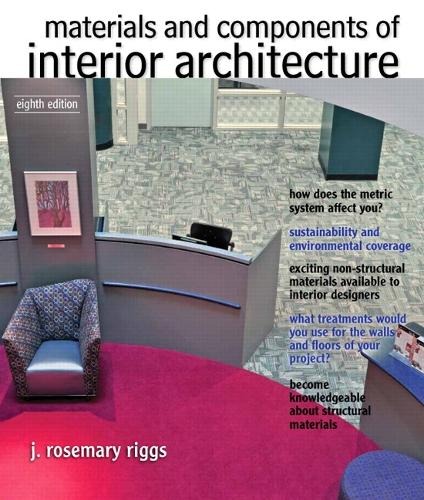
Materials and Components of Interior Architecture
Offers a unique look at interior design,fully covering the exciting breadth of nonstructural materials available to interior designers. With an eye on the environment, it instills a firm understanding of the products, properties, and uses of all materials—from floors, walls, and ceilings to installation and recycling. Going beyond paint and carpet, it explores over 27 different floorings and devotes separate chapters to kitchens and baths. Filled with the latest information from manufacturers, suppliers, and associations, it provides students with the knowledge to creatively engage the “nuts and bolts” of interior design—both in terms of structure and style.
Magnesium Technology : Metallurgy, Design Data, Applications
Magnesium, with a density of 1.74 g/cm², is the lightest structural metal and magnesium are increasingly chosen for weight-critical applications such as in land-based transport systems. "Magnesium Technology" substantially updates and complements existing reference sources on this key material. It assembles international contributions from seven countries covering a wide range of research programs into new alloys with the requisite property profiles, i.e., the current state of both research and technological applications of magnesium. In particular, the international team of authors covers key topics, such as: casting and wrought alloys; fabrication methods; corrosion and protection; engineering requirements and strategies, with examples from the automobile, aerospace, and consumer-goods industries, and recycling.
Knowledge and Skill Chains in Engineering and Manufacturing : Information Infrastructure in the Era of Global Communications
Explores knowledge and skill chains in engineering and manufacturing in the age of global communications. Information infrastructure involves a range of activities from product planning, engineering, and manufacturing trough transportation, marketing, and repair/upgrade to returns and recycling/disposal. Distinct from the traditional engineering database, life-cycle support information has its own characteristic requirements, -- flexible extensibility, distributed architecture, multiple viewpoints, long-time archiving, and product usage information. Several authors address the architecture of the information infrastructure, its services and its requirements. Other papers focus on the knowledge and skill chains that develop in a variety of situations: the supply chain, the factory floor, the man-system interaction, etc. For each of these, state-of-the-art and state-of-research scenarios for various industrial sectors address both engineering and operations requirements in the current socio-economic environment.
Comprehensive utilization of magnesium slag by pidgeon process
This book introduces the harmless handling/recycling of magnesium slag , the process of magnesium silicothermic reduction (Pidgeon process)which the slag was produced, and . the magnesium resources, layout of the industry of the world. Examples and experimental data in this book are from the author group’s research programs, as well as the rencent researches in China. The book could provide precious reference to scientists and engineers in the field of recycling and environment friendly use of the industrial solid wastes. It could also be used for researchers and students who are interested in relevant field.
