



الصفحة 1
الصفحة 1

Modern Multivariate Statistical Techniques : Regression, Classification, and Manifold Learning
Remarkable advances in computation and data storage and the ready availability of huge data sets have been the keys to the growth of the new disciplines of data mining and machine learning, while the enormous success of the Human Genome Project has opened up the field of bioinformatics. These exciting developments, which led to the introduction of many innovative statistical tools for high-dimensional data analysis, are described here in detail. The author takes a broad perspective; for the first time in a book on multivariate analysis, nonlinear methods are discussed in detail as well as linear methods.

Introduction to Machine Learning with Applications in Information Security
Provides a classroom-tested introduction to a wide variety of machine learning and deep learning algorithms and techniques, reinforced via realistic applications. The book is accessible and doesn't prove theorems, or dwell on mathematical theory. The goal is to present topics at an intuitive level, with just enough detail to clarify the underlying concepts. The book covers core classic machine learning topics in depth, including Hidden Markov Models (HMM), Support Vector Machines (SVM), and clustering. Additional machine learning topics include k-Nearest Neighbor (k-NN), boosting, Random Forests, and Linear Discriminant Analysis (LDA). The fundamental deep learning topics of backpropagation, Convolutional Neural Networks (CNN), Multilayer Perceptrons (MLP), and Recurrent Neural Networks (RNN) are covered in depth. A broad range of advanced deep learning architectures are also presented, including Long Short-Term Memory (LSTM), Generative Adversarial Networks (GAN), Extreme Learning Machines (ELM), Residual Networks (ResNet), Deep Belief Networks (DBN), Bidirectional Encoder Representations from Transformers (BERT), and Word2Vec.

Deepfake detection = اكتشاف التزييف العميق
In the rapidly evolving era of artificial intelligence, addressing the escalating threats of deepfake technology becomes a necessity because of the increasing sophistication of AI algorithms in generating deceptive content, and since it threatens the integrity of information across diverse data. The main objective is to build a sophisticated AI-driven system to detect different types of deepfake in text, audio, and images. In English text deepfake detection, multiple pre-trained tokenizers have been used, but XLNET and BERT stand out with identifying objects outside the dataset with an accuracy of 0.9809 and both have been generalized & trained using LSTM. In Arabic text deepfake detection, Arabert has been trained using LSTM which led with an accuracy of 99.53% by generalizing the model. Both English and Arabic datasets have been generated to enhance the accuracy and effectiveness of the models. Audio deepfake detection has been generalized too, using Random Forest with an accuracy of 98.259%.

Machine learning for biomedical application
Biomedicine is a multidisciplinary branch of medical science that consists of many scientific disciplines, e.g., biology, biotechnology, bioinformatics, and genetics; moreover, it covers various medical specialties. In recent years, this field of science has developed rapidly. This means that a large amount of data has been generated, due to (among other reasons) the processing, analysis, and recognition of a wide range of biomedical signals and images obtained through increasingly advanced medical imaging devices. The analysis of these data requires the use of advanced IT methods, which include those related to the use of artificial intelligence, and in particular machine learning. It is a summary of the Special Issue “Machine Learning for Biomedical Application”, briefly outlining selected applications of machine learning in the processing, analysis, and recognition of biomedical data, mostly regarding biosignals and medical images.

Artificial intelligence techniques in hydrology and water resources management
The sustainable management of water cycles is crucial in the context of climate change and global warming. It involves managing global, regional, and local water cycles, as well as urban, agricultural, and industrial water cycles, to conserve water resources and their relationships with energy, food, microclimates, biodiversity, ecosystem functioning, and anthropogenic activities. Hydrological modeling is indispensable for achieving this goal, as it is essential for water resources management and the mitigation of natural disasters. In recent decades, the application of artificial intelligence (AI) techniques in hydrology and water resources management has led to notable advances. In the face of hydro-geo-meteorological uncertainty, AI approaches have proven to be powerful tools for accurately modeling complex, nonlinear hydrological processes and effectively utilizing various digital and imaging data sources, such as ground gauges, remote sensing tools, and in situ Internet of Things (IoT) devices.
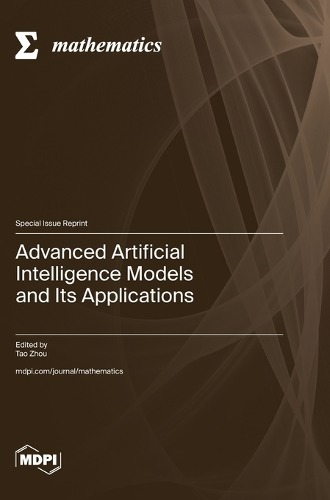
Advanced artificial intelligence models and its applications
The field of artificial intelligence (AI) has undergone enormous expansion since its inception in the mid-20th century, as demonstrated by its application across an array of engineering and scientific challenges. Particularly in the last decade, AI has witnessed a significant breakthrough with the advent of deep learning, which has facilitated the employment of various AI models across a multitude of domains. This reprint features ten papers accepted for publication in the Special Issue titled "Advanced Artificial Intelligence Models and Their Applications," published in the MDPI Mathematics journal. These papers explore numerous facets of advanced artificial intelligence models and their applications, covering areas such as cybersecurity, image classification, logistics optimization, automatic music generation, human capital investment, writer recognition, remote sensing image indexing, target tracking, and more.
