



الصفحة 1
الصفحة 1

محطة قطار
القطار من وسائل النقل الهامة جدا لنقل الركاب وشحن البضائع بين كافة محافظات القطر العربي السوري. يخفف من الزحام ومن الوقود وبالنسبة لشحن البضائع يحمل كميات كبيرة جدا من البضائع والمواد الخام والمشتقات النفطية والمنتجات الزراعية وتتميز بسرعة النقل.

The Kaiser's Mosques : Islamic Architecture and Orientalizing Style in Habsburg Bosnia, 1878–1918
Highlights an understudied experiment at the intersection of 19th-century European and Islamic architectural histories. It draws attention to a body of buildings designed by architects trained in Central Europe for use by Muslims in Habsburg ruled Bosnia-Herzegovina (1878-1918). They include mosques, madrasas, and other buildings corresponding to a traditional Islamic formal and functional typology. The composition and decoration, however, is the product of 19th-century European His toricist conduct. It became a prominent style for town halls and private residences; on occasion, it was also used for railway stations, schools, or hotels. The spread and concentration of buildings in this style in Bosnia is extraordinary. This monography not only fills a gap in an art history that has long turned a blind eye to Europe’s Southeast but also contributes to our understanding of European powers’ historical responses to the challenge of cultural diversity in territories under their control.

robust resilient resistant : Reinforced concrete structures
Reinforced concrete is the go-to powerhouse of modern construction: no other load-bearing building material is as malleable with similarly good noise and fire protection properties. The book illustrates this versatility with around 20 building examples and specialist articles from the fields of structural and civil engineering. In-depth project descriptions and numerous detailed drawings show the design and construction process of these halls, bridges, railway stations, and office buildings.
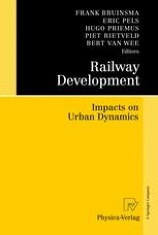
Railway Development : Impacts on Urban Dynamics
This book addresses the role of railways in urban development. The central aim is to inquire into how especially the development of high-speed rail and light rail links will affect European cities. The analyses are carried out with special attention given to the broader institutional environment of the railway system, including the shift toward privatised railway companies, internationalisation, the occurrence of market and government failures in land markets, and private-public partnerships in the development of railway station areas. The essence of the plans to invest in railway stations is that railway stations are not considered merely as nodes where people transfer from one vehicle to another, but also as places where spatial concentrations of high value activity are recognised as having a positive impact on cities.
