



الصفحة 1
الصفحة 1

Non-Linear Dynamics and Fundamental Interactions
This volume contains the papers presented at the NATO Advanced Research Institute on "Non-Linear Dynamics and Fundamental Interactions" held in Tashkent, Uzbekistan, from Oct.10-16,2004. The main objective of the Workshop was to bring together people working in areas of Fundamental physics relating to Quantum Field Theory, Finite Temperature Field theory and their applications to problems in particle physics, phase transitions and overlap regions with the areas of Quantum Chaos. The other important area is related to aspects of Non-Linear Dynamics which has been considered with the topic of chaology. The applications of such techniques are to mesoscopic systems, nanostructures, quantum information, particle physics and cosmology. All this forms a very rich area to review critically and then find aspects that still need careful consideration with possible new developments to find appropriate solutions.

Modern Aspects of Spin Physics
The volume investigates central aspects of modern spin physics in the form of extensive lectures on semiconductor spintronics, the spin-pairing mechanism in high- temperature semiconductors, spin in quantum field theory and the nucleon spin.

Mathematical Physics of Quantum Mechanics : Selected and Refereed Lectures from QMath9
At the QMath9 meeting, young scientists learn about the state of the art in the mathematical physics of quantum systems. Based on that event, this book offers a selection of outstanding articles written in pedagogical style comprising six sections which cover new techniques and recent results on spectral theory, statistical mechanics, Bose-Einstein condensation, random operators, magnetic Schrödinger operators and much more. For postgraduate students, Mathematical Physics of Quantum Systems serves as a useful introduction to the research literature. For more expert researchers, this book will be a concise and modern source of reference.

Infinite dimensional algebras and quantum integrable systems
This volume presents the invited lectures of the workshop "Infinite Dimensional Algebras and Quantum Integrable Systems'' .ecent developments in the theory of infinite dimensional algebras and their applications to quantum integrable systems are reviewed by some of the leading experts in the field. The volume will be of interest to a broad audience from graduate students to researchers in mathematical physics and related fields.

IFAE 2007 ; Incontri di Fisica delle Alte Energie = Italian Meeting on High Energy Physics Napoli, 11–13 April 2007
This book collects the Proceedings of the Workshop "Incontri di Fisica delle Alte Energie (IFAE) 2007, Napoli, 11-13 April 2007". This is the sixth edition of a series of meetings on fundamental research in particle physics and was attended by about 160 researchers. Presentations, both theoretical and experimental, addressed the status of Physics of the Standard Model and beyond, Flavour phyisc, Neutrino and Astroparticle physics, new technology in high energy physics. Special emphasis was given to the expectations of the forthcoming Large Hadron Collider, due in operation at the end of 2007.

Hilbert Space Operators in Quantum Physics
The second edition of this course-tested book provides a detailed and in-depth discussion of the foundations of quantum theory as well as its applications to various systems. The exposition is self-contained; in the first part the reader finds the mathematical background in chapters about functional analysis, operators on Hilbert spaces and their spectral theory, as well as operator sets and algebras. This material is used in the second part to a systematic explanation of the foundations, in particular, states and observables, properties of canonical variables, time evolution, symmetries and various axiomatic approaches. In the third part, specific physical systems and situations are discussed. Two chapters analyze Schrödinger operators and scattering, two others added in the second edition are devoted to new important topics, quantum waveguides and quantum graphs.

Gravity, Black Holes, and the Very Early Universe : An Introduction to General Relativity and Cosmology
In the early 1900s, Albert Einstein formulated two theories that would forever change the landscape of physics: the Special Theory of Relativity and the General Theory of Relativity. By 1925, quantum mechanics had been born out of the dissection of these two theories, and shortly after that, relativistic quantum field theory. We now had in place some important ties between the laws of physics and the types of particle interactions the new physics was uncovering. Gravity is one of the four types of forces that are found throughout the universe. In fact, although it is a relatively weak force, it operates at huge distances, and so must be accounted for in any cosmological system. Unfortunately, gravity continues to defy our neat categorization of how all the forces in nature work together.

Geometry of Quantum Theory ; 2nd ed.
This book a classic on the foundations of quantum theory. This view, which is essentially geometric and relies on the concept of symmetry. The mathematical treatment of symmetry in quantum theory is based on the theory of group representations, and this book includes a self-contained treatment of the parts of this theory that are most useful in quantum physics.

Geometric and Topological Methods for Quantum Field Theory
This volume offers an introduction, in the form of four extensive lectures, to some recent developments in several active topics at the interface between geometry, topology and quantum field theory. The first lecture is by Christine Lescop on knot invariants and configuration spaces, in which a universal finite-type invariant for knots is constructed as a series of integrals over configuration spaces. This is followed by the contribution of Raimar Wulkenhaar on Euclidean quantum field theory from a statistical point of view. The author also discusses possible renormalization techniques on noncommutative spaces. The third lecture is by Anamaria Font and Stefan Theisen on string compactification with unbroken supersymmetry. The authors show that this requirement leads to internal spaces of special holonomy and describe Calabi-Yau manifolds in detail. The last lecture, by Thierry Fack, is devoted to a K-theory proof of the Atiyah-Singer index theorem and discusses some applications of K-theory to noncommutative geometry. These lectures notes, which are aimed in particular at graduate students in physics and mathematics, start with introductory material before presenting more advanced results. Each chapter is self-contained and can be read independently.

Foundations of Quantum Physics
Intended to be used as a textbook for an introductory course in quantum mechanics at the undergraduate level, Foundations of Quantum Physics is also meant to be retained by the student for later use as a reference. The presentation begins with the solution of some basic quantum mechanical problems. The emphasis is on those features of the solutions that are unique to quantum physics. It is only after these aspects of quantum physics are thoroughly discussed that the mathematical formalism of quantum mechanics is presented and related to the previous chapters. Throughout the book, the emphasis is on understanding the concepts and relating them to known phenomena.

Feynman Integral Calculus
The problem of evaluating Feynman integrals over loop momenta has existed from the early days of perturbative quantum field theory. The goal of the book is to summarize those methods for evaluating Feynman integrals that have been developed over a span of more than fifty years. `Feynman Integral Calculus' characterizes the most powerful methods in a systematic way. It concentrates on the methods that have been employed recently for most sophisticated calculations and illustrates them with numerous examples, starting from very simple ones and progressing to nontrivial examples. It also shows how to choose adequate methods and combine them in a non-trivial way.

Evaluating Feynman Integrals
The problem of evaluating Feynman integrals over loop momenta has existed from the early days of perturbative quantum field theory. Although a great variety of methods for evaluating Feynman integrals has been developed over a span of more than fifty years, this book is a first attempt to summarize them. 'Evaluating Feynman Integrals' characterizes the most powerful methods, in particular those used for recent, quite sophisticated calculations, and then illustrates them with numerous examples, starting from very simple ones and progressing to nontrivial examples.

Collider Physics within the Standard Model : A Primer
In 2013 the late Prof. Altarelli wrote: The discovery of the Higgs boson and the non-observation of new particles or exotic phenomena have made a big step towards completing the experimental confirmation of the standard model of fundamental particle interactions. It is thus a good moment for me to collect, update and improve my graduate lecture notes on quantum chromodynamics and the theory of electroweak interactions, with main focus on collider physics. I hope that these lectures can provide an introduction to the subject for the interested reader, assumed to be already familiar with quantum field theory and some basic facts in elementary particle physics as taught in undergraduate courses.
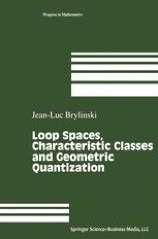
Loop Spaces, Characteristic Classes and Geometric Quantization
This book deals with the differential geometry of manifolds, loop spaces, line bundles and groupoids, and the relations of this geometry to mathematical physics. Various developments in mathematical physics (e.g., in knot theory, gauge theory, and topological quantum field theory) have led mathematicians and physicists to search for new geometric structures on manifolds and to seek a synthesis of ideas from geometry, topology and category theory. In this spirit, this book develops the differential geometry associated to the topology and obstruction theory of certain fiber bundles (more precisely, associated to grebes). The theory is a 3-dimensional analog of the familiar Kostant--Weil theory of line bundles. In particular the curvature now becomes a 3-form.

Lectures on Quantum Mechanics
Presents theoretical physics with a breathtaking array of examples and anecdotes. Basdevant's style is clear and stimulating, in the manner of a brisk classroom lecture that students can follow with ease and enjoyment.
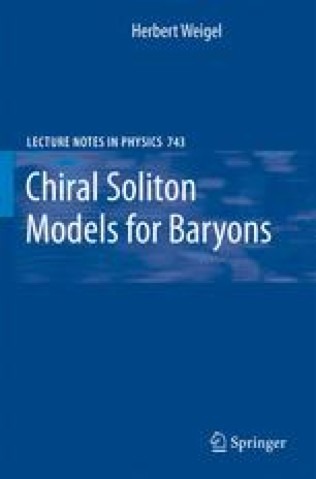
Chiral Soliton Models for Baryons
This concise research monograph introduces and reviews the concept of chiral soliton models for baryons. In these models, baryons emerge as (topological) defects of the chiral field. The many applications shed light on a number of bayron properties, ranging from static properties via nucleon resonances and deep inelastic scattering to even heavy ion collisions. As far as possible, the theoretical investigations are confronted with experiment. Conceived to bridge the gap between advanced graduate textbooks and the research literature, this volume also features a number of appendices to help nonspecialist readers to follow in more detail some of the calculations in the main text.
Basic bundle theory and K-Cohomology invariants
Based on several recent courses given to mathematical physics students, this volume is an introduction to bundle theory with the aim to provide newcomers to the field with solid foundations in topological K-theory. A fundamental theme, emphasized in the book, centers around the gluing of local bundle data related to bundles into a global object. One renewed motivation for studying this subject, which has developed for almost 50 years in many directions, comes from quantum field theory, especially string theory, where topological invariants play an important role.
Axions : Theory, Cosmology, and Experimental Searches
Axions are peculiar hypothetical particles that could both solve the CP problem of quantum chromodynamics and at the same time account for the dark matter of the universe. Based on a series of lectures by world experts in this field held at CERN (Geneva), this volume provides a pedagogical introduction to the theory, cosmology and astrophysics of these fascinating particles and gives an up-to-date account of the status and prospect of ongoing and planned experimental searches. Learners and practitioners of astroparticle physics will find in this book both a concise introduction and a current reference work to a showcase topic that connects the "inner space" of the elementary particle world with the "outer space" of the universe at large.
Approaches to Fundamental Physics : An Assessment of Current Theoretical Ideas
This book presents contributions on particle theory, quantum field theory, general relativity, quantum gravity, string theory and cosmology. These represent the outcome of numerous discussions, taking place among the authors over a period of several years, about the research landscape of present-day fundamental theoretical physics. Indeed, the resultant book documents their attempt, out of their respective and highly specialized scientific positions, to find a way of communicating about methods, achievements and promises of the different approaches which shape the development of this field. It is therefore also an attempt to elucidate the connections between these approaches, and present them not as disjoint ventures but rather as facets of a common quest for understanding. Readers interested in fundamental approaches of theoretical physics will find this book highly stimulating and enlightening.

An introduction to relativistic processes and the standard model of electroweak interactions
The first part of the volume is devoted to the description of scattering processes in the context of relativistic quantum field theory. The use of the semi-classical approximation allows us to illustrate the relevant computation techniques in a reasonably small amount of space. Our approach to relativistic processes is original in many respects. The second part contains a detailed description of the construction of the standard model of electroweak interactions, with special attention to the mechanism of particle mass generation. The extension of the standard model to include neutrino masses is also described. We have included a number of detailed computations of cross sections and decay rates of pedagogical and phenomenological relevance.
