



الصفحة 1
الصفحة 1

Zeta Functions, Topology and Quantum Physics
This volume focuses on various aspects of zeta functions: multiple zeta values, Ohno’s relations, the Riemann hypothesis, L-functions, polylogarithms, and their interplay with other disciplines. Eleven articles on recent advances are written by outstanding experts in the above-mentioned fields. Each article starts with an introductory survey leading to the exciting new research developments accomplished by the contributors.

Zero Distance : Management in the Quantum Age
This book offers a new management meta-theory to replace Taylorism. It presents a new paradigm in management thinking and a new, practical organizational model for implementing it in our personal and working lives, in our companies, in our communities and nations, and in a sustainable global order. It will offer an understanding of why and how “thinking-as-usual” is failing both business and political leaders in these new times, and it will advocate new thinking and new management practices that are so radically new that they turn everything we have taken for granted inside out and upside down.

Vavilov-Cherenkov and Synchrotron Radiation : Foundations and Applications
Reviews fundamental physical and mathematical problems of the Vavilov-Cherenkov effect of media. Here the readers could find a discussion of all basic problems of the Vavilov-Cherenkov effect and of synchrotron radiation. … This book may be useful for advanced graduate students and for professional scientists, both experimentalists and theoreticians.

Variational Principles in Physics
Variational Principles in Physics explains variational principles and charts their use throughout modern physics. The heart of the book is devoted to the analytical mechanics of Lagrange and Hamilton, the basic tools of any physicist.

Variant Construction from Theoretical Foundation to Applications
This book presents theoretical framework and sample applications of variant construction. The first part includes the components variant logic, variant measurements, and variant maps, while the second part covers sample applications such as variation with functions, variant stream ciphers, quantum interference, classical/quantum random sequences, whole DNA sequences, and multiple-valued pulse sequences. Addressing topics ranging from logic and measuring foundation to typical applications and including various illustrated maps.

Universality of Nonclassical Nonlinearity : Applications to Non-Destructive Evaluations and Ultrasonics
Comes as a result of the research work developed in the framework of two international projects: the European Science Foundation supported program NATEMIS (Nonlinear Acoustic Techniques for Micro-Scale Damage Diagnostics) and a Los Alamos-based international network. The main topics of both the programs and the book cover the phenomenology, theory and applications of Nonclassical Nonlinearity (NCNL). NCNL techniques have been found in recent years to be extremely powerful (up to 1000 times more than the corresponding linear techniques) in a wide range of applications, including Material Characterization, Ultrasonics, Geophysics and Maintenance and Restoration of artifacts. These techniques are being adopted as the main inspection and research tool in another European program: AERONEWS (Health monitoring of aircraft by nonlinear elastic wave propagation).

Uniformly Accelerating Charged Particles : A Threat to the Equivalence Principle
There has been a long debate about whether uniformly accelerated charges should radiate electromagnetic energy and how one should describe their worldline through a flat spacetime, i.e., whether the Lorentz-Dirac equation is right. There are related questions in curved spacetimes, e.g., do different varieties of equivalence principle apply to charged particles, and can a static charge in a static spacetime radiate electromagnetic energy? The problems with the LD equation in flat spacetime are spelt out in some detail here, and its extension to curved spacetime is discussed. Different equivalence principles are compared and some vindicated. The key papers are discussed in detail and many of their conclusions are significantly revised by the present solution.

Unconventional Programming Paradigms ; International Workshop UPP 2004, Le Mont Saint Michel, France, September 15-17, 2004, Revised Selected and Invited Papers
Nowadays, developers have to face the proliferation of hardware and software environments, the increasing demands of the users, the growing number of p- grams and the sharing of information, competences and services thanks to the generalization ofdatabasesandcommunication networks. Aprogramisnomore a monolithic entity conceived, produced and?nalized before being used. A p- gram is now seen as an open and adaptive frame, which, for example, can - namically incorporate services not foreseen by the initial designer. These new needs call for new control structures and program interactions. Unconventionalapproachestoprogramminghavelongbeendevelopedinv-iousnichesandconstituteareservoirofalternativewaystofacetheprogramming languages crisis.

Unconventional Computing ; 7th International Conference, UC 2008 Vienna, Austria, August 25-28, 2008. Proceedings
The book is devoted to all aspects of unconventional computation ranging from theoretical and experimental aspects to various applications. Typical topics are: natural computing including quantum, cellular, molecular, neural and evolutionary computing, chaos and dynamical system-based computing, and various proposals for computations that go beyond the Turing model.

Unconventional Computation ; Vol. 4135 ; 5th International Conference, UC 2006, York, UK, September 4-8, 2006, Proceedings
This book about The 5th International Conference on Unconventional Computation, UC 2006,organized under the auspices of the EATCS by the Centre for Discrete Mathe-matics and Theoretical Computer Science of the University of Auckland, and theDepartment of Computer Science of the University of York, was held in York,UK, September 4–8, 2006.
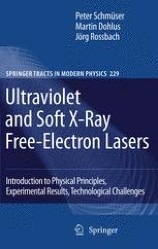
Ultraviolet and Soft X-Ray Free-Electron Lasers : Introduction to Physical Principles, Experimental Results, Technological Challenges
In the introduction accelerator-based light sources are considered and a comparison is made between free-electron lasers and conventional quantum lasers. The motion and radiation of relativistic electrons in undulator magnets is discussed. The principle of a low-gain free-electron laser is explained and the pendulum equations are introduced that characterize the electron dynamics in the field of a light wave. The differential equations of the high-gain FEL are derived from the Maxwell equations of electrodynamics. Analytical and numerical solutions of the FEL equations are presented and important FEL parameters are defined, such as gain length, FEL bandwidth and saturation power. A detailed numerical study of the all-important microbunching process is presented. The mechanism of Self Amplified Spontaneous Emission is described theoretically and illustrated with numerous experimental results. Three-dimensional effects such as betatron oscillations and optical diffraction are addressed and their impact on the FEL performance is analyzed.

Ubiquitous communications and network computing ; 4th EAI International Conference, UBICNET 2021, Virtual Event, March 2021, Proceedings
Constitutes the refereed proceedings of the 4th International Conference on Ubiquitous Communications and Network Computing, UBICNET 2021, held in March 2021. Due to COVID-19 pandemic the conference was held virtually. The 17 full papers were selected from 59 submissions and are basically arranged in different sessions on 5G networks, millimeter wave communication systems and emerging applications; quantum communication, IoT and emerging applications; data analytics and cloud computing; artificial neural network, machine learning and emerging applications.

Turbulence, Dynamos, Accretion Disks, Pulsars and Collective Plasma Processes ; First Kodai-Trieste Workshop on Plasma Astrophysics Held at the Kodaikanal Observatory Kodaikanal, India, August 27 – September 7, 2007
It is well established and appreciated by now that more than 99% of the baryonic matter in the universe is in the plasma state. Most astrophysical systems could be approximated as conducting fluids in a gravitational field. It is the combined effect of these two that gives rise to the mind boggling variety of configurations in the form of filaments, loops , jets and arches. The plasma structures that cannot last for more than a second or less in a laboratory remain intact for astronomical time and spatial scales in an astrophysical setting. The case in point is the well known extragalactic jets whose collimation and stability has remained an enigma inspite of the efforts of many for many long years. The high energy radiation sources such as the active galactic nuclei again summon the coherent plasma radiation processes for their exceptionally large output from regions of relatively small physical sizes. The generation of magnetic field, anomalous transport of angular momentum with decisive bearing on star formation processes, the ubiquitous MHD turbulence under conditions irreproducible in terrestrial laboratories are some of the generic issues still awaiting a concerted effort for their understanding.

Trapped Charged Particles and Fundamental Interactions
The development of ion traps has spurred significant experimental activities able to link measurable quantities to the most fundamental aspects of physics. The first chapter sets the scene and motivates the use of ion traps with an in-depth survey of the low-energy electroweak sector of the standard model amenable to precision test. The next parts then introduce and review aspects of the theory, simulation and experimental implementation of such traps. Last but not least, two important applications, namely high resolution mass spectrometry in Penning traps and tests of fundamental physics - such as the CPT theorem - with trapped antiprotons are discussed.

Topology in Condensed Matter
This book reports new results in condensed matter physics for which topological methods and ideas are important. It considers, on the one hand, recently discovered systems such as carbon nanocrystals and, on the other hand, new topological methods used to describe more traditional systems such as the Fermi surfaces of normal metals, liquid crystals and quasicrystals. The authors of the book are renowned specialists in their fields and present the results of ongoing research, some of it obtained only very recently and not yet published in monograph form.

Topological Quantum Field Theory and Four Manifolds
Deals with topological quantum field theories and their applications to topological aspects of four manifolds. This book contains a chapter dealing with topological aspects of four manifolds. It also provides an introduction to supersymmetry. It constitutes a useful tool for researchers interested in the basics of topological quantum field theory.

Topics in the Theory of Chemical and Physical Systems ; Proceedings of the 10th European Workshop on Quantum Systems in Chemistry and Physics held at Carthage, Tunisia, in September 2005
Topics in the Theory of Chemical and Physical Systems is a collection of 14 selected papers from the scientific presentations made at the 10th European Workshop on Quantum Systems in Chemistry and Physics held at Carthage, Tunisia, in September 2005. This book encompasses a spectrum of topics in which emphasis is placed on theoretical methods in the study of chemical and physical properties of various systems: Advanced Methodologies ,Interactions and Clusters, Excited States, and Condensed Matter.

Topics in Cohomological Studies of Algebraic Varieties : Impanga Lecture Notes
The articles in this volume study various cohomological aspects of algebraic varieties: characteristic classes of singular varieties / geometry of flag varieties / cohomological computations for homogeneous spaces / K-theory of algebraic varieties / quantum cohomology and Gromov-Witten theory. The main purpose is to give comprehensive introductions to the above topics through a series of "friendly" texts starting from a very elementary level and ending with the discussion of current research.

Topics in Atomic Physics
The study of atomic physics propelled us into the quantum age in the early twentieth century and carried us into the twenty-first century with a wealth of new and, in some cases, unexplained phenomena. Topics in Atomic Physics provides a foundation for students to begin research in modern atomic physics. It can also serve as a reference because it contains material that is not easily located in other sources

Topics in Analysis and its Applications
Most topics dealt with here deal with complex analysis of both one and several complex variables. Several contributions come from elasticity theory. Areas covered include the theory of p-adic analysis, mappings of bounded mean oscillations, quasiconformal mappings of Klein surfaces, complex dynamics of inverse functions of rational or transcendental entire functions, the nonlinear Riemann-Hilbert problem for analytic functions with nonsmooth target manifolds, the Carleman-Bers-Vekua system, the logarithmic derivative of meromorphic functions, G-lines, computing the number of points in an arbitrary finite semi-algebraic subset, linear differential operators, explicit solution of first and second order systems in bounded domains degenerating at the boundary, the Cauchy-Pompeiu representation in L2 space, strongly singular operators of Calderon-Zygmund type, quadrature solutions to initial and boundary-value problems, the Dirichlet problem, operator theory, tomography, elastic displacements and stresses, quantum chaos, and periodic wavelets.
