



الصفحة 1
الصفحة 1

Encyclopedia of Language and Education
In this second, fully revised edition, the 10 volume Encyclopedia of Language and Education offers the newest developments including two new volumes of research and scholarly content essential to the field of language teaching and learning in the age of globalization. In the selection of topics and contributors, the Encyclopedia reflects the depth of disciplinary knowledge, breadth of interdisciplinary perspective, and diversity of sociogeographic experience in the field. Vol.1: Language Policy and Political Issues in Education; Vol.2: Literacy; Vol.3: Discourse and Education; Vol.4: Second and Foreign Language Education; Vol.5: Bilingual Education; Vol.6: Knowledge About Language Vol.7: Lanaguage Testing and Assessment; Vol.8: Language Socialization; Vol.9: Ecology of Language; Vol.10: Research Methods in Language and Education.

Disfluency and Proficiency in Second Language Speech Production
This book explores the concept of disfluency in speech production, particularly as it occurs in the context of second language acquisition. Drawing on examples from learner speech at three levels (beginner, intermediate and advanced), the author argues that acquiring target language norms for performing disfluency is essential to an individual being recognized as fluent in a language by fellow-speakers. Starting with a survey of the psycholinguistic research in this area, he then applies a sociolinguistic lens to examine how a learner's social and educational background impacts the types of disfluencies in their speech.
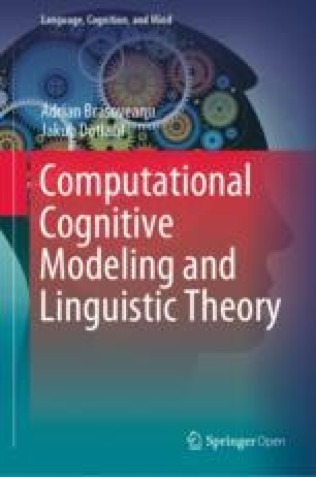
Computational Cognitive Modeling and Linguistic Theory
This book introduces a general framework that allows natural language researchers to enhance existing competence theories with fully specified performance and processing components. Gradually developing increasingly complex and cognitively realistic competence-performance models, it provides running code for these models and shows how to fit them to real-time experimental data. This computational cognitive modeling approach opens up exciting new directions for research in formal semantics, and linguistics more generally, and offers new ways of (re)connecting semantics and the broader field of cognitive science.

Cohesion, coherence and temporal reference from an experimental corpus pragmatics perspective
Provides new methodological and theoretical insights into temporal reference and its linguistic expression, from a cross-linguistic experimental corpus pragmatics approach. Verbal tenses, in general, and more specifically the categories of tense, grammatical and lexical aspect are treated as cohesion ties contributing to the temporal coherence of a discourse, as well as to the cognitive temporal coherence of the mental representations built in the language comprehension process. As such, it investigates the phenomenon of temporal reference at the interface between corpus linguistics, theoretical linguistics and pragmatics, experimental pragmatics, psycholinguistics, natural language processing and machine translation.
Cognitive Systems ; Joint Chinese-German Workshop, Shanghai, China, March 7-11, 2005, Revised Selected Papers
This book organized in topical sections on multimodal human-computer interfaces, neuropsychology and neurocomputing, Chinese-German natural language processing and psycholinguistics, as well as information processing and retrieval from the semantic Web for intelligent applications.
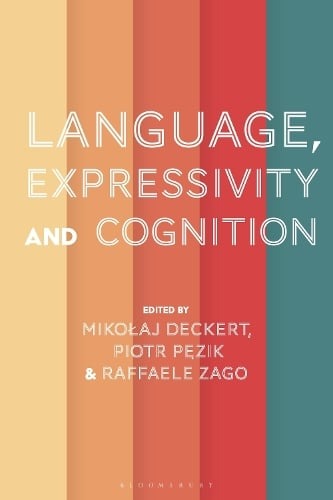
Language, Expressivity and Cognition
The book presents how language shapes communicative and cognitive processes but at the same time is also shaped by those processes. The chapters put forward a number of disciplinary and methodological perspectives encompassing insights from cognitive and social psychology, (critical) discourse analysis, cognitive linguistics, corpus linguistics and sociolinguistics. Both intralingual as well as contrastive, each chapter also engages with qualitative and quantitative methods.
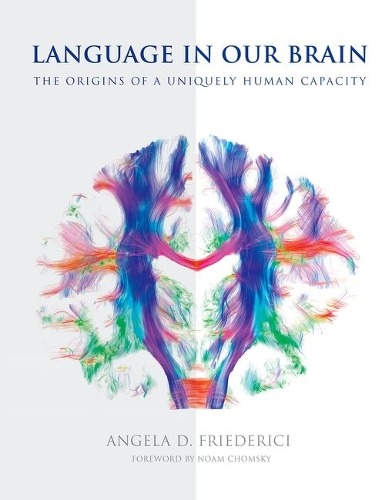
Language in our brain : The origins of a uniquely human capacity
Friederici describes the basic language functions and their brain basis; the language networks connecting different language-related brain regions; the brain basis of language acquisition during early childhood and when learning a second language, proposing a neurocognitive model of the ontogeny of language; and the evolution of language and underlying neural constraints. She finds that it is the information exchange between the relevant brain regions, supported by the white matter tract, that is the crucial factor in both language development and evolution.
Compositionality and Concepts in Linguistics and Psychology
By highlighting relations between experimental and theoretical work, this volume explores new ways of addressing one of the central challenges in the study of language and cognition. The articles bring together work by leading scholars and younger researchers in psychology, linguistics and philosophy. An introductory chapter lays out the background on concept composition, a problem that is stimulating much new research in cognitive science. Researchers in this interdisciplinary domain aim to explain how meanings of complex expressions are derived from simple lexical concepts and to show how these meanings connect to concept representations.
Communicating with One Another : Toward a Psychology of Spontaneous Spoken Discourse
In other words, this book is a call for a paradigm shift in the study of oral communication. It is a must read for people interested in language use, as well as for specialists in language studies. "The authors have identified crucial theoretical and methodological assumptions that have hampered scholarship on language use. Their critical assessment is grounded in nuanced theoretical analysis and rigorous empirical studies. As a result, they reveal the complexity, elegance, and moral aspects of day to day dialogical communication."

Case and linking in language comprehension : evidence from German
This volume contains detailed introductions to human syntactic processing as well as to German syntax which will be helpful especially for readers less familiar with psycholinguistics and with Germanic.
