



الصفحة 1
الصفحة 1

Nonlinear Analysis and Synthesis Techniques for Aircraft Control
Given the continuous increase in the complexity of aircraft control laws, and the corresponding - crease in the demands on their performance and reliability, industrial control law designers are highly motivated to explore the applicability of new and more powerful methods for design and analysis. The successful application of fully nonlinear control techniques to aircraft control problems o?ers the prospect of improvements in several di?erent areas. Firstly, there is the possibility of - proving design and analysis criteria to more fully re?ect the nonlinear nature of the dynamics of the aircraft. Secondly, the time and e?ort required on the part of designers to meet demanding speci?cations on aircraft performance and h- dling could be reduced. Thirdly, nonlinear analysis techniques could potentially reduce the time and resources required to clear ?ight control laws, and help to bridge the gap between design, analysis and ?nal ?ight clearance.
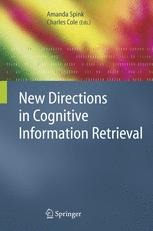
New Directions in Cognitive Information Retrieval
New Directions in Cognitive Information Retrieval presents an exciting new direction for research into cognitive oriented information retrieval (IR) research, a direction based on an analysis of the user’s problem situation and cognitive behavior when using the IR system. This contrasts with the current dominant IR research paradigm which concentrates on improving IR system matching performance. The chapters describe the leading edge concepts and models of cognitive IR that explore the nexus between human cognition, information and the social conditions that drive humans to seek information using IR systems. Chapter topics include: Polyrepresentation, cognitive overlap and the boomerang effect, Multitasking while conducting the search, Knowledge Diagram Visualizations of the topic space to facilitate user assimilation of information, Task, relevance, selection state, knowledge need and knowledge behavior, search training built into the search, children’s collaboration for school projects, and other cognitive perspectives on IR concepts and issues.

New Algorithms for Macromolecular Simulation
Molecular simulation is a widely used tool in biology, chemistry, physics and engineering. This book contains a collection of articles by leading researchers who are developing new methods for molecular modelling and simulation. Topics addressed here include: multiscale formulations for biomolecular modelling, such as quantum-classical methods and advanced solvation techniques; protein folding methods and schemes for sampling complex landscapes; membrane simulations; free energy calculation; and techniques for improving ergodicity. The book is meant to be useful for practitioners in the simulation community and for those new to molecular simulation who require a broad introduction to the state of the art.

Neural Networks : Computational Models and Applications
Neural Networks: Computational Models and Applications covers a wealth of important theoretical and practical issues in neural networks, including the learning algorithms of feed-forward neural networks, various dynamical properties of recurrent neural networks, winner-take-all networks and their applications in broad manifolds of computational intelligence: pattern recognition, uniform approximation, constrained optimization, NP-hard problems, and image segmentation. By presenting various computational models, this book is developed to provide readers with a quick but insightful understanding of the broad and rapidly growing areas in the neural networks domain. Besides laying down fundamentals on artificial neural networks, this book also studies biologically inspired neural networks. Some typical computational models are discussed, and subsequently applied to objection recognition, scene analysis and associative memory. The studies of bio-inspired models have important implications in computer vision and robotic navigation, as well as new efficient algorithms for image analysis.

Networking -- ICN 2005 ; Vol. 3420 : 4th International Conference on Networking, Reunion Island, France, April 17-21, 2005, Proceedings, Part I
The International Conference on Networking (ICN 2005) was the fourth conf- ence in its series aimed at stimulating technical exchange in the emerging and important ?eld of networking. On behalf of the International Advisory C- mittee, it is our great pleasure to welcome you to the proceedings of the 2005 event. Networking faces dramatic changes due to the customer-centric view, the venue of the next generation networks paradigm, the push from ubiquitous n- working, and the new service models. Despite legacy problems, which researchers and industry are still discovering and improving the state of the art, the ho- zon has revealed new challenges that some of the authors tackled through their submissions. In fact ICN 2005 was very well perceived by the international networking community. A total of 651 papers from more than 60 countries were submitted, from which 238 were accepted. Each paper was reviewed by several members of the Technical Program Committee. This year, the Advisory Committee revalidated various accepted papers after the reviews had been incorporated. We perceived a signi?cant improvement in the number of submissions and the quality of the submissions. The ICN 2005 program covered a variety of research topics that are of current interest, starting with Gridnetworks, multicasting, TCP optimizations, QoS and security, emergency services, and network resiliency. The Program Committee selected also three tutorials and invited speakers that addressed the latest - search results from the international industries and academia, and reports on ?ndings from mobile, satellite, and personal communications related to 3rd- and 4th-generation research projects and standardization.

Natural Language Processing and Information Systems ; Vol. 3513 ; 10th International Conference on Applications of Natural Language to Information Systems, NLDB 2005, Alicante, Spain, June 15-17, Proceedings
The development and convergence of computing, telecommunications and information systems has already led to a revolution in the way that we work, communicate with each other, buy goods and use services, and even in the way that we entertain and educate ourselves.The revolution continues, and one of its results is that large volumes of information will increasingly be held in a form which is more natural for users than the data presentation formats typical of computer systems of the past. Natural language processing (NLP) is crucial in solving these problems, and language technologies will make an indispensable contribution to the success of information systems. We hope that NLDB 2005 was a modest contribution to this goal. NLDB 2005 contributed to advancing the goals and the high international standing of these conferences, largely due to its Program Committee, composed of renowned researchers in the field of natural language processing and inf- mation system engineering. Papers were reviewed by three reviewers from the Program Committee. This clearly contributed to the significant number of - pers submitted (95). Twenty-nine were accepted as regular papers, while 18 were accepted as short papers.

NATO and terrorism catastrophic terrorism and first responders : Threats and mitigation
In this important new book a group of experts represents the current knowledge on the various terrorism threats to first responders resulting from the novel use of conventional weapons, as well radiological, nuclear, biological and chemical weapons. Also, the current situation in selected countries of different sizes and practical experience with terrorism countermeasures (Austria, Israel, Slovenia, Russia, U.S.) is reviewed, focusing on the national operational logistics and the individual needs for improving the present situation. Finally, this book offers innovative solutions to strengthen the level of protection of the first responders, culminating in fifty-one practically applicable recommendations

Nanotechnology for Oral Drug Delivery : From Concept to Applications
Discusses the current challenges of oral drug delivery, broadly revising the different physicochemical barriers faced by nanotechnolgy-based oral drug delivery systems, and highlighting the challenges of improving intestinal permeability and drug absorption. Oral delivery is the most widely used form of drug administration due to ease of ingestion, cost effectiveness, and versatility, by allowing for the accommodation of different types of drugs, having the highest patient compliance.

Nanoparticle-based cancer vaccines
Reviews the fundamentals of cancer vaccines, explores the role of nanotechnology in improving vaccine design and delivery, and evaluates current clinical applications, challenges, and regulatory considerations, highlighting the potential of nanoparticle-based cancer vaccines in future cancer treatment.

Nanomedicine : Innovations, applications, and breakthroughs in the quest for health and medicine's future
Revolutionizing healthcare, by providing innovative solutions to some of the most challenging issues in medicine. This book provides an in-depth overview of nanoscale materials and devices that are advancing diagnostics, therapeutics, and personalized care in medical field. It focuses on nanomedicine’s impact on vaccine efficacy as well as innovative diagnosis and therapy for various type of cancer while addressing concerns about safety and toxicity. It examines how nanotechnology is enhancing drug delivery by precisely targeting medicines to specific cells or tissues, thereby increasing treatment efficacy with reduced side effects. Explores how nanoparticles are advancing medical imaging for earlier and more accurate disease detection, and how nanosensors allow real-time biomarker monitoring for faster and more reliable diagnoses. Additionally, it explores nanomedicine's role in managing cardiovascular diseases, improving bone health through nano-extracellular vesicles, and regenerative medicine, including ongoing clinical trials and ethical considerations.
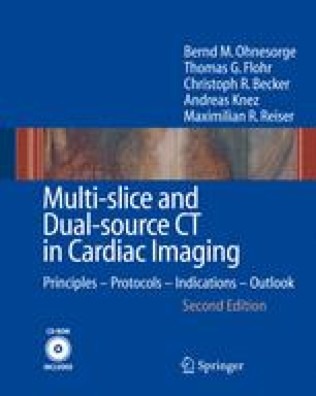
Multi-slice and Dual-source CT in Cardiac Imaging : Principles - Protocols - Indications - Outlook
Cardiac diseases, and in particular coronary artery disease, are the leading cause of death and morbidity in industrialized countries. The development of non-invasive imaging techniques for the heart and the coronary arteries has been considered a key element in improving patient care. A breakthrough in cardiac imaging using CT occurred in 1998, with the introduction of multi-slice computed tomography (CT). Since then, amazing advances in performance have taken place with scanners that acquire up to 64 slices per rotation. This book discusses the state-of-the-art developments in multi-slice CT for cardiac imaging as well as those that can be anticipated in the future

Multi-Robot Systems. From Swarms to Intelligent Automata, Vol. III ; Proceedings from the 2005 International Workshop on Multi-Robot Systems
Documents developments in multi-robot systems research. This volume is the result of the Third International workshop on Multi-Robot Systems that was held in March 2005 at the Naval Research Laboratory in Washington, DC.
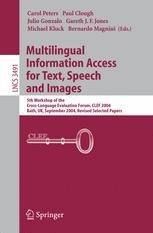
Multilingual Information Access for Text, Speech and Images ; 5th Workshop of the Cross-Language Evaluation Forum, CLEF 2004, Bath, UK, September 15-17, 2004, Revised Selected Papers
The ?fth campaign of the Cross-Language Evaluation Forum (CLEF) for Eu- pean languages was held from January to September 2004. Participation in the CLEF campaigns has increased each year and CLEF 2004 was no exception: 55 groups submitted results for one or more of the di?erent tracks compared with 42 groups in the previous year. CLEF 2004 also marked a breaking point with respect to previous campaigns. The focus was no longer mainly concentrated on multilingual document retrieval as in previous years but was diversi?ed to include di?erent kinds of text retrieval across languages (e. g. , exact answers in the question-answering track) and retrieval on di?erent kinds of media (i. e. , not just plain text but collections containing image and speech as well). In ad- tion, increasing attention was given to issues that regard system usability and user satisfaction with tasks to measure the e?ectiveness of interactive systems or system components being included in both the cross-language question - swering and image retrieval tasks with the collaboration of the coordinators of the interactive track. The campaign culminated in a two-and-a-half-day workshop held in Bath, UK, 15–17 September, immediately following the 8th European Conference on Digital Libraries. The workshop was attended by nearly 100 researchers and s- tem developers.
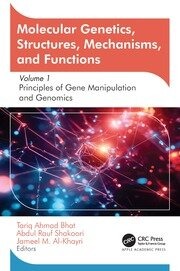
Molecular genetics, structures, mechanisms, and functions : Principles of gene manipulation and genomics ; Vol.1
Provides an overview of the future of genetic engineering and delves into the role of biotechnology and its applications in genetic engineering. It discusses the tools of recombinant technology, which have brought about revolution in our understanding of various complex biological phenomena. Chapters cover mutagenesis, construction, and sequencing of DNA libraries along with applications of genetic engineering for improving health, preventing genetic diseases, enhancing food resources, managing environmental bioremediation, and more. Topics include genetic engineering tools for restriction enzymes and vectors, gene and cell division, mutation detection and screening in plants, population genetics, sexuality in bacteria, and more. Several chapters focus on the tools of recombinant technology, such as restriction enzymes, vectors, etc., that have paved the way for creating organisms of choice and opened new horizons in the field of medicine, agriculture, and industry for human welfare.
Molecular Diagnostic PCR Handbook
PREFACE The Joint FAO/IAEA Division of Nuclear Techniques in Food and Agriculture is involved in agricultural research and development and assists Member States of FAO and IAEA in improving strategies to ensure food security through the use of nuclear techniques and related biotechnologies, where such techniques have a valuable and often unique role. In particular, molecular diagnostic methods have rapidly evolved in the past twenty years, since the advent of the Polymerase Chain Reaction (PCR). They are used in a wide range of agricultural areas such as, improving soil and water management; producing better crop varieties; diagnosing plant and animal diseases; controlling insect pests and improving food quality and safety. The uses of nucleic acid-directed methods have increased significantly in the past five years and have made important contributions to disease control country programmes for improving national and international trade. These developments include the more routine use of PCR as a diagnostic tool in veterinary diagnostic laboratories. However, there are many problems associated with the transfer and particularly, the application of this technology. These include lack of consideration of: the establishment of quality-assured procedures, the required set-up of the laboratory and the proper training of staff. This can lead to a situation where results are not assured. This book gives a comprehensive account of the practical aspects of PCR and strong consideration is given to ensure its optimal use in a laboratory environment. This includes the setting-up of a PCR laboratory; Good Laboratory Practice and standardised of PCR protocols.

Modern tools and methods of water treatment for improving living standards ; Proceedings of the NATO Advanced Research Workshop on modern tools and methods of water treatment for improving living standards, Dnepropetrovsk, Ukraine, November 19-22, 2003
In 2001, one in seven of the water samples taken from Ukrainian industrial and drinking water supply systems did not meet sanitary-hygienic standards, and one in twelve did not meet microbiological standards.
Mobile Professional Voluntarism and International Development : Killing Me Softly?
This book explores the impact that professional volunteers have on the low resource countries they choose to spend time in. Whilst individual volunteering may be of immediate benefit to individual patients, this intervention may have detrimental effects on local health systems; distorting labour markets, accentuating dependencies and creating opportunities for corruption. Improved volunteer deployment may avoid these risks and present opportunities for sustainable systems change. The empirical research presented in this book stems from a specific volunteering intervention funded by the Tropical Health Education Trust and focused on improving maternal and newborn health in Uganda.

Minimal English for a Global World : Improved Communication Using Fewer Words
This book introduces a new tool for improving communication and promoting clearer thinking in a world where the use of Global English can create numerous comprehension and communication issues. Based on research findings from cross-linguistic semantics, it contains essays and studies by leading experts exploring the value and application of ‘Minimal English’ in various fields, including ethics, health, human rights discourse, education and international relations.

Metalliferous Sediments of the World Ocean : Fundamental Theory of Deep-Sea Hydrothermal Sedimentation
Dramatic advances in understanding global tectonics have been made in the last half century and the information and specific data acquired on the floor of the World Ocean by the scientific community probably has exc- ded that available in all previous time. With the benefit of new technology and advanced concepts in the earth sciences extensive exploration of the deep seabed became possible, and has been carried out in many parts of the world. Many features have been recognized and data recorded that are vital for understanding the fundamental processes that shape the earth=s surface and control the habitable environment. The data collected to date on the o- an floor and its physical environment greatly exceeds our understanding and appreciation of their fundamental importance in the earth sciences, and our ability to apply this knowledge effectively in improving our way of life.

Medical Treatment of Intoxications and Decontamination of Chemical Agents in the Area of Terrorist Attack
This book includes reports which were presented at a NATO Advanced Research Workshop (ARW) entitled?Medical Treatment of Intoxications and Decontamination of Chemical Agent in the Area of Terrorist Attack?. The focus of this workshop was assessment of scientific concepts and practical means for management of chemical agent casualties in the area of terrorist attack with emphasis on improving the medical treatment and decontamination. These problems were analyzed from an interdisciplinary perspective. The primary objective of the ARW was to provide countries in which chemical-defense systems are currently under development with the experience and expertise of those that are more advanced and/or have already been exposed and responded to a chemical-terrorist attack. . The main areas covered were: 1. new approaches in pre-treatment and prophylaxis of nerve agent intoxication; 2. diagnosis of exposure to chemical agents ; 3. therapy of chemical agent intoxication; 4. development of personal decontamination; 5. decontamination of intoxication with chemical agents.
